
Bayview Heights, QLD 4868

Good to know:
Bayview Heights is a picturesque suburb located in Cairns, Queensland, with the postcode 4868. Nestled against the lush rainforest backdrop of the Whitfield Range, it offers stunning views over the Cairns cityscape and Trinity Inlet. The suburb is predominantly residential, featuring a mix of older homes and modern developments, catering to diverse demographics. Bayview Heights boasts a range of amenities, including local shops, parks, and schools, making it a family-friendly area. Its proximity to the Cairns CBD, just a short drive away, adds to its appeal for those seeking a balance of tranquillity and convenience.
Read More
Bayview Heights QLD 4868 house market summary: Bayview Heights QLD 4868 property market shows a typical house price of $831,017, median weekly rent of $672 and a gross rental yield of 4.2%. The suburb combines a relatively high IRSAD (1031) with low public stock on market (SoM% 0.32%) but elevated inventory (7.78 months) and an affordability measure of 37 years — an affordability stress signal. This combination means Bayview Heights property investment can offer above‑benchmark rental yield for houses and a solid socio‑economic profile, while also carrying price-growth risk from stretched affordability and a high months‑of‑supply reading.
Property market outlook
Supply and demand: For houses the active stock on market is very low (SoM% 0.32% — opportune/tight list), which normally supports price stability or upside. However inventory at 7.78 months is in the high‑supply band and is unfavourable; this suggests sales turnover is low relative to listed stock (fewer transactions clearing existing listings), which can place downward pressure on price growth if listings persist. Building approvals ratio (0.34%) is neutral, so pipeline additions to supply are not excessive.
Buyer profile and fundamentals: IRSAD 1031 is opportune — a relatively advantaged socio‑economic catchment that supports longer‑term capital resilience. Renter/Owner ratio at 16% sits in the neutral band, indicating a balanced mix of owner‑occupiers and renters. The Units/Houses ratio is 0.0% (opportune), confirming the suburb is overwhelmingly house stock — relevant for investors targeting stand‑alone houses rather than units.
Market liquidity and rental conditions: Days on market (59 days) and vacancy rate (1.76%) are both neutral — rental demand is adequate and listings take a moderate time to transact. Yield at 4.2% is above the commonly cited 3% threshold, delivering reasonable cashflow prospects for investors. Data confidence is High, so these readings are reliable for shortlist decisions.
Affordability and risk: Affordability is a material constraint — the Years to Own metric of 37 years exceeds the 30‑year threshold and is an extreme relative value here. High affordability years reduce the pool of marginal buyers and can cap price growth unless incomes or lending capacity improve.
Pros
- Yield above 4% (4.2%) — viable for cashflow-minded investors in houses.
- Strong socio‑economic catchment (IRSAD 1031) — supportive of long‑term capital preservation.
- Very low Stock on Market (0.32%) — limited active selling stock can support price resilience in a tighter market.
- Predominantly houses (Units/Houses ratio 0.0%) — simplifies acquisition strategy for investors preferring detached dwellings.
- High confidence in the data — good reliability for decision‑making.
Cons
- High inventory (7.78 months) — elevated months‑of‑supply is unfavourable and a potential drag on near‑term capital growth.
- Affordability stretched (37 years) — local buyers are cost‑strained, increasing sensitivity to interest rate moves and credit tightening.
- Moderate days on market (59 days) — sales are neither fast nor slow, limiting rapid portfolio turnover.
- Neutral renter/owner mix — not strongly rental‑dominated, so tenant demand upside is moderate rather than structural.
Investment strategies
- Cashflow / yield strategy: Target well‑priced three‑bedroom houses where a 4%+ gross yield can be maximised. Focus on properties requiring light cosmetic upgrades to increase rent and reduce vacancy downtime. Given the neutral vacancy rate, maintain a conservative vacancy allowance in cashflow modelling.
- Value‑add renovation: With an affluent catchment (IRSAD 1031), modest renovations (kitchen/bathroom refresh, outdoor living improvements) that raise rental appeal and capital value can produce outsized returns relative to acquisition price — but validate with comparable sale evidence because inventory suggests buyers are price sensitive.
- Negotiation and timing: Use the higher months‑of‑supply as leverage in negotiations. Although SoM% is low, the elevated inventory implies listings persist; buyers’ agents should look for motivated sellers or properties lingering on market to secure margin.
- Hold period and exit planning: Given affordability headwinds, plan for a medium to long holding period (5–10 years) for capital growth to materialise. The hold period metric (10.31 years) is neutral — align your refinance and exit timing with broader market cycles.
- Portfolio fit: Bayview Heights is better suited to investors seeking blended outcomes (reasonable yield with potential for modest capital growth) rather than high‑growth, high‑turnover plays. Avoid strategies that rely on rapid capital appreciation unless supported by targeted micro‑location catalysts.
- Due diligence: Inspect supply dynamics at the street/sub‑precinct level — the suburb‑level inventory may mask pockets of very tight supply or micro‑areas with chronic listings. Confirm rental demand for the specific dwelling size and condition.
Is Bayview Heights QLD 4868 a good suburb to invest in?
Bayview Heights QLD 4868 is a conditional yes for investors who prioritise yield and socio‑economic stability in house stock. The 4.2% gross yield and IRSAD 1031 make it attractive for income and capital preservation strategies. However, the suburb carries near‑term risk from stretched affordability (37 years) and high months‑of‑supply, which can slow price growth. If your strategy tolerates a medium to long holding period, focuses on houses, and includes selective negotiation or renovation to lift returns, Bayview Heights can be a suitable market. For short‑term capital plays or investors who require quick turnaround, the current supply indicators and affordability constraints make alternative suburbs with tighter inventory and stronger affordability metrics preferable.
About HtAG Analytics Data
Base metrics reported (subset): Typical Price, Median Rent, Yield (Gross Rental Yield), Sales count, Rentals count, % Change vs referent periods, Capital Growth (annualised with low/high bounds), Total RoI (Yield + CG), Rent Increase (annualised), Volatility Index (MAPE‑based), Confidence (data reliability), Relative Composite Score. Additional metrics we routinely report include SoM / SoM% (Stock on Market), Inventory (months of supply), Building Approvals & BA Ratio, Hold Period, Days on Market, Discounting, Vacancy Rate, Buy & Rent Search Index, Auction Clearance Rates, IRSAD, Renter/Owner ratio, Units/Houses ratio, Years to Own (Affordability), Population, School Rank and infrastructure approvals per capita.
HtAG methodology (suburb context): Our metrics are designed to capture both current market conditions and historical trends at the suburb/dwelling type level so that comparisons reflect the point‑of‑purchase dynamics investors face. In the context of Bayview Heights QLD 4868, this means our Typical Price, Inventory and Yield measures are calibrated to local transaction frequency and listing behaviour rather than broad regional aggregates. While other providers may focus on public macro figures to drive high‑level commentary, HTAG’s analytics emphasise relative, purchase‑level signals to support buyers’ agents and investors selecting specific suburbs.
Snapshot vs trends and selection nuance: The summary above is a current snapshot of value metrics for Bayview Heights houses and does not replace trend analysis — metric direction and momentum can materially change the investment case. Some metrics (for example affordability and inventory) typically carry more weight for local price sensitivity, while others (IRSAD, yield) influence long‑term resilience. Different investor goals and borrowing capacities will lead to different suburb choices; HTAG specialises in shortlisting markets against bespoke investor criteria rather than a one‑size‑fits‑all ranking. For serious investors or buyer’s agents, we recommend a relative analysis across a curated set of suburbs that match your budget, risk profile and intended hold/exit strategy.
Updated: 1 Jun 2026
Read Less
Quick Area Stats

Dwellings

Population

EDI

Bushfire Risk Index

Flood Risk Index
Education & Infrastructure
Sign Up to Access

School Rank

Infra. Spend
Market Trends
Essential metrics effectively streamline the process of identifying markets that match your financial situation and investment objectives. Typical Price, Indicative Yield and Total ROI provide a swift means to shortlist areas that resonate with what you’re seeking and can afford. These metrics also serve as valuable general trend indicators, allowing you to visualise transaction volumes and dynamics of change.
1M
1Q
1Y
3Y
5Y
7Y
10Y
1M
1Q
1Y
3Y
5Y
7Y
10Y

1M
1Q
1Y
3Y
5Y
7Y
10Y
The Growth Rate Cycle (GRC) is a metric used to analyse the year-on-year change in property values, providing insights into the growth cycle of a particular area. It uses the “typical price” metric to gauge property values more accurately than median prices, and includes both actual and projected data for the current year.

Fundamental metrics play a vital role in providing a comprehensive analysis of the socio-economic environment within a specific suburb or region. Additionally, the Return on Investment (ROI) and Volatility Index are crucial metrics that aid in evaluating the prospective profitability and the level of risk or stability in the market.
Socio-economics
Sign Up to Access

IRSAD

Renter to Owner

Units to Houses
Projections
Sign Up to Access

Projected Annual ROI

Volatility Index
Quick Area Stats
Sign Up to Access

Annual Sales Volume

Annual Rentals Volume



Stock on Market

Building Approvals

Inventory

Hold Period




Supply metrics are crucial in gauging both the existing volumes of real estate listed for sale and the properties anticipated to enter the market soon. A diminished supply could signal opportunities for price appreciation, particularly when there’s corresponding buyer demand to buoy the market. The Stock on Market and Inventory level metrics (current values) are presented as a 3-month rolling average of monthly data shown in the charts. This means the last 3 months of data are averaged. The BA Ratio represents the proportion of building approvals over the latest 12 months relative to the total dwellings in the area.

Days on Market

Search Index

Vacancy Rate

Clearance Rate




Demand metrics underscore the level of interest that potential property buyers or tenants have in a specific suburb or locality. When demand outstrips the available supply, or if the supply fails to meet the intensity of buyer/renter interest, there’s a potential for prices to climb, underscoring the pivotal relationship between demand dynamics and property value trends. The Days on Market and Clearance Rate metrics (current values) are presented as a 3-month rolling average of monthly data shown in the charts. This means the last 3 months of data are averaged.
We invite you to contribute to the conversation by sharing your thoughts or raising questions about this market in the comment section below.
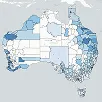

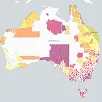


The total adult population (15 years or older) of Bayview Heights 4868 QLD is 3,389, with a median age of 43. Of those, 49.87% are married, 11.89% are divorced or separated, 33.25% are single and 4.78% are widowed.
The average household size is 2.6 people per dwelling, and the median household monthly income is estimated to be $8,456. The median monthly mortgage repayment for households in this suburb is $1,625 which is 19.22% of their earnings.
Source: ABS Census Data (2021)
Hi @Mat, the data for Bayview Heights looks great on the surface. However, the capital growth RCS score (43) seems very low considering the supply metrics all have a decreasing trend. Could you please give me any extra insight on why this may be the case?
Hi Tom,
I agree BH has great metrics and great potential. It all comes down to the comparative analysis – what are the other options on the basis of your budget, investment time horizon, equity extraction timeframe and risk profile. More importantly, although RCS is a 5 years plus metric, we will never find a suburb that has perfect alignment of metrics which means that we cannot make a decision by isolating one metrics and disregarding others. Yes RCS is a level one metric but there are also other that are level one metrics that should be considered – IRSAD, supply and demand metrics, affordability etc.
Bottom line, my suggestion would be to conduct a detailed analysis of the shortlist that has been produced for your brief which would allow you to settle on the best option.