
Charlemont, VIC 3217

Good to know:
Charlemont is a rapidly growing suburb located in Victoria, within the Greater Geelong area and bearing the postcode 3217. Situated approximately 10 kilometres south of Geelong's CBD, Charlemont offers a blend of suburban tranquillity and convenient access to urban amenities. The suburb primarily features new housing developments, attracting young families and professionals. Its proximity to the Armstrong Creek growth corridor ensures residents have access to modern infrastructure, schools, parks, and shopping centres. Charlemont is well-connected by public transport, making it an appealing option for commuters.
Read More
Charlemont VIC 3217 is displaying a mixed but actionable property market profile for houses: a Typical Price of $667,259, a rolling-year Median Rent of $522pw and a Gross Rental Yield of 4.07% — above the practical 3% floor many investors use. Charlemont property market data combines tight established supply and quick transactions with a high rate of recent building approvals that could materially change near-term stock. House prices in Charlemont remain supported by a strong IRSAD (1053) and fast days-on-market, but investors must weigh rising approvals and short hold periods that point to elevated turnover and potential added future supply.
Property market outlook
Charlemont houses currently show supply-side tension at the established end (SoM 0.4%, Inventory 1.46 months — both in the low-supply/opportune band) combined with demand indicators consistent with a live market (DoM 20 days, Buy Search Index 5). Those conditions normally support price resilience and near-term capital growth. Offsetting this is a high Building Approvals Ratio (7.43%) and a short average Hold Period (4.81 years): these are clear signals of substantial new construction and above-average turnover that can increase competition among sellers and add inventory over the next 12–24 months.
Rental fundamentals are acceptable: 4.07% gross yield and a Vacancy Rate of 1.57% (neutral) suggest rentals are stable but not exceptionally tight. Affordability sits at around 30 years — at the practical affordability threshold — which constrains buyer breadth compared with cheaper markets. Confidence in the data is high, so these observations are robust for decision-making at the suburb level.
Pros
- Yield and rent: 4.07% yield with $522pw median rent — attractive for income-focused buyers versus many coastal/blue‑chip suburbs.
- Socio-economic strength: IRSAD 1053 signals above-average socio-economic characteristics that support long-term capital growth.
- Low established supply: SoM 0.4% and Inventory 1.46 months indicate tight resale stock, which supports price stability.
- Fast transactional market: Days on Market of 20 days suggests properties transact quickly, reducing time-to-deal for buyers using buyers’ agents.
- Dwelling composition favourable for houses: Units/Houses ratio 1.0% is opportune for house buyers (limited competition from unit stock).
Cons
- High new supply risk: Building Approvals Ratio 7.43% is unfavourable — significant pipeline of new dwellings could increase supply and cap near-term capital gains in specific pockets.
- Short hold period: Average Hold Period 4.81 years indicates higher turnover — distributors of stock and potential for patchy price volatility.
- Affordability stretched: Affordability at ~30 years sits at the threshold, narrowing the pool of owner‑occupier buyers if rates rise.
- Neutral rental tightness: Vacancy 1.57% is only neutral — limited upside for rent inflation compared with tighter regional markets.
- Auction data uninformative: Clearance Rate 0.0% reported as neutral (likely due to very few auctions), making auction signals less useful.
Investment strategies
- House-only focus: With a 1% unit share, target well-located detached houses rather than units — fewer comparable stock issues and better long-term demand from families.
- Short-to-medium hold selectivity: Given the elevated approvals pipeline, target properties with locational defensibility (corner blocks, near schools, local shops, transport nodes) that are less likely to be affected by nearby medium-density completions.
- Balance yield and capital growth: The ~4.1% yield plus strong IRSAD supports a total return strategy — buy for rental income while selectively pursuing areas within Charlemont showing established amenity or infrastructure upgrades.
- Stagger purchases and ladder timing: To manage development-supply risk, stagger acquisitions across micro‑locations and timing (avoid buying multiple assets in the same release stage of new estates).
- Buyers‑agent value-add: Use a buyers’ agent to secure off-market stock or negotiate conditional settlements with developers (to avoid periods when newly approved completions flood listings).
- Monitor approvals and settlements: Actively track new dwelling commencements and settlement schedules in adjacent estates — when approvals convert to delivered supply, expect short-term pricing pressure in the same precincts.
- Yield protection: For investors reliant on cashflow, target properties with slightly higher gross yields or add value via minor refurbishments to improve rent appetite and reduce vacancy exposure.
Is Charlemont VIC 3217 a good suburb to invest in?
Charlemont VIC 3217 houses offer a pragmatic proposition: above‑average socio-economic backing (IRSAD 1053), healthy gross yield (4.07%) and tight existing resale stock creating near-term support for house prices. However, a material pipeline of approved dwellings (BA Ratio 7.43%) and a short hold period (4.81 years) elevate supply-side risk that can dampen price momentum in specific precincts. For investors who prioritise yield and can be selective about micro-location and timing — particularly buyers targeting detached houses near established amenity or future infrastructure — Charlemont is a reasonable suburb to include on a shortlist. For those relying solely on capital growth from scarcity, the approvals pipeline requires careful due diligence and a longer-term horizon.
About HtAG Analytics Data
HtAG reports a base set of suburb metrics that are frequently used in our suburb briefs: Typical Price, Median Rent, Sales and Rentals counts, Yield (Gross Rental Yield), Inventory/Months of Supply, Stock on Market (SoM and SoM%), Building Approvals & BA Ratio, Hold Period, Days on Market, Vacancy Rate, Buy & Rent Search Index, Auction Clearance Rate, Affordability (Years to Own), IRSAD, Renter/Owner ratio, Units/Houses ratio, Confidence and a Relative Composite Score™. There are additional advanced metrics available on our platform (volatility indices, capital-growth projections, rent-increase forecasts, school rank, non‑residential approvals per capita, and others) that are not exhaustively listed here.
HtAG’s metric set is designed to capture both current market conditions and historical trends in order to perform relative market analysis that aligns closely with point‑of‑purchase decisions. In a suburb context such as Charlemont VIC 3217, our methodology emphasises locally relevant measures — for example, distinguishing tight established stock from a concurrent high approvals pipeline — rather than relying solely on public headline numbers. Other providers may publish similar metric names, but HTAG’s curation and measurement are tuned to compare micro-markets where purchase timing and precinct-level supply matter.
Finally, the summary above is a snapshot of current value metrics for Charlemont houses and does not substitute for trend analysis: metric trajectories and the relative importance of specific indicators (for example, BA Ratio versus SoM) can materially change the investment case. Different investors and strategies will select different suburbs based on budget, borrowing capacity, risk appetite and intended sell/refinance horizons. HTAG excels at short‑listing and ranking markets against bespoke investor criteria rather than offering a one‑size‑fits‑all recommendation. For serious acquisition decisions, perform relative analysis across a tailored set of locations that align with your objectives.
Updated: 1 Jun 2026
Read Less
Quick Area Stats

Dwellings

Population

EDI

Bushfire Risk Index

Flood Risk Index
Education & Infrastructure
Sign Up to Access

School Rank

Infra. Spend
Market Trends
Essential metrics effectively streamline the process of identifying markets that match your financial situation and investment objectives. Typical Price, Indicative Yield and Total ROI provide a swift means to shortlist areas that resonate with what you’re seeking and can afford. These metrics also serve as valuable general trend indicators, allowing you to visualise transaction volumes and dynamics of change.
1M
1Q
1Y
3Y
5Y
7Y
10Y
1M
1Q
1Y
3Y
5Y
7Y
10Y

1M
1Q
1Y
3Y
5Y
7Y
10Y
The Growth Rate Cycle (GRC) is a metric used to analyse the year-on-year change in property values, providing insights into the growth cycle of a particular area. It uses the “typical price” metric to gauge property values more accurately than median prices, and includes both actual and projected data for the current year.

Fundamental metrics play a vital role in providing a comprehensive analysis of the socio-economic environment within a specific suburb or region. Additionally, the Return on Investment (ROI) and Volatility Index are crucial metrics that aid in evaluating the prospective profitability and the level of risk or stability in the market.
Socio-economics
Sign Up to Access

IRSAD

Renter to Owner

Units to Houses
Projections
Sign Up to Access

Projected Annual ROI

Volatility Index
Quick Area Stats
Sign Up to Access

Annual Sales Volume

Annual Rentals Volume



Stock on Market

Building Approvals

Inventory

Hold Period




Supply metrics are crucial in gauging both the existing volumes of real estate listed for sale and the properties anticipated to enter the market soon. A diminished supply could signal opportunities for price appreciation, particularly when there’s corresponding buyer demand to buoy the market. The Stock on Market and Inventory level metrics (current values) are presented as a 3-month rolling average of monthly data shown in the charts. This means the last 3 months of data are averaged. The BA Ratio represents the proportion of building approvals over the latest 12 months relative to the total dwellings in the area.

Days on Market

Search Index

Vacancy Rate

Clearance Rate




Demand metrics underscore the level of interest that potential property buyers or tenants have in a specific suburb or locality. When demand outstrips the available supply, or if the supply fails to meet the intensity of buyer/renter interest, there’s a potential for prices to climb, underscoring the pivotal relationship between demand dynamics and property value trends. The Days on Market and Clearance Rate metrics (current values) are presented as a 3-month rolling average of monthly data shown in the charts. This means the last 3 months of data are averaged.
We invite you to contribute to the conversation by sharing your thoughts or raising questions about this market in the comment section below.
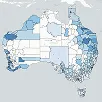

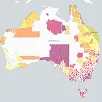


The total adult population (15 years or older) of Charlemont 3217 VIC is 2,102, with a median age of 29. Of those, 37.06% are married, 9.99% are divorced or separated, 50.14% are single and 2.95% are widowed.
The average household size is 2.5 people per dwelling, and the median household monthly income is estimated to be $9,136. The median monthly mortgage repayment for households in this suburb is $1,733 which is 18.97% of their earnings.
Source: ABS Census Data (2021)