
Canberra, ACT

Good to know:
Canberra, located in the Australian Capital Territory (ACT), is Australia’s capital city and serves as the political heart of the nation. Established in 1913, it was purpose-built as a compromise between Sydney and Melbourne. The city is renowned for its carefully planned layout, designed by architect Walter Burley Griffin, featuring expansive parks, open spaces, and iconic structures such as Parliament House, the Australian War Memorial, and the National Gallery of Australia. As the seat of the Australian Government, Canberra hosts numerous cultural institutions and offers a high standard of living with its education, healthcare, and research facilities.
Read More
–
Read Less
Quick Area Stats

Dwellings

Population

EDI

Bushfire Risk Index

Flood Risk Index
Education & Infrastructure
Sign Up to Access

School Rank

Infra. Spend
Market Trends
Essential metrics effectively streamline the process of identifying markets that match your financial situation and investment objectives. Typical Price, Indicative Yield and Total ROI provide a swift means to shortlist areas that resonate with what you’re seeking and can afford. These metrics also serve as valuable general trend indicators, allowing you to visualise transaction volumes and dynamics of change.
1M
1Q
1Y
3Y
5Y
7Y
10Y
1M
1Q
1Y
3Y
5Y
7Y
10Y

1M
1Q
1Y
3Y
5Y
7Y
10Y
The Growth Rate Cycle (GRC) is a metric used to analyse the year-on-year change in property values, providing insights into the growth cycle of a particular area. It uses the “typical price” metric to gauge property values more accurately than median prices, and includes both actual and projected data for the current year.

Fundamental metrics play a vital role in providing a comprehensive analysis of the socio-economic environment within a specific suburb or region. Additionally, the Return on Investment (ROI) and Volatility Index are crucial metrics that aid in evaluating the prospective profitability and the level of risk or stability in the market.
Socio-economics
Sign Up to Access

IRSAD

Renter to Owner

Units to Houses
Projections
Sign Up to Access

Projected Annual ROI

Volatility Index
Quick Area Stats
Sign Up to Access

Annual Sales Volume

Annual Rentals Volume



Stock on Market

Building Approvals

Inventory

Hold Period




Supply metrics are crucial in gauging both the existing volumes of real estate listed for sale and the properties anticipated to enter the market soon. A diminished supply could signal opportunities for price appreciation, particularly when there’s corresponding buyer demand to buoy the market. The Stock on Market and Inventory level metrics (current values) are presented as a 3-month rolling average of monthly data shown in the charts. This means the last 3 months of data are averaged. The BA Ratio represents the proportion of building approvals over the latest 12 months relative to the total dwellings in the area.

Days on Market

Search Index

Vacancy Rate

Clearance Rate




Demand metrics underscore the level of interest that potential property buyers or tenants have in a specific suburb or locality. When demand outstrips the available supply, or if the supply fails to meet the intensity of buyer/renter interest, there’s a potential for prices to climb, underscoring the pivotal relationship between demand dynamics and property value trends. The Days on Market and Clearance Rate metrics (current values) are presented as a 3-month rolling average of monthly data shown in the charts. This means the last 3 months of data are averaged.
We invite you to contribute to the conversation by sharing your thoughts or raising questions about this market in the comment section below.
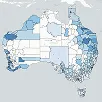

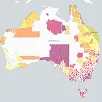


The ACT is a larger market than neighbouring LGAs. Sales by house and unit market segments for 2018-2019 register in the thousands, whereas surrounding council areas only experience sales in the hundreds per property type.
Property sales for the period of 2018-2019 segmented by property type and size show the demand profile for Canberra. Units are more popular for those seeking one and two-bedroom properties, while family home buyers, with a need for three, four, or five-bedroom homes, prefer houses.
Three-bedroom properties sell in far greater numbers in ACT than any other type of home. The market for three-bedroom homes was double that for two-bedroom properties during the year. Three and four-bedroom houses sell in larger numbers in Canberra than any other property type or size.
Canberra unit prices are currently on the rise due to significant inflow of new development stock in the ACT property market.
Forecasts for units have a positive bias in this market due to dominance of new unit sales (that are priced well above established dwellings). Because of this, current prices and forecasts for units are yet to ‘catch up’ with the market and should be treated as preliminary data.