
Elderslie, NSW 2570

Good to know:
Elderslie, NSW 2570, is a charming suburb situated within the Macarthur region, southwest of Sydney. Known for its blend of historical charm and modern amenities, Elderslie offers a family-friendly environment with a strong sense of community. The suburb boasts several parks, including the popular Kirkham Park, ideal for outdoor activities and sports. It is close to essential services in nearby Camden and Narellan, with schools like Elderslie Public School and Elizabeth Macarthur High School serving local families. The Nepean River adds a scenic touch, making Elderslie a serene yet convenient place to live.
Read More
Elderslie NSW 2570 shows a tightly supplied house market with solid rental demand and limited new approvals. Elderslie NSW 2570 property market data for houses reports a Typical Price of $1,177,168, a rolling-year Median Rent of $713pw and a Gross Rental Yield of 3.15%. For investors targeting houses, the combination of low stock on market (0.36%), short days on market (24 days) and a sub-1% vacancy (0.84%) supports ongoing rent growth pressure and underpins house prices in Elderslie. That said, affordability is stretched (Years to Own ~46 years), which constrains buyer depth and increases sensitivity to interest rate shifts.
Property market outlook
The house market in Elderslie is supply-constrained and demand-leaning. Low Stock on Market (0.36% — opportune) and a modest Inventory (2.37 months — neutral) indicate limited resale options but not an extreme shortage; Building Approvals Ratio at 0.29% (opportune) suggests few imminent new completions, reinforcing tight supply over the medium term. Demand indicators are supportive: Days on Market of 24 days and Vacancy at 0.84% are consistent with a seller/landlord-favouring market and imply rental scarcity that supports rent growth. Key downside is affordability — 46 years to own is materially high, meaning house prices are elevated relative to incomes and the market is more vulnerable to rate rises or credit tightening. Overall, the structural supply constraints coupled with low vacancy create a favourable backdrop for capital growth, but price levels are already high relative to local incomes.
Pros
- Low Stock on Market (0.36% — opportune): tight resale supply supports price resilience and faster sales.
- Low Vacancy (0.84% — opportune): strong rental demand and reduced rental void risk for investors.
- Fast turnover (DoM 24 days — opportune): competitive buyer environment gives vendors pricing power and limits negotiation margins.
- Building Approvals Ratio low (0.29% — opportune): limited pipeline of new housing reduces near-term supply pressure.
- Units/Houses ratio 1.0% (opportune): market dominated by houses — less price competition from unit developments.
- Data confidence: High — robust transaction sample improves metric reliability.
Cons
- Affordability stretched (46 years): very high ownership years increases downside risk from rate rises and reduces the pool of owner-occupier buyers.
- Yield modest (3.15%): above the 3% minimum but low for cashflow-focused investors; limited immediate income upside without value-add.
- Buy Search Index only neutral (6): demand is present but not overheated in search activity terms — may indicate buyer interest is concentrated rather than broad-based.
- Clearance Rate 0% (neutral): likely reflects few auctions rather than weak price discovery; still reduces auction-based market signals.
- Hold Period 9.22 years (neutral): turnover is moderate — not extremely tightly held, which means occasional supply surges are possible.
Investment strategies
- Core long-term capital-growth play: Buy established houses to capture capital appreciation from structurally tight supply, low vacancy and limited approvals. Plan for a medium-to-long holding period to ride out affordability-sensitive cycles.
- Income preservation with selective value-add: With a 3.15% gross yield, target modest value-add renovations (kitchen/bathroom, landscaping) to lift rental return and resale appeal rather than expecting strong yield-driven cashflow.
- Price-sensitive sourcing: Given fast DoM and low SoM, use buyer-agent networks, off-market sourcing and pre-emptive offers to secure stock without competing in hot public listings.
- Leverage caution: High Years to Own means the market is stretched; structure finance conservatively (longer fixed-rate tranches or larger buffers) to mitigate rate shock risk.
- Subdivision / development optionality for specialists: Low approvals and low unit share suggest upside for small-lot development or townhouse infill where zoning and land size permit, but run feasibility with conservative sales/rent assumptions.
- Rental strategy: Maintain conservative vacancy buffers and market rents aggressively given sub-1% vacancy — regular market repricing and tenancy screening will protect yield.
Is Elderslie NSW 2570 a good suburb to invest in?
Elderslie NSW 2570 is a good option for investors prioritising capital growth in established houses rather than immediate high cashflow. The house market fundamentals — low stock, quick sales, and sub-1% vacancy — are supportive of price appreciation and steady rental demand. However, affordability is a clear headwind: at ~46 years to own, the market is expensive relative to household incomes, which elevates downside risk if financing conditions tighten. For buyer’s agents and sophisticated investors, Elderslie is attractive when acquisitions are executed below replacement-type prices or include clear value-add upside; purely yield-chasing investors should expect modest income returns and plan for capital-led outcomes.
About HtAG Analytics Data
HtAG reports core suburb metrics per dwelling type: Typical Price, Median Rent, Sales and Rentals counts, % Change over time, Gross Rental Yield, Capital Growth (annualised) and low/high ranges, Total RoI (Yield + CG), Rent Increase projection, Volatility Index, Confidence, and a Relative Composite Score™. The fundamental contextual metrics we use include IRSAD, Renter/Owner ratio, Unit/House ratios, Years to Own (Affordability), and Growth Rate Cycle (GRC). Supply measures include Stock on Market (SoM) and SoM%, Inventory (months), Building Approvals and BA Ratio, and Hold Period. Demand indicators cover Days on Market, Discounting, Vacancy Rate, Buy & Rent Search index and Auction Clearance Rates. There are additional advanced metrics (population, estimated dwellings, school rank, infrastructure approvals per capita, annual sales volume, distance to CBD, etc.) not fully listed here that we use to refine location-level analysis.
The guiding principle behind HtAG metrics is to capture both present conditions and historical trends so markets can be compared close to the point of purchase. In practice this means our suburb-level measures are calibrated to reflect transaction activity, supply pipelines and rental market pressures in ways designed for investors and buyer’s agents — not just high-level public commentary. While other providers often aggregate public datasets to describe broad trends, HtAG’s measurements are built for relative market selection and include curation and timing nuances that change how similarly named metrics should be interpreted.
Finally, the snapshot above summarises current value metrics for Elderslie houses but does not replace trend analysis: metric trajectories (rent growth momentum, approvals acceleration, or changing days on market) can materially alter the investment case. Some metrics carry more weight depending on strategy and time horizon. Investor selection of suburbs will vary by budget, borrowing capacity, risk appetite and exit/ refinance timing; HtAG specialises in shortlisting suburbs against bespoke criteria rather than offering one-size-fits-all rankings. For serious acquisition decisions, perform comparative analysis across candidate suburbs and timeframes aligned with your specific objectives.
Updated: 1 May 2026
Read Less
Quick Area Stats

Dwellings

Population

EDI

Bushfire Risk Index

Flood Risk Index
Education & Infrastructure
Sign Up to Access

School Rank

Infra. Spend
Market Trends
Essential metrics effectively streamline the process of identifying markets that match your financial situation and investment objectives. Typical Price, Indicative Yield and Total ROI provide a swift means to shortlist areas that resonate with what you’re seeking and can afford. These metrics also serve as valuable general trend indicators, allowing you to visualise transaction volumes and dynamics of change.
1M
1Q
1Y
3Y
5Y
7Y
10Y
1M
1Q
1Y
3Y
5Y
7Y
10Y

1M
1Q
1Y
3Y
5Y
7Y
10Y
The Growth Rate Cycle (GRC) is a metric used to analyse the year-on-year change in property values, providing insights into the growth cycle of a particular area. It uses the “typical price” metric to gauge property values more accurately than median prices, and includes both actual and projected data for the current year.

Fundamental metrics play a vital role in providing a comprehensive analysis of the socio-economic environment within a specific suburb or region. Additionally, the Return on Investment (ROI) and Volatility Index are crucial metrics that aid in evaluating the prospective profitability and the level of risk or stability in the market.
Socio-economics
Sign Up to Access

IRSAD

Renter to Owner

Units to Houses
Projections
Sign Up to Access

Projected Annual ROI

Volatility Index
Quick Area Stats
Sign Up to Access

Annual Sales Volume

Annual Rentals Volume



Stock on Market

Building Approvals

Inventory

Hold Period




Supply metrics are crucial in gauging both the existing volumes of real estate listed for sale and the properties anticipated to enter the market soon. A diminished supply could signal opportunities for price appreciation, particularly when there’s corresponding buyer demand to buoy the market. The Stock on Market and Inventory level metrics (current values) are presented as a 3-month rolling average of monthly data shown in the charts. This means the last 3 months of data are averaged. The BA Ratio represents the proportion of building approvals over the latest 12 months relative to the total dwellings in the area.

Days on Market

Search Index

Vacancy Rate

Clearance Rate




Demand metrics underscore the level of interest that potential property buyers or tenants have in a specific suburb or locality. When demand outstrips the available supply, or if the supply fails to meet the intensity of buyer/renter interest, there’s a potential for prices to climb, underscoring the pivotal relationship between demand dynamics and property value trends. The Days on Market and Clearance Rate metrics (current values) are presented as a 3-month rolling average of monthly data shown in the charts. This means the last 3 months of data are averaged.
We invite you to contribute to the conversation by sharing your thoughts or raising questions about this market in the comment section below.
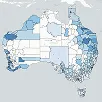

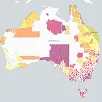


The total adult population (15 years or older) of Elderslie 2570 NSW is 5,944, with a median age of 34. Of those, 49.83% are married, 13.46% are divorced or separated, 32.77% are single and 3.90% are widowed.
The average household size is 2.8 people per dwelling, and the median household monthly income is estimated to be $9,808. The median monthly mortgage repayment for households in this suburb is $2,383 which is 24.30% of their earnings.
Source: ABS Census Data (2021)