
Mambourin, VIC 3024

Good to know:
Mambourin, located in Victoria with the postcode 3024, is a rapidly developing suburb within the City of Wyndham. Situated approximately 38 kilometres southwest of Melbourne's CBD, Mambourin offers a blend of new residential projects and future-planned amenities. The area is designed for family-friendly living, featuring modern housing estates, parks, and community facilities. A future town centre, schools, and employment zones are in the pipeline, promising a self-sufficient, vibrant community. Its proximity to Werribee and key transport links provides convenient access to urban comforts while maintaining a suburban charm.
Read More
Mambourin VIC 3024 property market data: typical price for houses $728,201, median rent $442 per week and a gross yield of 3.16%. This is a house-focused snapshot for Mambourin VIC 3024 that combines affordability (28 years), socio-economic strength (IRSAD 1058) and active buyer interest (Buy Search Index 10) against pronounced supply-side pressure and elevated vacancy (7.23%). House prices in Mambourin are supported by higher-than-average SES and reasonable affordability, but investors must weigh strong online demand against current oversupply and rental market weakness. Note: no confidence score is provided for this dataset, so treat thin-sample signals with caution and verify with on-the-ground intelligence.
Property market outlook
Mambourin VIC 3024 house market shows a mixed outlook. Strengths: above-average IRSAD (1058) indicates a relatively affluent catchment and affordability around 28 years keeps the market accessible for owner-occupiers and first-home buyers. Buyer interest is high (Buy Search Index = 10) which normally supports transactions and price stability. Yields at 3.16% clear the common 3% liquidity threshold, so gross cash flow is modestly acceptable for investors targeting neutral cash return.
Risks are material and immediate: Inventory at 7.24 months and Stock on Market 0.84% combined with a Building Approvals Ratio of 6.4% imply both established and pipeline supply are high — an unfavourable combination for near-term capital growth. Vacancy is exceptionally high at 7.23%, signalling elevated rental vacancy risk and likely downward pressure on rents or stronger leasing incentives. Hold period is short (3.77 years), indicating high churn and looser holding patterns that increase transactional turnover and available stock. Overall this is a market where demand signals (searches) are at odds with on-market availability and rental demand.
Pros
- Strong socio-economic position: IRSAD 1058 (opportune) supports long-term price resilience relative to lower-SES suburbs.
- Affordable relative to national norms: Years to Own 28 years — at or below the 30-year threshold — makes ownership plausible for typical buyers.
- Yield above common screening threshold: Gross yield 3.16% (>3%) gives modest positive cash flow potential for houses.
- Very low unit supply: Units/Houses ratio 1% (opportune) — market is predominantly houses, reducing competition from unit oversupply and simplifying stock selection for house-focused investors.
- High online buyer interest: Buy Search Index = 10 (favourable) suggests demand exists and active buyer appetite could accelerate sales when supply tightens.
Cons
- Very elevated vacancy: 7.23% (unfavourable) is a significant rental market weakness — higher landlord vacancy costs, rent discounting and longer re-leasing periods are likely.
- Excess inventory and pipeline supply: Inventory 7.24 months (unfavourable) and Building Approvals Ratio 6.4% (unfavourable) point to heavy present and forthcoming supply pressure that undermines short-term capital growth.
- Short hold period / high turnover: 3.77 years (unfavourable) increases available stock and reduces the “tightly held” premium — can depress price momentum.
- Low data confidence: Confidence is None — limited transaction data or reporting gaps mean metrics may be volatile or incomplete; verify locally.
- Sales channels: Clearance Rate 0% (reported neutral) may reflect few auctions and a private-treaty dominated market, making transparency and comparable sales harder to parse.
Investment strategies
- Be selective on product and location: prioritise ready-established houses in pockets with proven rental take-up rather than new-estate releases where approvals are concentrated. Given the high Building Approvals Ratio, avoid buying off-the-plan in the immediate pipeline unless pricing reflects future supply risk.
- Target cashflow resilience: with vacancy elevated, seek properties with slightly higher yield margins, multiple potential tenant cohorts (families and contractors), or lower holding costs to withstand vacancy periods.
- Negotiate price and terms: current inventory favours buyers — use longer inspections, conditional clauses for finance/inspection, and seek vendor concessions to protect returns.
- Value-add and differentiation: pursue renovation or minor improvement plays that enhance rental appeal and reduce time-to-lease (sound insulation, storage, landscaping, flexible floorplans). Small spend that materially reduces vacancy can materially improve effective yield.
- Staging and timing: if buying multiple assets, stagger acquisitions to avoid concentration in an over-supplied market; monitor approval activity and leasing absorption before subsequent buys.
- Focus on micro-markets: use hyper-local indicators (distance to new infrastructure, school catchments, transport nodes) to find pockets where vacancy is lower than suburb average.
- Short-term vs long-term horizon: given the supply overhang, prefer medium-to-long hold horizons where SES and affordability can support eventual recovery; avoid short speculative flips unless pricing already discounts supply risk heavily.
- Due diligence emphasis: because Confidence is None, verify comparable sales, recent leasing evidence, and check agent listings to confirm advertised vacancy and rental demand.
Is Mambourin VIC 3024 a good suburb to invest in?
Conditional yes — but only for investors who are selective, patient and tactical. Structural positives (IRSAD 1058, reasonable affordability, 3.16% yield and very low unit competition) make Mambourin VIC 3024 property investment attractive on a medium-term horizon if you can pick properties that minimise vacancy exposure. Short-term investors face material headwinds: high inventory (7.24 months), an elevated vacancy rate (7.23%) and heavy approvals (6.4%) create downside risk for near-term capital growth and rental performance. If you prefer lower risk, wait for inventory and vacancy to normalise or target micro-locations within Mambourin that already show stronger leasing metrics. If you can secure discounts, focus on cashflow resilience and accept a longer hold period, there are reasonable entry points today.
About HtAG Analytics Data
Base metrics reported here (per dwelling type when applicable) include: Typical Price, Median Rent, Sales, Rentals, % Change versus prior periods, Yield (Gross Rental Yield), Capital Growth (CG) with low/high bounds, Total RoI, Rent Increase (projected p.a.), Volatility Index, Confidence, Relative Composite Score™, Stock on Market (SoM) and SoM%, Inventory (months), Building Approvals & BA Ratio, Hold Period, Days on Market, Discounting, Vacancy Rate and Vacancies, Days on Rental Market, Buy & Rent Search Index, Auction Clearance Rate, plus advanced context fields such as Population, Estimated Dwellings, School Rank, Non-residential Building Approvals per Capita, Annual Sales Volume and Distance to nearest CBD/GPO. There are additional metrics in our dashboards; the list above represents the core base set most investors use for comparative suburb analysis.
HtAG’s measurement approach aims to capture both current market conditions and historical trends to enable relative, point-of-purchase comparisons rather than broad-stroke media narratives. In the context of Mambourin VIC 3024 that means our figures combine recent transaction and listing behaviour with trend models to show how immediate supply (inventory, approvals) and demand indicators (search index, vacancy) are likely to affect value and yield. While other providers may deliver public-facing trend summaries, HTAG designs metrics specifically to compare suburbs at the level investors act — including nuances around supply timing, hold periods and lease market stress.
Finally, the snapshot above is a current-value view and does not substitute for trend analysis. Metric trajectories (rising or falling vacancy, approvals ramping up or cooling, shifts in buyer interest) can change the investment case materially. Some metrics carry greater weight depending on strategy (e.g. yield and vacancy for cashflow investors; IRSAD and approvals for capital growth plays). Market selection therefore varies by budget, borrowing capacity, risk appetite and intended hold/refinance timeframe. HTAG excels at shortlisting and ranking suburbs against individual investor criteria rather than offering one-size-fits-all verdicts — for Mambourin VIC 3024, pair this data with targeted on-the-ground comps and leasing checks before committing.
Updated: 1 May 2026
Read Less
Quick Area Stats

Dwellings

Population

EDI

Bushfire Risk Index

Flood Risk Index
Education & Infrastructure
Sign Up to Access

School Rank

Infra. Spend
Market Trends
Essential metrics effectively streamline the process of identifying markets that match your financial situation and investment objectives. Typical Price, Indicative Yield and Total ROI provide a swift means to shortlist areas that resonate with what you’re seeking and can afford. These metrics also serve as valuable general trend indicators, allowing you to visualise transaction volumes and dynamics of change.
1M
1Q
1Y
3Y
5Y
7Y
10Y
1M
1Q
1Y
3Y
5Y
7Y
10Y

1M
1Q
1Y
3Y
5Y
7Y
10Y
The Growth Rate Cycle (GRC) is a metric used to analyse the year-on-year change in property values, providing insights into the growth cycle of a particular area. It uses the “typical price” metric to gauge property values more accurately than median prices, and includes both actual and projected data for the current year.

Fundamental metrics play a vital role in providing a comprehensive analysis of the socio-economic environment within a specific suburb or region. Additionally, the Return on Investment (ROI) and Volatility Index are crucial metrics that aid in evaluating the prospective profitability and the level of risk or stability in the market.
Socio-economics
Sign Up to Access

IRSAD

Renter to Owner

Units to Houses
Projections
Sign Up to Access

Projected Annual ROI

Volatility Index
Quick Area Stats
Sign Up to Access

Annual Sales Volume

Annual Rentals Volume



Stock on Market

Building Approvals

Inventory

Hold Period




Supply metrics are crucial in gauging both the existing volumes of real estate listed for sale and the properties anticipated to enter the market soon. A diminished supply could signal opportunities for price appreciation, particularly when there’s corresponding buyer demand to buoy the market. The Stock on Market and Inventory level metrics (current values) are presented as a 3-month rolling average of monthly data shown in the charts. This means the last 3 months of data are averaged. The BA Ratio represents the proportion of building approvals over the latest 12 months relative to the total dwellings in the area.

Days on Market

Search Index

Vacancy Rate

Clearance Rate




Demand metrics underscore the level of interest that potential property buyers or tenants have in a specific suburb or locality. When demand outstrips the available supply, or if the supply fails to meet the intensity of buyer/renter interest, there’s a potential for prices to climb, underscoring the pivotal relationship between demand dynamics and property value trends. The Days on Market and Clearance Rate metrics (current values) are presented as a 3-month rolling average of monthly data shown in the charts. This means the last 3 months of data are averaged.
We invite you to contribute to the conversation by sharing your thoughts or raising questions about this market in the comment section below.
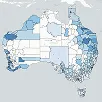

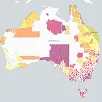


The total adult population (15 years or older) of Mambourin 3024 VIC is 240, with a median age of 30. Of those, 47.92% are married, 8.75% are divorced or separated, 40.00% are single and 0.00% are widowed.
The average household size is 3.0 people per dwelling, and the median household monthly income is estimated to be $9,952. The median monthly mortgage repayment for households in this suburb is $2,000 which is 20.10% of their earnings.
Source: ABS Census Data (2021)