
Greenwich, NSW 2065

Good to know:
Greenwich is a picturesque suburb located on Sydney's Lower North Shore, within the state of New South Wales. Postcode 2065 marks its scenic locale bordered by Lane Cove River and Sydney Harbour. Greenwich boasts a tranquil, village-like atmosphere while being just 7 kilometres from the Sydney CBD. The suburb features leafy streets, heritage homes, and modern apartments. Greenwich boasts several parks, including Greenwich Point Reserve, offering stunning harbour views. The area is well-serviced by public transport, including buses and ferries, making it a convenient yet serene choice for residents.
Read More
Greenwich NSW 2065 property market: typical house price $3,508,117, median rent $1,365 per week and a gross yield of 2.02% (well below the common 3% yield benchmark). This Greenwich NSW 2065 property investment snapshot shows very low advertised stock and months-of-supply, strong auction clearance activity and a high socio‑economic profile (IRSAD 1149), but extreme affordability pressure (84 years to own) and a low rental yield that will make the market primarily suitable for capital‑growth focused buyers.
Property market outlook
The house market in Greenwich is supply‑constrained and affluent. Stock on market at 0.13% and inventory of 1.21 months point to tight established supply — a condition that supports price resilience and creates a seller’s market for well‑presented houses. A clearance rate above 70% confirms active buyer competition, particularly at auction. High IRSAD (1149) indicates owner wealth and amenity demand supportive of longer‑term capital growth, and the 9.53 year hold period suggests properties are moderately tightly held.
Countervailing forces are material. Gross yield at 2.02% is low and will deter yield‑seeking investors; the suburb requires reliance on capital appreciation. Affordability is extreme (84 years to own), which narrows the buyer pool to higher‑net‑worth purchasers and increases sensitivity to interest rate moves and credit tightening. The units/houses ratio (58%) flags a substantial unit presence in the overall fabric — relevant for comparative value and rental market dynamics in the LGA. Data confidence is medium, so use caution for fine-grain market timing decisions.
Pros
- Very low listed supply (SoM 0.13%, inventory 1.21 months) — supportive of price stability and upside for scarce well‑located houses.
- High IRSAD (1149) — affluent catchment, typically associated with better amenity, schools and longer-term capital preservation.
- Strong auction performance (clearance rate ~71%) — demonstrates active demand and willingness to pay in competitive settings.
- Hold period ~9.5 years — properties are not frequently traded, reducing churn and limiting established supply.
- Vacancy rate 1.49% — in the balanced range, so rental demand is adequate for landlords who accept low yields.
Cons
- Very low gross rental yield (2.02%) — below the 3% practical threshold, making cash‑flow positive ownership difficult without significant leverage or tax strategies.
- Affordability at 84 years — extreme unaffordability restricts the local owner‑occupier buyer pool and raises exposure to financing conditions.
- Units/Houses ratio 58% (unfavourable) — higher unit presence in the housing stock can compress relative growth or rental upside for units and changes competitive dynamics for houses.
- Renter/Owner ratio 31% is neutral but not especially owner‑dominant — rental market exists but is not the primary driver.
- Medium confidence — monthly sales count is modest; treat short-term metric swings with caution.
Investment strategies
- Capital‑growth focus: target high‑quality, tightly‑located houses (proximity to harbour views, top public schools and transport nodes) where scarcity and amenity premium are strongest. Accept low current yield for potential long‑term price appreciation.
- Selective value add: consider modest renovations, landscaping and high‑end finishes that materially shift the property into a higher buyer cohort. Small improvements can create margin in premium markets when yields are low.
- Off‑market and buyers‑agent sourcing: with SoM extremely low, pursue off‑market listings and vendor introductions to avoid competitive auctions and secure properties at a small discount to public campaigns.
- Longer hold horizon: plan 7–10+ year holds to capture capital growth cycles and justify low initial yield; shorter horizons magnify risk from affordability and rate shocks.
- Finance resilience: ensure borrowing capacity and stress‑testing at higher rates given the high-priced market and elevated years‑to‑own; avoid aggressive gearing if relying on rental cashflow.
- Tenant selection and lease strategy: aim for secure, premium tenants (professionals, families) and offer longer leases where possible to reduce turnover and vacancy costs given the low yield environment.
- Consider alternatives if yield is required: if an investor needs positive cashflow, Greenwich houses are a poor fit — either seek neighbouring precincts with better yields or consider commercial/alternative assets.
Is Greenwich NSW 2065 a good suburb to invest in?
Greenwich NSW 2065 is a high‑quality, low‑supply suburb that suits investors who prioritise long‑term capital growth and can tolerate very low rental yields and extreme affordability constraints. It is not attractive for buy‑and‑hold investors reliant on rental income or for those with limited borrowing headroom. For sophisticated buyers and buyers’ agents aiming to secure premium family houses in an affluent market, Greenwich offers structural scarcity and amenity support — but success depends on access to off‑market opportunities, conservative financing and a multi‑year hold strategy.
About HtAG Analytics Data
HtAG reports a base set of suburb metrics that commonly include: Typical Price, Median Rent, Sales and Rentals count, % Change over time, Gross Rental Yield, Capital Growth forecast (CG, CG Low/High), Total RoI, Rent Increase (annualised), Volatility Index, Confidence, Relative Composite Score™, IRSAD, Renter/Owner Ratio, Unit/House Ratio, Years to Own (Affordability), Growth Rate Cycle (GRC), Stock on Market (SoM) and SoM%, Inventory (months of supply), Building Approvals and BA Ratio, Hold Period, Days on Market (DOM), Discounting, Vacancy Rate and Vacancies, Days on Rental Market (DoRM), Buy & Rent Search Index, Auction Clearance Rates, plus advanced context metrics (population, estimated dwellings, school rank, non‑residential approvals per capita, annual sales volume and distance to nearest GPO). There are additional metrics on HTAG dashboards beyond this base set.
HtAG’s methodology is designed to capture both present market conditions and historical trends to perform relative market analysis at the suburb level — explicitly focused on markets as close as possible to the point of purchase. While other providers (for example, those that aggregate and publish public datasets to explain macro trends) are useful for headline analysis, HTAG metrics are curated and measured with nuances that prioritise comparative decision‑making for property professionals and investors working across specific locations.
The snapshot above summarises current value metrics for Greenwich houses but does not replace trend analysis: metric trajectories, differing metric weightings and investor-specific constraints (budget, borrowing capacity, risk appetite, and desired hold or refinance horizons) materially change which suburbs are appropriate for any strategy. HTAG is built to shortlist and rank markets against individual criteria rather than offer one‑size‑fits‑all conclusions. For transactional decisions and portfolio construction, perform relative analysis across a targeted set of suburbs that match your objectives and timeframes.
Updated: 1 May 2026
Read Less
Quick Area Stats

Dwellings

Population

EDI

Bushfire Risk Index

Flood Risk Index
Education & Infrastructure
Sign Up to Access

School Rank

Infra. Spend
Market Trends
Essential metrics effectively streamline the process of identifying markets that match your financial situation and investment objectives. Typical Price, Indicative Yield and Total ROI provide a swift means to shortlist areas that resonate with what you’re seeking and can afford. These metrics also serve as valuable general trend indicators, allowing you to visualise transaction volumes and dynamics of change.
1M
1Q
1Y
3Y
5Y
7Y
10Y
1M
1Q
1Y
3Y
5Y
7Y
10Y

1M
1Q
1Y
3Y
5Y
7Y
10Y
The Growth Rate Cycle (GRC) is a metric used to analyse the year-on-year change in property values, providing insights into the growth cycle of a particular area. It uses the “typical price” metric to gauge property values more accurately than median prices, and includes both actual and projected data for the current year.

Fundamental metrics play a vital role in providing a comprehensive analysis of the socio-economic environment within a specific suburb or region. Additionally, the Return on Investment (ROI) and Volatility Index are crucial metrics that aid in evaluating the prospective profitability and the level of risk or stability in the market.
Socio-economics
Sign Up to Access

IRSAD

Renter to Owner

Units to Houses
Projections
Sign Up to Access

Projected Annual ROI

Volatility Index
Quick Area Stats
Sign Up to Access

Annual Sales Volume

Annual Rentals Volume



Stock on Market

Building Approvals

Inventory

Hold Period




Supply metrics are crucial in gauging both the existing volumes of real estate listed for sale and the properties anticipated to enter the market soon. A diminished supply could signal opportunities for price appreciation, particularly when there’s corresponding buyer demand to buoy the market. The Stock on Market and Inventory level metrics (current values) are presented as a 3-month rolling average of monthly data shown in the charts. This means the last 3 months of data are averaged. The BA Ratio represents the proportion of building approvals over the latest 12 months relative to the total dwellings in the area.

Days on Market

Search Index

Vacancy Rate

Clearance Rate




Demand metrics underscore the level of interest that potential property buyers or tenants have in a specific suburb or locality. When demand outstrips the available supply, or if the supply fails to meet the intensity of buyer/renter interest, there’s a potential for prices to climb, underscoring the pivotal relationship between demand dynamics and property value trends. The Days on Market and Clearance Rate metrics (current values) are presented as a 3-month rolling average of monthly data shown in the charts. This means the last 3 months of data are averaged.
We invite you to contribute to the conversation by sharing your thoughts or raising questions about this market in the comment section below.
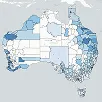

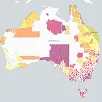


The total adult population (15 years or older) of Greenwich 2065 NSW is 4,571, with a median age of 42. Of those, 49.99% are married, 9.93% are divorced or separated, 34.68% are single and 5.38% are widowed.
The average household size is 2.4 people per dwelling, and the median household monthly income is estimated to be $16,136. The median monthly mortgage repayment for households in this suburb is $3,000 which is 18.59% of their earnings.
Source: ABS Census Data (2021)