
Wallsend, NSW 2287

Good to know:
Wallsend, NSW 2287, is a bustling suburb located approximately 11 kilometres west of Newcastle's CBD. Known for its rich coal mining history, Wallsend seamlessly blends historical charm with modern amenities. The suburb features a variety of shops, cafes, and services, particularly centred around the Wallsend Village Shopping Centre. It offers several parks and green spaces, including Federal Park, ideal for family outings and leisure activities. Schools, both primary and secondary, make it a family-friendly locale. Public transport is well-serviced, with easy access to major roads connecting to Newcastle and surrounding areas.
Read More
Wallsend NSW 2287 houses: the property market shows tight supply and a healthy rental backdrop, with a typical price of $954,095, median rent $667/week and a gross yield of 3.64%. Wallsend NSW 2287 property investment is supported by low stock and inventory (SoM 0.26%, 1.23 months), short selling times (DOM 21 days) and a vacancy rate of 0.78% — all signals that favour landlords. House prices in Wallsend sit just under the million-dollar mark and yield is above a common 3% threshold, but affordability is a standout risk (years to own 51), which matters for buyer demand and future capital growth.
Property market outlook
Supply is the strongest near-term signal: SoM at 0.26% and inventory of 1.23 months indicate tight established supply for houses, which historically supports price stability or modest growth when demand persists. Demand indicators are generally positive for rental investors — vacancy at 0.78% is well into the "opportune" range and Days on Market at 21 days indicates active buyer interest. The Building Approvals Ratio of 0.44% is neutral: it does not point to a material surge in new housing stock that would ease supply soon.
Affordability is the dominant structural constraint. A Years-to-Own estimate of 51 years is materially above the 30-year threshold and suggests owner-occupier affordability pressure; that limits the effective buyer pool and can cap upside in house prices over time unless incomes or lending conditions improve. IRSAD at 950 sits on the borderline between neutral and opportune, implying middle-of-market socio-economic characteristics — not a high-income outlier but not disadvantaged either. Overall, the suburb is positioned as a tight supply market that favours rental stability and modest capital growth, but affordability will moderate any rapid price acceleration.
Pros
- Tight supply for houses: SoM 0.26% and Inventory 1.23 months support price resilience.
- Strong rental market: Vacancy 0.78% and median rent $667/wk underpin rental security and low rental turnover risk.
- Short selling times: DOM 21 days signals ongoing buyer demand and reasonably competitive selling conditions.
- Yield above common floor: Gross yield 3.64% exceeds a typical 3% minimum, offering acceptable income for many investors.
- Data confidence high: Confidence flag is High, improving trust in the snapshot metrics.
Cons
- Very poor affordability: 51 years to own is an extreme reading and a clear limit on owner-occupier demand and first-home buyer activity.
- Earnings / socio-economic mix only borderline: IRSAD 950 is not strongly opportune, which may temper long-term premium growth relative to higher-SES suburbs.
- Neutral development activity: Building Approvals Ratio 0.44% suggests no meaningful pipeline to increase supply but also no infrastructure-led uplift in the short term.
- Modest buy-side search interest: Buy Search Index 4 is neutral — not a standout growth signal from demand-side online behaviour.
- Clearance Rate 0% (neutral) indicates auctions are not a reliable market signal locally, limiting certain demand transparency.
Investment strategies
- Core buy-and-hold (houses): Given tight supply and low vacancy, purchasing an established house under $1.0m to sit for medium–long term suits investors seeking rental income plus steady capital preservation rather than rapid capital gains.
- Cashflow support via rent optimisation: With vacancy sub-1%, focus on modest interior upgrades, targeted landscaping and professional property management to push rent increases within market allowances and improve net cashflow.
- Value-add where possible: Small refurbishments (kitchen, bathrooms, floorcoverings) that increase weekly rent by $20–$40 can materially lift gross yield and total RoI given the typical price point.
- Entry timing and exit planning: Monitor DOM and SoM for signs of softening before buying; use hold periods of 5–10+ years to ride out affordability cycles. Given years-to-own dynamics, expect longer hold horizons for capital growth realisation.
- Risk management: Given affordability constraints, avoid aggressive gearing aimed at short-term flips. Prioritise loan structures and stress-testing against rate rises and rental downturns.
Is Wallsend NSW 2287 a good suburb to invest in?
Wallsend NSW 2287 (houses) is a solid option for investors prioritising rental stability and low vacancy risk. Tight supply and short days-on-market support price resilience and reliable tenancy performance. However, the suburb is not a high-growth, high-yield outlier: yield is modest and the affordability metric (51 years) is an important headwind that will mute rapid capital appreciation driven by owner-occupier demand. In short: good for conservative, long-term buy-and-hold investors seeking consistent rental returns and capital preservation; less attractive for investors seeking rapid capital appreciation or high immediate cash yields. Comparative, relative analysis against neighbouring suburbs and different dwelling types is advisable before committing.
About HtAG Analytics Data
Base metrics reported here (sample set) include Typical Price, Median Rent, Sales and Rentals count, % Change over multiple periods, Gross Rental Yield, Capital Growth projections (CG and CG Low/High), Total RoI, Rent Increase projection, Volatility Index, Confidence, Relative Composite Score™, Stock on Market (SoM) and SoM%, Inventory (months), Building Approvals and BA Ratio, Hold Period, Days on Market, Discounting, Vacancy Rate and Vacancies, DoRM where applicable, Buy & Rent Search Index, Auction Clearance Rate, IRSAD, RO Ratio, UH Ratio, UHV Ratio (units only), Years to Own (Affordability), Growth Rate Cycle (GRC) and supplementary metrics such as Population, Estimated Dwellings, School Rank, Non-residential Approvals per Capita and Distance to nearest CBD. There are more metrics available on HTAG suburb dashboards; the list above is the base set typically used for initial market shortlisting.
HTAG’s approach is to capture both current market conditions and historical behaviour to enable relative market analysis that is tightly aligned with the point of purchase. For Wallsend, that means metrics are curated and modelled to reflect local sales cadence, rental dynamics and supply signals rather than broad-brush public feeds. Other data providers may emphasise public macro trends and media narratives; HTAG’s measurements are engineered to compare suburbs against one another at the granular level investors and buyers’ agents use when deciding where to buy.
Finally, note that the table above provides a snapshot of value metrics for Wallsend houses but does not substitute for trend analysis — metric trajectories and the relative importance of individual indicators vary by strategy and investor profile. Some metrics (for example vacancy and inventory) will matter more for a cashflow investor, whereas IRSAD, affordability and long-term capital growth projections weigh more for capital-growth strategies. HTAG specialises in shortlisting and relative analysis tailored to specific budgets, borrowing capacity, risk appetite and timeframes rather than one-size-fits-all rankings. For serious investors and buyer’s agents, HTAG recommends performing relative comparisons across a short-list of suburbs that match your criteria.
Updated: 1 May 2026
Read Less
Quick Area Stats

Dwellings

Population

EDI

Bushfire Risk Index

Flood Risk Index
Education & Infrastructure
Sign Up to Access

School Rank

Infra. Spend
Market Trends
Essential metrics effectively streamline the process of identifying markets that match your financial situation and investment objectives. Typical Price, Indicative Yield and Total ROI provide a swift means to shortlist areas that resonate with what you’re seeking and can afford. These metrics also serve as valuable general trend indicators, allowing you to visualise transaction volumes and dynamics of change.
1M
1Q
1Y
3Y
5Y
7Y
10Y
1M
1Q
1Y
3Y
5Y
7Y
10Y

1M
1Q
1Y
3Y
5Y
7Y
10Y
The Growth Rate Cycle (GRC) is a metric used to analyse the year-on-year change in property values, providing insights into the growth cycle of a particular area. It uses the “typical price” metric to gauge property values more accurately than median prices, and includes both actual and projected data for the current year.

Fundamental metrics play a vital role in providing a comprehensive analysis of the socio-economic environment within a specific suburb or region. Additionally, the Return on Investment (ROI) and Volatility Index are crucial metrics that aid in evaluating the prospective profitability and the level of risk or stability in the market.
Socio-economics
Sign Up to Access

IRSAD

Renter to Owner

Units to Houses
Projections
Sign Up to Access

Projected Annual ROI

Volatility Index
Quick Area Stats
Sign Up to Access

Annual Sales Volume

Annual Rentals Volume



Stock on Market

Building Approvals

Inventory

Hold Period




Supply metrics are crucial in gauging both the existing volumes of real estate listed for sale and the properties anticipated to enter the market soon. A diminished supply could signal opportunities for price appreciation, particularly when there’s corresponding buyer demand to buoy the market. The Stock on Market and Inventory level metrics (current values) are presented as a 3-month rolling average of monthly data shown in the charts. This means the last 3 months of data are averaged. The BA Ratio represents the proportion of building approvals over the latest 12 months relative to the total dwellings in the area.

Days on Market

Search Index

Vacancy Rate

Clearance Rate




Demand metrics underscore the level of interest that potential property buyers or tenants have in a specific suburb or locality. When demand outstrips the available supply, or if the supply fails to meet the intensity of buyer/renter interest, there’s a potential for prices to climb, underscoring the pivotal relationship between demand dynamics and property value trends. The Days on Market and Clearance Rate metrics (current values) are presented as a 3-month rolling average of monthly data shown in the charts. This means the last 3 months of data are averaged.
We invite you to contribute to the conversation by sharing your thoughts or raising questions about this market in the comment section below.
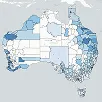

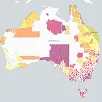


The total adult population (15 years or older) of Wallsend 2287 NSW is 11,189, with a median age of 39. Of those, 37.13% are married, 13.97% are divorced or separated, 40.91% are single and 7.98% are widowed.
The average household size is 2.3 people per dwelling, and the median household monthly income is estimated to be $7,332. The median monthly mortgage repayment for households in this suburb is $1,733 which is 23.64% of their earnings.
Source: ABS Census Data (2021)