
Griffith, NSW 2680

Good to know:
Griffith, located in New South Wales with the postcode 2680, is a vibrant regional city known for its rich agricultural heritage. Established in 1916 and designed by Walter Burley Griffin, the city is a notable part of the Murrumbidgee Irrigation Area. Griffith is a major centre for wine production, hosting several renowned wineries. The city boasts multicultural influences, highlighted during the annual Griffith Italian Festival. It offers a mix of amenities including schools, parks, and shops. Nearby natural attractions like Cocoparra National Park provide outdoor recreational opportunities.
Read More
Griffith NSW 2680 shows a typical house price of $626,958, median rent of $523 per week and a gross yield of 4.34% — clear inputs for assessing the Griffith NSW 2680 property market. House prices in Griffith sit at modest regional levels with rental returns above commonly cited minimums, while affordability (35 years to own) is stretched relative to major-city benchmarks. This snapshot combines supply-side tightness, neutral demand signals and a high-confidence data read for houses.
Property market outlook
The Griffith NSW 2680 house market is characterised by tight listed supply and balanced-to-strong transactional activity. Stock on Market (SoM) at 0.16% is very low, indicating limited established-supply and a structural support for prices if underlying demand persists. Days on Market of 23 days points to faster turnarounds and a relatively active buyer market for houses. Inventory at 2.67 months is in the balanced range — enough choice for buyers but not a glut. Vacancy of 1.23% sits in the balanced zone, so rental risk is not elevated, and the reported yield of 4.34% is healthy for regional houses and attractive for income-focused investors.
Affordability is a notable constraint: 35 years to own (above the 30-year threshold) signals that local incomes relative to prices create pressure on long-term owner-occupier accessibility and could limit rapid capital appreciation compared with more affordable or higher-growth markets. IRSAD at 943 places Griffith in the neutral socio‑economic band; it is not low enough to signal systemic disadvantage but not in the upper decile that often correlates with premium capital growth. Renter/Owner ratio of 37% is neutral — a balanced mix of tenants and owners — and the low Units/Houses ratio (7%) is opportune for house buyers because it reduces competition from higher-density product.
Confidence in the house-level data is High, giving more weight to these indicators for shortlisting and comparative analysis.
Pros
- Yield 4.34%: above the commonly referenced 3% threshold, supporting cash-flow and yield-focused strategies.
- Very low Stock on Market (0.16%): reduced established supply is supportive of price stability and scarcity premium.
- Fast sales pace: Days on Market 23 days indicates active buyer engagement for houses.
- Low unit share (Units/Houses 7%): less risk of over-supply from apartments; favourable if targeting houses.
- High data confidence: reliable monthly sales underpin the metrics for houses.
Cons
- Affordability stretched at 35 years: longer servicing timeline could dampen owner-occupier demand and slow long-term capital gains.
- Neutral inventory and vacancy: while not problematic, neither signal a strong-market overheating that typically precedes rapid price rises.
- Renter/Owner ratio neutral (37%): a balanced rental market limits tenant-driven upside seen in high renter-share areas.
- Building Approvals Ratio neutral (0.74%): limited pipeline but not so low as to guarantee scarcity-driven growth.
- Buy Search Index only neutral: demand signals from online search activity are not elevated, which constrains near-term overheating.
Investment strategies
- Income-first buy-and-hold: Griffith houses deliver above-average regional yields (4.34%) suitable for investors prioritising cash flow. Target conservative gearing and stress-test for higher rates given affordability pressures.
- Renovation-for-rent uplift: with balanced vacancy and reasonable demand, modest value-add refurbishments (kitchen/bath updates, energy efficiency) can lift rents and improve yield without relying on speculative capital growth.
- Buy with medium-term hold (5–10 years): hold-period data (7.28 years) and low supply support a medium-term strategy where rental income is primary and capital growth is steady rather than explosive.
- Selective location picking within Griffith: because unit supply is low, focus on established detached housing pockets and properties with broad tenant appeal (3+ bedroom family homes) to reduce vacancy risk.
- Monitor affordability and local economic drivers: given the 35-year affordability metric, align acquisitions with employers, infrastructure or agribusiness cycles that support household incomes, and be ready to adjust cash-flow expectations if local conditions soften.
Is Griffith NSW 2680 a good suburb to invest in?
Griffith NSW 2680 is a suitable market for investors seeking regional house cash flow with lower supply risk. The typical house price (~$626,958), median rent ($523pw) and 4.34% gross yield make it appealing for income-oriented portfolios and buyers agents shortlisting dependable regional rental markets. It is less compelling for investors pursuing rapid capital appreciation since affordability is stretched (35 years) and demand indicators are neutral rather than exuberant. In short: good for conservative, yield-focused investors and portfolio diversification into regional houses; less attractive for high‑growth/speculative strategies unless paired with local fundamentals or active value-add execution.
About HtAG Analytics Data
HtAG reports a base set of suburb metrics (reported per dwelling type where applicable) including: Typical Price, Median Rent, Sales, Rentals, Δ Change (periodic % change), Gross Rental Yield, Capital Growth (annualised estimate with low/high bounds), Total RoI (Yield + Capital Growth), Rent Increase (projected per annum), Volatility Index (forecast error using MAPE), Confidence (data accuracy), and Relative Composite Score™. There are additional metrics in our dashboards (supply/demand ratios, SoM%, Inventory months, Building Approvals ratios, Hold Period, IRSAD, Ro Ratio, UH Ratio, Vacancy, Days on Market, Buy/Rent Search Index, Auction Clearance Rates, population and infrastructure proxies) — the list above is the base set shown routinely.
HtAG’s methodology is designed to capture both current market conditions and historical trends to enable relative market analysis at or near the point of purchase. That means our metrics combine timely listings and sales signals with longer-term trend models so users can compare suburbs on factors that matter for transaction-level decisions. While other providers (for example those focusing primarily on public data feeds and broad trend narratives) may generate useful macro views, HtAG’s metrics are curated and measured with the explicit aim of shortlisting and comparing markets for individual investor criteria — the same metric names can therefore have meaningful methodological differences versus other sources.
Finally, the snapshot above describes current value-levels for Griffith houses but does not replace trend analysis: metric trajectories, weighting of specific indicators and investor timeframes materially change the investment case. Some metrics matter more for certain strategies (e.g. vacancy and yield for cash‑flow investors; IRSAD and capital growth projections for long-term growth buyers). Market selection always depends on budget, borrowing capacity, risk appetite and hold/refinance timelines. HtAG’s strength is in shortlisting markets against bespoke criteria rather than offering one-size-fits-all recommendations.
Updated: 1 May 2026
Read Less
Quick Area Stats

Dwellings

Population

EDI

Bushfire Risk Index

Flood Risk Index
Education & Infrastructure
Sign Up to Access

School Rank

Infra. Spend
Market Trends
Essential metrics effectively streamline the process of identifying markets that match your financial situation and investment objectives. Typical Price, Indicative Yield and Total ROI provide a swift means to shortlist areas that resonate with what you’re seeking and can afford. These metrics also serve as valuable general trend indicators, allowing you to visualise transaction volumes and dynamics of change.
1M
1Q
1Y
3Y
5Y
7Y
10Y
1M
1Q
1Y
3Y
5Y
7Y
10Y

1M
1Q
1Y
3Y
5Y
7Y
10Y
The Growth Rate Cycle (GRC) is a metric used to analyse the year-on-year change in property values, providing insights into the growth cycle of a particular area. It uses the “typical price” metric to gauge property values more accurately than median prices, and includes both actual and projected data for the current year.

Fundamental metrics play a vital role in providing a comprehensive analysis of the socio-economic environment within a specific suburb or region. Additionally, the Return on Investment (ROI) and Volatility Index are crucial metrics that aid in evaluating the prospective profitability and the level of risk or stability in the market.
Socio-economics
Sign Up to Access

IRSAD

Renter to Owner

Units to Houses
Projections
Sign Up to Access

Projected Annual ROI

Volatility Index
Quick Area Stats
Sign Up to Access

Annual Sales Volume

Annual Rentals Volume



Stock on Market

Building Approvals

Inventory

Hold Period




Supply metrics are crucial in gauging both the existing volumes of real estate listed for sale and the properties anticipated to enter the market soon. A diminished supply could signal opportunities for price appreciation, particularly when there’s corresponding buyer demand to buoy the market. The Stock on Market and Inventory level metrics (current values) are presented as a 3-month rolling average of monthly data shown in the charts. This means the last 3 months of data are averaged. The BA Ratio represents the proportion of building approvals over the latest 12 months relative to the total dwellings in the area.

Days on Market

Search Index

Vacancy Rate

Clearance Rate




Demand metrics underscore the level of interest that potential property buyers or tenants have in a specific suburb or locality. When demand outstrips the available supply, or if the supply fails to meet the intensity of buyer/renter interest, there’s a potential for prices to climb, underscoring the pivotal relationship between demand dynamics and property value trends. The Days on Market and Clearance Rate metrics (current values) are presented as a 3-month rolling average of monthly data shown in the charts. This means the last 3 months of data are averaged.
We invite you to contribute to the conversation by sharing your thoughts or raising questions about this market in the comment section below.
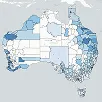

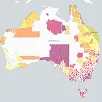


The total adult population (15 years or older) of Griffith 2680 NSW is 15,722, with a median age of 36. Of those, 49.49% are married, 9.65% are divorced or separated, 34.40% are single and 6.40% are widowed.
The average household size is 2.6 people per dwelling, and the median household monthly income is estimated to be $7,804. The median monthly mortgage repayment for households in this suburb is $1,483 which is 19.00% of their earnings.
Source: ABS Census Data (2021)