
Menangle Park, NSW 2563

Good to know:
Menangle Park is a serene, semi-rural suburb in New South Wales, located within the postcode 2563. Situated in the Macarthur Region, it is approximately 56 kilometres southwest of Sydney's CBD. Known for its lush landscapes and equestrian facilities, including the renowned Menangle Park Paceway, the suburb offers a tranquil lifestyle. Its semi-rural character combines with increasing residential development, making it attractive to those seeking a balance between country charm and suburban convenience. The suburb is well-connected by road and rail, with Menangle Park railway station providing access to the South Coast and Southern Highlands.
Read More
Menangle Park NSW 2563 shows a high-priced house market with a typical house price of $1,410,696, median rent of $800 per week and a gross yield of 2.96% — below the commonly cited 3% threshold. These property market data point to a market driven more by capital values than rental income; confidence in the underlying data is Medium.
Property market outlook
Menangle Park NSW 2563 house market combines strong socio-economic indicators with several supply and affordability headwinds. IRSAD of 958 sits in the opportune band, supporting long-term price resilience for higher-value stock. However, affordability at an estimated 56 years is an extreme outlier and signals owner-occupier purchase power is very stretched; this tends to leave price discovery and transaction activity reliant on higher-income buyers or investors. Supply metrics are tilted to caution: Inventory at 4.86 months and a Building Approvals Ratio of 11.52% are both in the high-supply/unfavourable range and point to meaningful near-term additions to stock. The market is not illiquid — stock on market is neutral at 0.57% and days on market for houses is 77 (neutral) — but demand indicators are soft: Buy Search Index = 2 (below average) and renter/owner ratio 48% (unfavourable) indicate a higher share of renters and weaker buying enquiry. Vacancy (2.37%) remains in the balanced zone. Overall, expect subdued transactional momentum and pressure on short-term growth unless new-demand drivers emerge; the market currently favours selective, long-horizon capital strategies over yield plays.
Pros
- Strong socioeconomic base: IRSAD 958 (opportune) supports the premium positioning of house prices and reduces downside relative to lower-SES suburbs.
- Low unit exposure: Units/Houses ratio 0.0% (opportune) — the stock is overwhelmingly houses, which reduces apartment-driven oversupply risks in the immediate suburb.
- Vacancy is balanced: Vacancy rate 2.37% suggests rental market absorption remains adequate for existing stock.
- Neutral days on market (77) and modest stock on market (0.57%) allow room for negotiation without wholesale market stagnation.
- Medium data confidence: sufficient sales activity for meaningful insight, though not as strong as high-confidence suburbs.
Cons
- Very low yield: Gross rental yield 2.96% sits below the 3% benchmark — not attractive for investors needing positive cash flow.
- Severely stretched affordability: 56 years to own is an extreme value and signals limited owner-occupier demand and higher sensitivity to interest rate shifts.
- Heavy pipeline risk: Building Approvals Ratio 11.52% is very high — significant upcoming supply that will weigh on price growth and rental tightness.
- Elevated inventory and short hold periods: Inventory 4.86 months and hold period 4.03 years indicate abundant available stock and frequent turnover — both are unfavourable for capital growth sustainability.
- Weak buyer interest signals: Buy Search Index = 2 and renter/owner ratio 48% indicate lower demand from purchase-side searches and a high proportion of renters, which can increase market volatility.
Investment strategies
- Long-term capital selective buys: Given the low yield and high affordability barrier, Menangle Park houses are most suitable for investors targeting long-term capital growth (5–10+ years), with strict attention to micro-location (larger lots, elevated sites, parcels that can be subdivided later).
- Avoid yield-reliant strategies: Yield is below 3%; investors dependent on positive cash flow should look elsewhere or consider higher-leverage, tax-sensitive approaches only after stress-testing serviceability.
- Target scarcity and fundamentals: Seek properties insulated from the high approvals pipeline — older established lots with planning constraints, corner blocks, or homes with redevelopment potential that require higher replacement cost can hold value better.
- Negotiation and hold-capital: Use soft demand signals (Buy Search Index low, days on market neutral) to negotiate price and structure longer hold periods; price flexibility can be obtained where approvals-driven competition exists.
- Due diligence on new supply: If considering new developments, model absorption carefully — the 11.52% BA Ratio implies many new builds will enter the market; avoid buying into phases without confirmed settlement/sales velocity.
- Buyers agents: Leverage the opportune IRSAD to justify retention strategies for owner-occupier clients, but price for pipeline risk and insist on development and BA transparency when negotiating.
Is Menangle Park NSW 2563 a good suburb to invest in?
Menangle Park NSW 2563 is not a straightforward buy for yield investors given sub-3% gross yields and stretched affordability. The suburb carries attributes attractive to long-horizon capital investors — an opportune IRSAD, predominance of houses and balanced vacancy — but these are offset by a significant near-term supply surge (high BA Ratio), elevated inventory and short hold periods. For buyers seeking capital growth with tolerance for supply-driven volatility and who can secure assets at the right price, it can be a tactical holding. For income-focused investors or those with limited holding flexibility, Menangle Park is likely not the optimal pick; neighbouring markets with stronger yields or lower upcoming supply should be considered in a comparative shortlist. Monitor building approval flows and rent-growth trends before committing.
About HtAG Analytics Data
Base metrics used in this suburb snapshot (not exhaustive): Typical Price (improved median-level value), Median Rent (rolling-year; $/week), Sales and Rentals (monthly online counts), Δ Change (period % change), Yield (gross rental yield), Capital Growth (annualised estimate from HtAG ML), Total RoI (Yield + Capital Growth), Rent Increase (annualised projection), Volatility Index (MAPE-based), Confidence (data accuracy from sales volume), Relative Composite Score. Supply and demand metrics include Stock on Market (SoM and SoM%), Inventory (months of supply), Building Approvals & BA Ratio, Hold Period, Days on Market, Discounting, Vacancy Rate, Buy & Rent Search Index, Auction Clearance Rate, plus contextual metrics such as IRSAD, RO Ratio, UH Ratio, Years to Own, School Rank, Population and Estimated Dwellings.
HtAG’s methodology is designed to capture both current market conditions and historical trends to enable relative, point-of-purchase analysis. In the Menangle Park context that means our metrics reflect recent trading, rental behaviour and development activity at a suburb level rather than relying solely on higher-level public feeds. While other providers often surface broad public datasets to describe statewide or national trends, HtAG focuses on curated suburb-level measurements and modelling — the metric names may look similar but our curation, normalisation and localisation steps are targeted to assist buyers, investors and agents making actual purchase decisions.
The snapshot above is a present-value view of key metrics for Menangle Park houses and does not substitute for trend analysis: metric trajectories (e.g., rising approvals, falling yields, rent momentum) materially affect decisions. Some metrics carry more weight depending on strategy — for example yield and vacancy matter most for cash-flow investors, while IRSAD and long-term capital growth models are higher priority for long-hold buyers. Different investors and buyers agents will therefore shortlist different suburbs based on budgets, borrowing power, risk appetite and intended hold/refinance timelines. HTAG excels at producing comparative shortlists tailored to those criteria rather than one-size-fits-all recommendations. For serious acquisition work, perform a relative analysis across candidate suburbs that align with your strategy and time horizon.
Updated: 1 Jun 2026
Read Less
Quick Area Stats

Dwellings

Population

EDI

Bushfire Risk Index

Flood Risk Index
Education & Infrastructure
Sign Up to Access

School Rank

Infra. Spend
Market Trends
Essential metrics effectively streamline the process of identifying markets that match your financial situation and investment objectives. Typical Price, Indicative Yield and Total ROI provide a swift means to shortlist areas that resonate with what you’re seeking and can afford. These metrics also serve as valuable general trend indicators, allowing you to visualise transaction volumes and dynamics of change.
1M
1Q
1Y
3Y
5Y
7Y
10Y
1M
1Q
1Y
3Y
5Y
7Y
10Y

1M
1Q
1Y
3Y
5Y
7Y
10Y
The Growth Rate Cycle (GRC) is a metric used to analyse the year-on-year change in property values, providing insights into the growth cycle of a particular area. It uses the “typical price” metric to gauge property values more accurately than median prices, and includes both actual and projected data for the current year.

Fundamental metrics play a vital role in providing a comprehensive analysis of the socio-economic environment within a specific suburb or region. Additionally, the Return on Investment (ROI) and Volatility Index are crucial metrics that aid in evaluating the prospective profitability and the level of risk or stability in the market.
Socio-economics
Sign Up to Access

IRSAD

Renter to Owner

Units to Houses
Projections
Sign Up to Access

Projected Annual ROI

Volatility Index
Quick Area Stats
Sign Up to Access

Annual Sales Volume

Annual Rentals Volume



Stock on Market

Building Approvals

Inventory

Hold Period




Supply metrics are crucial in gauging both the existing volumes of real estate listed for sale and the properties anticipated to enter the market soon. A diminished supply could signal opportunities for price appreciation, particularly when there’s corresponding buyer demand to buoy the market. The Stock on Market and Inventory level metrics (current values) are presented as a 3-month rolling average of monthly data shown in the charts. This means the last 3 months of data are averaged. The BA Ratio represents the proportion of building approvals over the latest 12 months relative to the total dwellings in the area.

Days on Market

Search Index

Vacancy Rate

Clearance Rate




Demand metrics underscore the level of interest that potential property buyers or tenants have in a specific suburb or locality. When demand outstrips the available supply, or if the supply fails to meet the intensity of buyer/renter interest, there’s a potential for prices to climb, underscoring the pivotal relationship between demand dynamics and property value trends. The Days on Market and Clearance Rate metrics (current values) are presented as a 3-month rolling average of monthly data shown in the charts. This means the last 3 months of data are averaged.
We invite you to contribute to the conversation by sharing your thoughts or raising questions about this market in the comment section below.
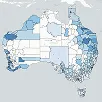

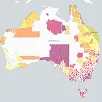


The total adult population (15 years or older) of Menangle Park 2563 NSW is 185, with a median age of 39. Of those, 29.73% are married, 11.89% are divorced or separated, 54.05% are single and 5.41% are widowed.
The average household size is 2.9 people per dwelling, and the median household monthly income is estimated to be $8,164. The median monthly mortgage repayment for households in this suburb is $1,712 which is 20.97% of their earnings.
Source: ABS Census Data (2021)