
Bringelly, NSW 2556

Good to know:
Bringelly, NSW 2556, is a suburb situated in the south-western part of Sydney. Known for its semi-rural charm, it offers a blend of agricultural land and residential spaces. The suburb is characterised by expansive properties, often featuring acreages, making it an appealing option for those seeking a quieter, more spacious lifestyle. Bringelly is experiencing growth due to its proximity to the future Western Sydney Airport at Badgerys Creek, promising significant infrastructure developments. Local amenities include schools and community centres, while the larger shopping and dining options are a short drive away in nearby suburbs.
Read More
Bringelly NSW 2556 has a high-end house market where the typical house price is $2,980,028, median rent sits at $784 per week and gross rental yield is very low at 1.37%. This Bringelly NSW 2556 property market shows clear signs of being an affluence-driven, capital-growth oriented location rather than a cashflow suburb — house prices in Bringelly are elevated relative to local rents, and affordability is extremely stretched (182 years by the HTAG affordability model).
Property market outlook
Bringelly houses trade at premium values supported by an IRSAD of 1008 (affluent). Short-term market signals are mixed: active listings as a proportion of total stock are low (SoM% 0.3% — tight immediate supply), and properties are selling quickly (DOM 24 days), which supports price resilience. However, inventory sits at 9.6 months (high) and the Building Approvals Ratio is extremely elevated (89.08% — a sign of a large pipeline of new supply), both of which point to medium-term downside pressure on both prices and rents if approvals translate into completed stock. Vacancy at 1.98% is in the balanced range, and the renter/share ratio of 21% suggests owner-occupiers dominate demand. In short: current demand metrics and socio-economic composition favour continued high capital values, but very high pipeline approvals and long inventory indicate potential softening risk that investors must monitor closely.
Pros
- High socio‑economic position (IRSAD 1008) underpins strong buyer willingness to pay and long‑term capital growth prospects.
- Very low unit penetration (Units/Houses 1.0%) means the area is house-dominant — suitable for investors targeting detached housing stock.
- Low Stock on Market (0.3%) and short Days on Market (24 days) indicate immediate market liquidity and a readiness of buyers to transact at prevailing prices.
- Vacancy rate is balanced (1.98%) so rental demand currently matches supply.
- Confidence of data is Medium — enough transaction activity to form actionable signals for suburb-level analysis.
Cons
- Extremely low gross yield (1.37%) makes Bringelly houses poor for yield-first strategies; rental income will not cover investment servicing without significant owner subsidy.
- Affordability is severely stretched (182 years) — this restricts the pool of marginal owner-occupier buyers and increases sensitivity to interest-rate rises or income shocks.
- Inventory (9.6 months) is in the high-supply band, increasing downside risk for near-term price growth and rent increases.
- Building Approvals Ratio at 89.08% is unusually high and indicates a substantial development pipeline that could erode scarcity once completed.
- Clearance Rate 0.0% and Buy Search Index 3 are neutral; absence of auction evidence makes price-discovery less transparent.
- Renter/Owner ratio of 21% (neutral) implies limited tenant pool relative to more rental-dense suburbs — any investor relying on tenant demand should be selective.
Investment strategies
- Capital growth, long-hold play: Bringelly is primarily a capital-appreciation market. Investors with long horizons and strong borrowing capacity who do not require positive cashflow may target high-quality, large-house stock or land parcels in tightly located pockets expecting appreciation over a multi-year horizon.
- Avoid yield-dependent buys: Given the sub‑3% yield, avoid strategies that rely on immediate positive cashflow or short-term rental returns. Expect to plug the cashflow gap or use negative gearing where tax strategy permits.
- Selectivity on new‑build exposure: The oversized approvals pipeline increases supply risk. For developers or off‑the‑plan buyers, perform micro-market due diligence (precise street, lot and timing) to avoid clusters of new completions that compete directly with your asset.
- Focus on scarcity and amenity: Prioritise properties with locational advantages (near proposed infrastructure, better lot positions, larger land parcels) that are less substitutable when new stock comes online.
- Negotiation and timing: Use the elevated inventory and approvals data to negotiate pricing or settlement terms; consider staggered acquisition to average entry risk as new supply clears.
- Hedging and exit planning: Plan for longer hold periods and slower refinance timelines if interest rates or servicing costs rise; have exit triggers tied to supply absorption rates and local sales velocity.
- Complementary portfolio allocation: Use Bringelly as a smaller allocation in a diversified portfolio where capital growth exposure is desired but liquidity and cashflow are managed elsewhere.
Is Bringelly NSW 2556 a good suburb to invest in?
Bringelly NSW 2556 is a good fit for investors targeting long-term capital growth in a high‑socioeconomic, house-dominant suburb who can tolerate very low rental yields and extended affordability stress. It is not suited to investors seeking immediate positive cashflow or short-term value-add flips without detailed planning because rental returns are weak and a large development pipeline increases short‑to‑medium term supply risk. For professional buyers agents and experienced investors, Bringelly can be considered selectively — prioritise premium land or off-market opportunities and monitor approvals and months‑of‑supply closely before committing.
About HtAG Analytics Data
HtAG reports a base set of suburb metrics for each dwelling type: Typical Price, Median Rent, Sales and Rentals activity, Change (% Δ) over multiple periods, Gross Rental Yield, Capital Growth (annualised with low/high bounds), Total RoI (Yield + CG), Rent Increase forecast, Volatility Index, Confidence (data accuracy proxy), and the Relative Composite Score™. Additional important measures include IRSAD, Renter/Owner ratio, Units/Houses ratio, Years to Own (affordability), Growth Rate Cycle (GRC), Stock on Market (SoM) and SoM%, Inventory (months of supply), Building Approvals and BA Ratio, Hold Period, Days on Market, Discounting, Vacancy Rate, Buy & Rent Search Indices, Auction Clearance Rates, Population, Estimated Dwellings, School Rank and infrastructure proxies. There are more specialised metrics on HTAG dashboards; the list above outlines the primary indicators we use for suburb comparisons.
The guiding principle behind HTAG metrics is to capture both current market conditions and historical trends to support relative market analysis at or near the point of purchase. HTAG’s methodology emphasises suburb-level comparability and decision-usefulness for investors and buyer’s agents; providers that publish broader public datasets (for example, those focused on media narratives) typically present different data treatment and scope. Although metric names may be similar across providers, HTAG applies distinct data curation and measurement techniques to better reflect nuances relevant to purchase decisions in a given suburb.
Note also that the snapshot metrics above describe current value signals but do not reflect metric trends or their relative importance over time — both of which can materially change an investment outcome. Some metrics carry more weight than others depending on strategy, and different investors will arrive at different suburb selections because of varied budgets, borrowing capacity, risk tolerance and intended hold/exit horizons. HTAG is designed to shortlist and rank markets against individual criteria rather than offering one-size-fits-all recommendations; for transactional decisions in Bringelly NSW 2556 we recommend running a relative analysis against comparable suburbs that align with your specific investment objectives.
Updated: 1 May 2026
Read Less
Quick Area Stats

Dwellings

Population

EDI

Bushfire Risk Index

Flood Risk Index
Education & Infrastructure
Sign Up to Access

School Rank

Infra. Spend
Market Trends
Essential metrics effectively streamline the process of identifying markets that match your financial situation and investment objectives. Typical Price, Indicative Yield and Total ROI provide a swift means to shortlist areas that resonate with what you’re seeking and can afford. These metrics also serve as valuable general trend indicators, allowing you to visualise transaction volumes and dynamics of change.
1M
1Q
1Y
3Y
5Y
7Y
10Y
1M
1Q
1Y
3Y
5Y
7Y
10Y

1M
1Q
1Y
3Y
5Y
7Y
10Y
The Growth Rate Cycle (GRC) is a metric used to analyse the year-on-year change in property values, providing insights into the growth cycle of a particular area. It uses the “typical price” metric to gauge property values more accurately than median prices, and includes both actual and projected data for the current year.

Fundamental metrics play a vital role in providing a comprehensive analysis of the socio-economic environment within a specific suburb or region. Additionally, the Return on Investment (ROI) and Volatility Index are crucial metrics that aid in evaluating the prospective profitability and the level of risk or stability in the market.
Socio-economics
Sign Up to Access

IRSAD

Renter to Owner

Units to Houses
Projections
Sign Up to Access

Projected Annual ROI

Volatility Index
Quick Area Stats
Sign Up to Access

Annual Sales Volume

Annual Rentals Volume



Stock on Market

Building Approvals

Inventory

Hold Period




Supply metrics are crucial in gauging both the existing volumes of real estate listed for sale and the properties anticipated to enter the market soon. A diminished supply could signal opportunities for price appreciation, particularly when there’s corresponding buyer demand to buoy the market. The Stock on Market and Inventory level metrics (current values) are presented as a 3-month rolling average of monthly data shown in the charts. This means the last 3 months of data are averaged. The BA Ratio represents the proportion of building approvals over the latest 12 months relative to the total dwellings in the area.

Days on Market

Search Index

Vacancy Rate

Clearance Rate




Demand metrics underscore the level of interest that potential property buyers or tenants have in a specific suburb or locality. When demand outstrips the available supply, or if the supply fails to meet the intensity of buyer/renter interest, there’s a potential for prices to climb, underscoring the pivotal relationship between demand dynamics and property value trends. The Days on Market and Clearance Rate metrics (current values) are presented as a 3-month rolling average of monthly data shown in the charts. This means the last 3 months of data are averaged.
We invite you to contribute to the conversation by sharing your thoughts or raising questions about this market in the comment section below.
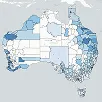

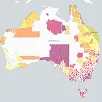


The total adult population (15 years or older) of Bringelly 2556 NSW is 2,042, with a median age of 42. Of those, 52.55% are married, 9.55% are divorced or separated, 34.08% are single and 3.67% are widowed.
The average household size is 3.2 people per dwelling, and the median household monthly income is estimated to be $7,648. The median monthly mortgage repayment for households in this suburb is $2,167 which is 28.33% of their earnings.
Source: ABS Census Data (2021)