
Ulladulla, NSW 2539

Good to know:
Ulladulla, NSW 2539, is a charming coastal town situated in the South Coast region of New South Wales. Known for its picturesque harbour, the town is a popular destination for fishing, boating, and seafood enthusiasts. Ulladulla features beautiful beaches like Mollymook and Narrawallee, attracting surfers and families alike. The area boasts a relaxed, community-oriented lifestyle with a range of amenities, including excellent dining options, local boutiques, and outdoor activities. National parks and scenic trails offer opportunities for hiking and exploring the natural beauty of the region.
Read More
Ulladulla NSW 2539 has a defined regional coastal property market with a typical house price of $1,041,979, median rent of $557pw and a gross rental yield of 2.78% (below the common 3% cashflow threshold). This summary draws on HTAG property market data for houses in Ulladulla NSW 2539 and highlights the primary signals investors should weigh: tight for-sale stock, neutral rental demand, very stretched affordability and low yield.
Property market outlook
Ulladulla house market shows characteristics of a low-supply, balanced-demand regional coastal market. Stock on market is very low at 0.27% (supportive of price resilience), while months‑of‑inventory at 3.01 is effectively balanced — not enough oversupply to push prices down, but not so tight that transactions become frantic. Days on market of 58 and a vacancy rate of 1.28% indicate steady rental activity rather than a landlord’s market. The affordability index of 74 years is extreme and signals that local income cannot sustainably service these house prices without strong borrower capacity; that weakens local buyer depth. Yield at 2.78% is below the typical investor cashflow threshold, so capital growth rather than immediate income is likely the primary return driver here. Confidence in the data is high, so these readings are reliable for comparative analysis.
Pros
- Low listed stock (SoM 0.27%) — tight for-sale supply supportive of price stability and potential capital growth.
- Units/Houses ratio 10.0% (opportune) — predominance of houses reduces competition from higher-density supply and supports long-term scarcity for detached stock.
- Vacancy rate 1.28% and Days on Market 58 — rental turnover is moderate, not showing elevated vacancy risk.
- HTAG data confidence: High — useful for shortlisting and comparative work.
Cons
- Gross yield 2.78% — below the practical 3% benchmark, implying weak cashflow for buy-and-hold investors relying on rental income.
- Affordability 74 years — very stretched; houses are expensive relative to local incomes, increasing sensitivity to interest-rate moves and reducing local buyer depth.
- Building approvals ratio 0.4% and inventory ~3 months are neutral — no clear pipeline of new supply but also no major supply contraction to push short-term scarcity higher.
- Renter/owner ratio 28% (neutral) — a balanced tenancy profile but not an elevated institutional or investor tenant base that can stabilise rents through cycles.
Investment strategies
- Growth-focused buy-and-hold: Given low for-sale stock and the house-dominant fabric of Ulladulla, purchasing with the expectation of long-term capital appreciation is the primary strategy. This requires serviceability buffers and longer hold periods to ride cycles.
- Target value-add within houses: With low unit stock and subdued yields, seek properties where modest renovation, reconfiguring living areas or improving amenity will lift rental return and resale appeal—reduce downside from low headline yields.
- Selective yield management: If immediate cashflow is required, consider smaller dwellings below the typical price or nearby suburbs where yields exceed 3%. Alternatively, structure finance for negative‑geared positions only with a clear exit/hold plan.
- Monitor development and planning: Keep a close eye on building approvals and any infrastructure announcements. Even neutral current approvals can change supply dynamics quickly in regional coastal towns.
- Diversify with nearby nodes: Use Ulladulla for capital growth exposure but balance portfolio income with higher‑yielding properties in neighbouring localities or different asset types.
- Active rental management: With vacancy and DoM neutral, optimise rent by professional management, periodic rent reviews and targeting longer-term tenants to stabilise income.
Is Ulladulla NSW 2539 a good suburb to invest in?
Ulladulla NSW 2539 can be a good suburb for investors whose primary objective is long-term capital growth and who have sufficient borrowing capacity and risk tolerance for stretched affordability. Low stock on market and a house-heavy supply mix support price resilience, but the sub-3% gross yield and a 74-year affordability measure mean this is not ideal for investors seeking immediate positive cashflow. For buyers focused on capital appreciation, careful property selection (value-add houses) and a multi-year hold horizon make sense. For cashflow-driven investors, consider smaller lots, nearby higher-yielding suburbs or alternative strategies.
About HtAG Analytics Data
Base metrics reported (selected): Typical Price, Median Rent, Yield (Gross Rental Yield), Sales, Rentals, % Change over time, Capital Growth (annualised with low/high bounds), Total RoI, Rent Increase (annualised), Volatility Index (MAPE-based), Confidence, Relative Composite Score. There are additional metrics available (e.g. school rank, non-residential approvals per capita, detailed demographic splits) that are not listed above.
Key metric ranges and interpretation examples (selected):
- IRSAD: Unfavourable <920; Neutral 920–950; Opportune >950.
- Renter/Owner ratio: Opportune <15%; Neutral 15–45%; Unfavourable >45%.
- Units/Houses ratio: Opportune <10%; Neutral 10–50%; Unfavourable >50%.
- SoM% (Stock on Market): Low supply <0.4%; Balanced 0.4–1.3%; High supply >1.3%.
- Inventory (months): Low supply <2.1; Balanced 2.1–4.5; High supply >4.5.
- Days on Market: High demand 0–35; Balanced 35–90; Low demand >90.
- Vacancy rate: High demand <1%; Balanced 1–3.5%; Low demand >3.5%.
These ranges are a subset of HTAG’s dashboard metrics and are offered to aid relative comparisons across suburbs.
Methodology note (paraphrased for suburb context): HTAG’s metrics are curated to capture both current market conditions in a suburb and the historical trends that drive relative comparisons at the point of purchase. Unlike providers that focus mainly on public aggregates and broader narratives, HTAG constructs measures specifically to compare suburbs as closely as possible to where investors actually buy. That produces methodological nuances even when metric names look similar elsewhere — the way we source, transform and apply transaction and listing data is oriented to purchase‑level decision making.
Context and limitations (paraphrased for suburb context): The snapshot above describes current value metrics for Ulladulla houses but does not include metric trends or weightings that can materially change an investment view. Some metrics (e.g. affordability, supply tightness) will be more decisive for certain strategies than others. Different investors with different budgets, borrowing capacity, risk appetite and timeframes will select different suburbs. HTAG specialises in shortlisting markets to match those individual criteria rather than providing a one‑size‑fits‑all recommendation. Serious investors and buyer’s agents should undertake relative comparative analysis across a small set of aligned locations before committing.
Updated: 1 Jun 2026
Read Less
Quick Area Stats

Dwellings

Population

EDI

Bushfire Risk Index

Flood Risk Index
Education & Infrastructure
Sign Up to Access

School Rank

Infra. Spend
Market Trends
Essential metrics effectively streamline the process of identifying markets that match your financial situation and investment objectives. Typical Price, Indicative Yield and Total ROI provide a swift means to shortlist areas that resonate with what you’re seeking and can afford. These metrics also serve as valuable general trend indicators, allowing you to visualise transaction volumes and dynamics of change.
1M
1Q
1Y
3Y
5Y
7Y
10Y
1M
1Q
1Y
3Y
5Y
7Y
10Y

1M
1Q
1Y
3Y
5Y
7Y
10Y
The Growth Rate Cycle (GRC) is a metric used to analyse the year-on-year change in property values, providing insights into the growth cycle of a particular area. It uses the “typical price” metric to gauge property values more accurately than median prices, and includes both actual and projected data for the current year.

Fundamental metrics play a vital role in providing a comprehensive analysis of the socio-economic environment within a specific suburb or region. Additionally, the Return on Investment (ROI) and Volatility Index are crucial metrics that aid in evaluating the prospective profitability and the level of risk or stability in the market.
Socio-economics
Sign Up to Access

IRSAD

Renter to Owner

Units to Houses
Projections
Sign Up to Access

Projected Annual ROI

Volatility Index
Quick Area Stats
Sign Up to Access

Annual Sales Volume

Annual Rentals Volume



Stock on Market

Building Approvals

Inventory

Hold Period




Supply metrics are crucial in gauging both the existing volumes of real estate listed for sale and the properties anticipated to enter the market soon. A diminished supply could signal opportunities for price appreciation, particularly when there’s corresponding buyer demand to buoy the market. The Stock on Market and Inventory level metrics (current values) are presented as a 3-month rolling average of monthly data shown in the charts. This means the last 3 months of data are averaged. The BA Ratio represents the proportion of building approvals over the latest 12 months relative to the total dwellings in the area.

Days on Market

Search Index

Vacancy Rate

Clearance Rate




Demand metrics underscore the level of interest that potential property buyers or tenants have in a specific suburb or locality. When demand outstrips the available supply, or if the supply fails to meet the intensity of buyer/renter interest, there’s a potential for prices to climb, underscoring the pivotal relationship between demand dynamics and property value trends. The Days on Market and Clearance Rate metrics (current values) are presented as a 3-month rolling average of monthly data shown in the charts. This means the last 3 months of data are averaged.
We invite you to contribute to the conversation by sharing your thoughts or raising questions about this market in the comment section below.
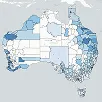

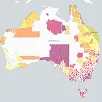


The total adult population (15 years or older) of Ulladulla 2539 NSW is 6,158, with a median age of 51. Of those, 45.36% are married, 15.85% are divorced or separated, 29.94% are single and 8.87% are widowed.
The average household size is 2.2 people per dwelling, and the median household monthly income is estimated to be $5,348. The median monthly mortgage repayment for households in this suburb is $1,579 which is 29.53% of their earnings.
Source: ABS Census Data (2021)