
Herbert, NT 0836

Good to know:
Herbert is a rural suburb situated in the outer regions of Darwin, Northern Territory, bearing the postcode 0836. Known for its spacious properties and natural bushland, Herbert offers a peaceful lifestyle away from the hustle and bustle of city life. The area is characterised by its large residential blocks, often featuring expansive gardens and room for livestock. Despite its rural setting, Herbert is within reasonable driving distance to essential amenities in nearby suburbs like Palmerston. It is popular with families and individuals seeking a serene, country-like environment.
Read More
Herbert NT 0836 houses: the local property market shows a typical price of $891,375, reported median rent $0 and a derived gross yield of 0.0% — indicating either missing rental data or an extremely weak recorded rental market. Herbert NT 0836 property investment is therefore skewed towards capital outcomes rather than rental returns at present; house prices in Herbert sit within an affluent IRSAD band but rental metrics and vacancy risk require careful verification.
Property market outlook
Herbert NT 0836 houses are priced at a typical value of $891,375 with a reported median weekly rent of $0 and an implied yield of 0.0% (confidence: Medium). Key structural strengths: IRSAD 1045 (opportune) and a low renter/owner ratio (12.0%, opportune) point to an established, owner-occupied and relatively affluent catchment that supports long‑term price resilience. Supply-side signals are mixed: Inventory at 1.14 months is tight (opportune) and Stock on Market 0.43% is neutral, suggesting limited for-sale stock despite average turnover (hold period 7.61 years). Demand indicators are tepid to neutral: Days on Market 58 and a Buy Search Index of 3 show neither frantic buyer activity nor deep lethargy.
Primary risk: Vacancy rate 4.11% is unfavourable — above the balanced threshold — and the recorded median rent of $0 with 0% yield strongly implies either no reliable advertised rental data for houses or an effectively inactive long-term rental market. For investors this combination raises near-term cashflow risk and increases dependence on capital growth for returns. Building approvals and BA ratio (0.48%, neutral) do not indicate imminent supply pressure, which is supportive of price stability if demand reasserts itself.
Pros
- High IRSAD (1045): demographic and socioeconomic indicators are supportive of price resilience and higher-quality buyer pools.
- Low Renter/Owner ratio (12%): predominantly owner‑occupied market, which tends to limit churn and supports capital values.
- Units/Houses ratio 0%: limited unit stock reduces competition from higher-density supply for house buyers.
- Inventory 1.14 months: tight months-of-supply that, if demand returns, can accelerate price recovery.
- Affordability ~27 years: within acceptable range for buyers (<=30 years) which helps maintain buyer participation.
Cons
- Median rent $0 and yield 0.0%: no usable rental yield recorded — immediate red flag for income-focused investors.
- Vacancy rate 4.11%: elevated rental vacancy risk that undermines prospects for steady rental income.
- Stock on Market neutral (0.43%) and DOM neutral (58 days): market activity is muted rather than strongly buoyant.
- Confidence Medium: sample sizes or transaction volumes limit data reliability; extra verification required.
- Clearance Rate 0.0%: reflects low auction activity, limiting market transparency on pricing at scale.
Investment strategies
- Capital-growth focused, long-hold: Given strong IRSAD and tight inventory, investors with capital-growth objectives and long time horizons can prioritise owner-appeal upgrades and hold for appreciation rather than immediate yield.
- Owner-occupier or hybrid strategy: Consider purchasing with owner-occupier occupation initially, then re-evaluate rental viability once the local rental market shows clearer signs of demand — this mitigates cashflow risk while capturing price appreciation.
- Value-add / repositioning: Target properties with scope for improvements that increase owner-occupier desirability (presentation, amenities) to attract better resale premiums in this owner-dominant market.
- Off-market & selective sourcing: With neutral stock metrics and medium data confidence, negotiate off-market or private-sale opportunities to access better pricing and avoid public bidding.
- Caution for yield-seekers: Avoid acquisition based on projected rental returns until independent, agent-verified rental comparables are secured; consider alternative strategies (short-term-stay suitability, if legally permissible and market-tested) only after careful local research.
- Due diligence imperative: Verify actual advertised rentals, ask local agents about tenancy demand and vacancy drivers, and cross-check recent sales records — medium confidence suggests dataset limitations for decision-making.
Is Herbert NT 0836 a good suburb to invest in?
Herbert NT 0836 is not an ideal target for investors seeking immediate rental income or high gross yields — the recorded median rent of $0 and a 0.0% yield, combined with a 4.11% vacancy rate, make income reliability questionable. However, for investors targeting capital growth in an affluent, owner‑occupied suburb with tight inventory, Herbert can be considered selectively attractive provided you accept a long holding period, conduct rigorous local rental-market verification, and focus on properties that appeal strongly to owner-occupiers. In short: unfavourable for yield-first strategies; cautiously opportune for capital-growth, owner-occupier-focused strategies after hands‑on due diligence.
About HtAG Analytics Data
HtAG reports a core set of metrics to describe suburb markets (base set shown, more metrics available): Typical Price, Median Rent, Sales, Rentals, Δ Change (periodic price/rent change), Yield (gross rental yield), Capital Growth (annual estimate + low/high), Total RoI (Yield + Capital Growth), Rent Increase (forecast per annum), Volatility Index, Confidence, and Relative Composite Score™. Supply/demand and structural indicators include IRSAD, Renter/Owner ratio, Units/Houses ratio, Years to Own (affordability), Growth Rate Cycle classifications, Stock on Market (SoM and SoM%), Inventory (months), Building Approvals & BA Ratio, Hold Period, Days on Market, Discounting, Vacancy Rate, Buy & Rent Search Index, Auction Clearance Rates and other advanced context metrics (population, estimated dwellings, school rank, non‑residential approvals per capita, annual sales volume, distance to CBD).
The guiding principle behind HTAG metrics is to capture both current market conditions and historical trends so we can perform relative market analysis that is aligned to the point of purchase. In the context of Herbert NT 0836 this means metrics are curated to reflect local sale and rental activity, supply dynamics and socioeconomic indicators rather than only broad, statewide aggregates. While other providers may emphasise public data feeds to describe macro trends, HTAG’s methodology is tuned to short‑list and compare suburbs at a granular level — producing nuanced measures that can differ from superficially similar metrics elsewhere.
Note that the snapshot above summarises current value metrics but does not replace trend analysis — metric trajectories (velocity and direction) can materially change the investment case for a suburb. Some indicators carry more weight depending on strategy (for Herbert, rental metrics are critical for income investors while IRSAD and inventory matter more for growth investors). Different investors will reach different conclusions based on budget, borrowing capacity, risk appetite and intended hold/refinance horizons. HTAG specialises in shortlisting suburbs to match those varied criteria rather than offering one-size-fits-all rankings; for professional decision-making, perform relative analysis across a tailored set of locations.
Updated: 1 May 2026
Read Less
Quick Area Stats

Dwellings

Population

EDI

Bushfire Risk Index

Flood Risk Index
Education & Infrastructure
Sign Up to Access

School Rank

Infra. Spend
Market Trends
Essential metrics effectively streamline the process of identifying markets that match your financial situation and investment objectives. Typical Price, Indicative Yield and Total ROI provide a swift means to shortlist areas that resonate with what you’re seeking and can afford. These metrics also serve as valuable general trend indicators, allowing you to visualise transaction volumes and dynamics of change.
1M
1Q
1Y
3Y
5Y
7Y
10Y
1M
1Q
1Y
3Y
5Y
7Y
10Y

1M
1Q
1Y
3Y
5Y
7Y
10Y
The Growth Rate Cycle (GRC) is a metric used to analyse the year-on-year change in property values, providing insights into the growth cycle of a particular area. It uses the “typical price” metric to gauge property values more accurately than median prices, and includes both actual and projected data for the current year.

Fundamental metrics play a vital role in providing a comprehensive analysis of the socio-economic environment within a specific suburb or region. Additionally, the Return on Investment (ROI) and Volatility Index are crucial metrics that aid in evaluating the prospective profitability and the level of risk or stability in the market.
Socio-economics
Sign Up to Access

IRSAD

Renter to Owner

Units to Houses
Projections
Sign Up to Access

Projected Annual ROI

Volatility Index
Quick Area Stats
Sign Up to Access

Annual Sales Volume

Annual Rentals Volume



Stock on Market

Building Approvals

Inventory

Hold Period




Supply metrics are crucial in gauging both the existing volumes of real estate listed for sale and the properties anticipated to enter the market soon. A diminished supply could signal opportunities for price appreciation, particularly when there’s corresponding buyer demand to buoy the market. The Stock on Market and Inventory level metrics (current values) are presented as a 3-month rolling average of monthly data shown in the charts. This means the last 3 months of data are averaged. The BA Ratio represents the proportion of building approvals over the latest 12 months relative to the total dwellings in the area.

Days on Market

Search Index

Vacancy Rate

Clearance Rate




Demand metrics underscore the level of interest that potential property buyers or tenants have in a specific suburb or locality. When demand outstrips the available supply, or if the supply fails to meet the intensity of buyer/renter interest, there’s a potential for prices to climb, underscoring the pivotal relationship between demand dynamics and property value trends. The Days on Market and Clearance Rate metrics (current values) are presented as a 3-month rolling average of monthly data shown in the charts. This means the last 3 months of data are averaged.
We invite you to contribute to the conversation by sharing your thoughts or raising questions about this market in the comment section below.
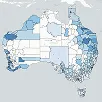

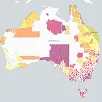


The total adult population (15 years or older) of Herbert 0836 NT is 1,230, with a median age of 38. Of those, 46.42% are married, 12.85% are divorced or separated, 38.46% are single and 1.95% are widowed.
The average household size is 3.0 people per dwelling, and the median household monthly income is estimated to be $12,020. The median monthly mortgage repayment for households in this suburb is $2,323 which is 19.33% of their earnings.
Source: ABS Census Data (2021)