
Salisbury, QLD 4107

Good to know:
Salisbury is a thriving suburb located approximately 9 kilometres south of Brisbane's CBD, in Queensland, with the postcode 4107. This family-friendly area is known for its mix of residential, commercial, and industrial zones. It features a variety of amenities including schools, parks, and shopping centres. Salisbury is well-connected by public transport, with frequent bus services and the Salisbury railway station providing easy access to Brisbane and surrounding areas. The suburb holds a rich history and offers a diverse cultural community, making it an appealing place for both families and professionals.
Read More
Salisbury QLD 4107 property market data shows typical house price at $1,421,141, median rent of $678/week and a gross rental yield of 2.48% — below the commonly used 3% cashflow benchmark. Salisbury QLD 4107 house prices are supported by a high IRSAD (1042), very low stock on market (0.29%) and quick days-on-market (27 days), signalling tight supply and continued buyer competition, but the 52-year affordability estimate and sub‑3% yield are material constraints for income-focused investors.
Overall this is a tight, higher‑socioeconomic house market that leans toward capital preservation and price appreciation rather than immediate rental income. The data confidence is high.
Property market outlook
Demand-supply mix: Supply appears constrained for houses — SoM% 0.29% (opportune/tight supply) and DOM 27 days (high demand), which typically supports price resilience. Inventory at 2.69 months is in the balanced range, implying transactions still clear but there is limited buffer for a sale slowdown.
Affordability and risk: Years-to-own at 52 years is extreme. This matters because it reduces the pool of marginal owner-occupiers and investors who can comfortably service debt, increasing sensitivity to rate rises and slowing organic demand growth if rates or lending standards tighten.
Capital vs income: Typical price $1.42m and yield 2.48% means poor cashflow for buy-to-let investors. Expect capital growth to be the principal return driver if local fundamentals hold. IRSAD 1042 (opportune) supports a premium buyer profile and potential for longer-term capital growth, but low yields require either strong leverage discipline or supplementing with higher-yield assets elsewhere.
Supply pipeline and holding behaviour: Building Approvals Ratio 1.09% (neutral) suggests a moderate development pipeline — not enough to markedly increase future supply. Hold period 9.73 years is neutral (typical turnover), so low churn aligns with the low SoM%.
Rental market: Vacancy 1.57% is within the balanced range and points to rental market stability rather than tight rental scarcity. Renter/owner ratio 30% is neutral — reasonable tenant demand but not dominated by renters.
Pros
- Tight established stock for houses (SoM% 0.29%) — supportive of price stability and upside.
- High IRSAD (1042) indicates above-average socioeconomic profile that historically correlates with stronger capital growth.
- Fast sales (DOM 27 days) — market moves quickly, useful for sellers and skilled buyers who are prepared.
- Low unit share (UH ratio 10%) implies less competition from higher-density supply and a market dominated by houses.
- High confidence in the data (High) — reliable basis for comparison and shortlist creation.
Cons
- Very low gross yield (2.48%) — below the 3% practical threshold for many investors; cashflow will be weak without high leverage or value-add.
- Affordability at 52 years is an outlier and restricts owner-occupier and investor pools; interest-rate sensitivity is elevated.
- Clearance rate reported as 0.0% — typically indicates few auctions (neutral) but reduces one transparent price-discovery channel.
- Inventory 2.69 months and Building Approvals Ratio 1.09% are neutral — limited immediate supply relief, but also not overly restrictive if demand weakens.
- Neutral renter/owner split (30%) limits specialised renter-driven strategies (e.g. high-turnover student or workforce rental plays).
Investment strategies
- Growth-focused buy-and-hold: Target buyers with strong balance sheets and long holding horizons who prioritise capital appreciation over cashflow. Key selection filters: proximity to amenity, renovation upside, and subdivision/development potential (confirm with council).
- Value-add renovation: Because yields are low, focus on properties where cosmetic or functional upgrades can materially increase rent or market value (kitchen/bathroom, additional bedroom, or permitted secondary dwelling), thereby improving effective yield and exit multiple.
- Off‑market and negotiated purchases: Low public stock makes off‑market sourcing and vendor introductions high value; buyers agents should prioritise pre-approval, quick due diligence and strong negotiation briefs to secure opportunities.
- Portfolio diversification: Combine Salisbury house exposures (for growth) with higher-yielding assets elsewhere to improve total portfolio cashflow; consider short‑term holiday or student markets only if supported by local dynamics.
- Risk management: Stress-test acquisitions at higher interest-rate scenarios given 52-year affordability metric — ensure clients can service debt under conservative conditions.
Is Salisbury QLD 4107 a good suburb to invest in?
Salisbury QLD 4107 is a good target for investors who prioritise capital growth and have the capacity to carry weak cashflow or who can add value to lift rents/prices. Tight supply, a high IRSAD and fast market clearance dynamics support price resilience. It is less attractive for investors needing immediate positive cashflow — the 2.48% gross yield and 52‑year affordability indicate cashflow pressure and elevated rate sensitivity. Buyers agents should shortlist Salisbury for growth-oriented clients, use off‑market search tactics, and ensure acquisition models account for rate and refinance risk.
About HtAG Analytics Data
Base metrics commonly used in our suburb reports include: Typical Price, Median Rent, Sales (monthly), Rentals (monthly), Δ Change (period % change), Gross Rental Yield, Capital Growth (per annum estimate with low/high bounds), Total RoI (Yield + CG), Rent Increase (annual projection), Volatility Index (MAPE-based), Confidence (data reliability), and Relative Composite Score™. There are more advanced metrics in our dashboards (e.g. UH ratios, IRSAD, RO ratio, SoM%, Inventory months, Building Approvals Ratio, Hold Period, Vacancy Rate, Buy/Rent Search Index, Auction Clearance) — the above list is the base set we report across suburbs.
HtAG’s methodology emphasises measuring both current market conditions and historical trends to enable relative market analysis near the point of purchase. In practice this means our suburb-level metrics are curated and modelled to highlight micro-market realities that can differ materially from broad, media-focused public datasets. Other providers may emphasise headline public data to track wider macro trends; HTAG refines similar inputs and applies distinct curation and measurement nuances so comparisons are directly relevant for transactional decision-making in a given suburb like Salisbury QLD 4107.
Finally, note that the snapshot above captures current value metrics for Salisbury QLD 4107 but does not substitute for trend analysis — metric trajectories can alter risk and return profiles significantly. Some metrics carry more weight than others depending on investor strategy and timeframe. Different investors will therefore end up with different suburb selections based on budgets, borrowing capacity, risk appetite and intended hold/exit strategies. HTAG specialises in shortlisting markets based on individual criteria rather than a one-size-fits-all score; for serious investors and buyers agents we recommend relative analysis across a set of shortlisted suburbs aligned to your investment objectives.
Updated: 1 May 2026
Read Less
Quick Area Stats

Dwellings

Population

EDI

Bushfire Risk Index

Flood Risk Index
Education & Infrastructure
Sign Up to Access

School Rank

Infra. Spend
Market Trends
Essential metrics effectively streamline the process of identifying markets that match your financial situation and investment objectives. Typical Price, Indicative Yield and Total ROI provide a swift means to shortlist areas that resonate with what you’re seeking and can afford. These metrics also serve as valuable general trend indicators, allowing you to visualise transaction volumes and dynamics of change.
1M
1Q
1Y
3Y
5Y
7Y
10Y
1M
1Q
1Y
3Y
5Y
7Y
10Y

1M
1Q
1Y
3Y
5Y
7Y
10Y
The Growth Rate Cycle (GRC) is a metric used to analyse the year-on-year change in property values, providing insights into the growth cycle of a particular area. It uses the “typical price” metric to gauge property values more accurately than median prices, and includes both actual and projected data for the current year.

Fundamental metrics play a vital role in providing a comprehensive analysis of the socio-economic environment within a specific suburb or region. Additionally, the Return on Investment (ROI) and Volatility Index are crucial metrics that aid in evaluating the prospective profitability and the level of risk or stability in the market.
Socio-economics
Sign Up to Access

IRSAD

Renter to Owner

Units to Houses
Projections
Sign Up to Access

Projected Annual ROI

Volatility Index
Quick Area Stats
Sign Up to Access

Annual Sales Volume

Annual Rentals Volume



Stock on Market

Building Approvals

Inventory

Hold Period




Supply metrics are crucial in gauging both the existing volumes of real estate listed for sale and the properties anticipated to enter the market soon. A diminished supply could signal opportunities for price appreciation, particularly when there’s corresponding buyer demand to buoy the market. The Stock on Market and Inventory level metrics (current values) are presented as a 3-month rolling average of monthly data shown in the charts. This means the last 3 months of data are averaged. The BA Ratio represents the proportion of building approvals over the latest 12 months relative to the total dwellings in the area.

Days on Market

Search Index

Vacancy Rate

Clearance Rate




Demand metrics underscore the level of interest that potential property buyers or tenants have in a specific suburb or locality. When demand outstrips the available supply, or if the supply fails to meet the intensity of buyer/renter interest, there’s a potential for prices to climb, underscoring the pivotal relationship between demand dynamics and property value trends. The Days on Market and Clearance Rate metrics (current values) are presented as a 3-month rolling average of monthly data shown in the charts. This means the last 3 months of data are averaged.
We invite you to contribute to the conversation by sharing your thoughts or raising questions about this market in the comment section below.
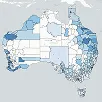

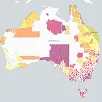


The total adult population (15 years or older) of Salisbury 4107 QLD is 5,426, with a median age of 35. Of those, 42.79% are married, 10.62% are divorced or separated, 41.25% are single and 5.23% are widowed.
The average household size is 2.7 people per dwelling, and the median household monthly income is estimated to be $10,104. The median monthly mortgage repayment for households in this suburb is $2,000 which is 19.79% of their earnings.
Source: ABS Census Data (2021)