
Riverhills, QLD 4074

Good to know:
Riverhills, located in Queensland's postcode 4074, is a serene suburb situated approximately 15 kilometres south-west of Brisbane's CBD. Part of the Centenary suburbs, Riverhills is known for its lush greenery, family-friendly environment, and proximity to the Brisbane River. It boasts numerous parks, walking trails, and recreational facilities, offering residents a balanced lifestyle with outdoor activities. The suburb is well-served by public transport and has essential amenities such as schools, shopping centres, and healthcare services nearby. Riverhills is favoured for its tranquillity, sense of community, and convenient location.
Read More
Riverhills QLD 4074 is showing a tight supply profile and strong socioeconomic indicators but stretched affordability and sub‑3% yields. For Riverhills QLD 4074 houses the typical price is $1,211,334, median rent is $696 per week and gross rental yield sits at 2.99% (just below the commonly cited 3% threshold). This Riverhills property market snapshot highlights supportive scarcity for house prices in Riverhills but limited cash‑flow for buy‑to‑let strategies and affordability pressure that could constrain some owner‑occupier demand.
Property market outlook
Supply/demand balance: Supply is relatively tight for houses — Stock on Market is 0.38% (opportune = low supply) and building approvals ratio is low at 0.15% (opportune), both factors that support price resilience and create competitive conditions for buyers. Inventory of 3.14 months and a hold period of 8.6 years are in the neutral band, indicating established stock turnover is typical rather than unusually sticky. Days on Market at 24 days is in the high‑demand band, which aligns with tight supply and faster transacting.
Socioeconomic and structural drivers: IRSAD at 1051 is opportune and signals above‑average socioeconomic capacity in the suburb — households are comparatively well positioned to support higher house prices over the medium term. The units/houses ratio is 8% (opportune), meaning the housing stock is dominated by houses rather than units; that reduces competition from unit supply and is favourable for house capital growth.
Affordability and yield: Affordability is a notable constraint — the Years to Own estimate is 48 years, well above the 30‑year threshold. That level of stretched affordability matters: it narrows the purchaser pool to higher‑income owner‑occupiers and investors with significant borrowing capacity. Gross yield of 2.99% is marginally below the 3% reference point, implying weak rental cash‑flow for investors unless debt service is unusually light or rental growth accelerates.
Rental market: Vacancy of 1.01% is neutral/near tight and supports steady rental demand, but it’s not low enough to guarantee strong rental growth. Buy search index at 3 and clearance rate of 0% are both neutral — search activity is average and auction evidence is limited, so market signals are more transaction‑level than auction‑driven. Data confidence is Medium.
Pros
- Strong socioeconomic profile (IRSAD 1051) supports long‑term capital appreciation.
- Low Stock on Market (0.38%) and low building approvals (0.15%) point to constrained future supply and price support.
- Fast days on market (24 days) indicates active buyer interest and transactional velocity for houses.
- Low units/houses ratio (8%) reduces competition from higher‑density product and favours house buyers.
- Vacancy near 1% suggests stable rental demand and limited vacancy risk.
Cons
- Gross yield 2.99% is below typical cash‑flow thresholds for many investors; negative for yield‑focused portfolios.
- Affordability extremely stretched (48 years) — a high‑rate or income shock could reduce buyer depth.
- Renter/owner split at 25% is neutral; not a dominant rental market that would insulate investors in downturns.
- Clearance rate 0% offers limited auction transparency; reliance falls to private sales market which can mask price signals.
- Confidence Medium — data is usable but watch for low sales volumes or reporting lag.
Investment strategies
- Capital growth focus: Riverhills houses suit long horizon investors seeking capital appreciation rather than immediate yields. The opportune IRSAD, low supply and short DOM favour owners prepared to hold for 5–10+ years.
- Gearing and finance structuring: Given sub‑3% yield and 48‑year affordability, investors should stress‑test serviceability at higher rates, consider higher equity contributions, or use interest buffers (fixed/offset) to protect cash flow.
- Owner‑occupier conversions / renovation: For buyers who can add value (extensions, modernisation) the low unit share and house stock dominance make value‑add upgrades appealing — improvements can lift rent and resale value in a constrained supply market.
- Off‑market acquisition and negotiation: With low SO M and limited approvals, pursuing off‑market listings and vendor introductions may be the most efficient route to secure stock without bidding wars.
- Seek nearby yield overlays: For portfolios needing cash flow, pair Riverhills house allocations with higher‑yield assets in adjacent suburbs or diversified property types (units where yields are stronger) to balance total portfolio return.
- Active rental management: Optimise occupancy and incremental rent growth (through lease renewals and targeted upgrades) to marginally improve yield given the tight vacancy environment.
Is Riverhills QLD 4074 a good suburb to invest in?
It depends on the strategy. For long‑term capital growth and owner‑occupier investors, Riverhills QLD 4074 is attractive — above‑average socioeconomic metrics, constrained supply and quick turnover create a constructive environment for house price appreciation. For yield or short‑term cash‑flow investors the suburb is less suitable: gross yield is below 3% and affordability is stretched, which increases sensitivity to rate rises and weakens immediate rental returns. Investors and buyers’ agents should prioritise relative comparisons with neighbouring suburbs and select Riverhills where the objective is capital growth within a portfolio that manages cash‑flow risk.
About HtAG Analytics Data
HtAG reports a core set of suburb metrics to support relative market analysis. The base set includes: Typical Price, Median Rent, Sales, Rentals, Δ Change (price/rent movement over time), Gross Rental Yield, Capital Growth (annualised with low/high bounds), Total RoI (Yield + Capital Growth), Rent Increase (projected annual rent growth), Volatility Index (MAPE‑based), Confidence (data reliability), and the Relative Composite Score™. There are additional advanced measures available (inventory metrics, building approvals, IRSAD, renter/owner ratios, unit/house mixes, vacancy rates, DoM, auction clearance rates and more) that support deeper diagnostics.
HtAG’s methodology is built to capture both current market conditions and historical trends to enable relative analysis at or near the point of purchase — applied here to Riverhills QLD 4074. That approach differs from providers that emphasise broad public data for media narratives: HtAG focuses on curating and measuring suburb‑level signals to help compare micro markets where buyers actually transact, which introduces methodological nuances even when metric names appear similar.
Finally, note this text is a snapshot of the key value metrics for Riverhills houses and does not replace trend analysis — metric momentum and the weighting of each indicator matter. Some metrics (supply tightness, affordability, yield) will have greater impact depending on an investor’s timeframe, leverage and liquidity needs. Different strategies and borrowing capacities will produce different suburb selections; HTAG excels at shortlisting based on individual criteria rather than one‑size‑fits‑all recommendations. For professional decision‑making, perform relative comparisons across a tailored set of suburbs that match budget, risk appetite and hold/refinance horizons.
Updated: 1 Jun 2026
Read Less
Quick Area Stats

Dwellings

Population

EDI

Bushfire Risk Index

Flood Risk Index
Education & Infrastructure
Sign Up to Access

School Rank

Infra. Spend
Market Trends
Essential metrics effectively streamline the process of identifying markets that match your financial situation and investment objectives. Typical Price, Indicative Yield and Total ROI provide a swift means to shortlist areas that resonate with what you’re seeking and can afford. These metrics also serve as valuable general trend indicators, allowing you to visualise transaction volumes and dynamics of change.
1M
1Q
1Y
3Y
5Y
7Y
10Y
1M
1Q
1Y
3Y
5Y
7Y
10Y

1M
1Q
1Y
3Y
5Y
7Y
10Y
The Growth Rate Cycle (GRC) is a metric used to analyse the year-on-year change in property values, providing insights into the growth cycle of a particular area. It uses the “typical price” metric to gauge property values more accurately than median prices, and includes both actual and projected data for the current year.

Fundamental metrics play a vital role in providing a comprehensive analysis of the socio-economic environment within a specific suburb or region. Additionally, the Return on Investment (ROI) and Volatility Index are crucial metrics that aid in evaluating the prospective profitability and the level of risk or stability in the market.
Socio-economics
Sign Up to Access

IRSAD

Renter to Owner

Units to Houses
Projections
Sign Up to Access

Projected Annual ROI

Volatility Index
Quick Area Stats
Sign Up to Access

Annual Sales Volume

Annual Rentals Volume



Stock on Market

Building Approvals

Inventory

Hold Period




Supply metrics are crucial in gauging both the existing volumes of real estate listed for sale and the properties anticipated to enter the market soon. A diminished supply could signal opportunities for price appreciation, particularly when there’s corresponding buyer demand to buoy the market. The Stock on Market and Inventory level metrics (current values) are presented as a 3-month rolling average of monthly data shown in the charts. This means the last 3 months of data are averaged. The BA Ratio represents the proportion of building approvals over the latest 12 months relative to the total dwellings in the area.

Days on Market

Search Index

Vacancy Rate

Clearance Rate




Demand metrics underscore the level of interest that potential property buyers or tenants have in a specific suburb or locality. When demand outstrips the available supply, or if the supply fails to meet the intensity of buyer/renter interest, there’s a potential for prices to climb, underscoring the pivotal relationship between demand dynamics and property value trends. The Days on Market and Clearance Rate metrics (current values) are presented as a 3-month rolling average of monthly data shown in the charts. This means the last 3 months of data are averaged.
We invite you to contribute to the conversation by sharing your thoughts or raising questions about this market in the comment section below.

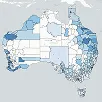

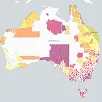


The total adult population (15 years or older) of Riverhills 4074 QLD is 3,240, with a median age of 36. Of those, 50.68% are married, 13.15% are divorced or separated, 33.36% are single and 2.72% are widowed.
The average household size is 2.7 people per dwelling, and the median household monthly income is estimated to be $9,236. The median monthly mortgage repayment for households in this suburb is $1,820 which is 19.71% of their earnings.
Source: ABS Census Data (2021)