In 30 Seconds
Adelaide is not one property market — it is at least six. According to HtAG Analytics data (May 2026), typical house prices range from $747,333 in the outer north to $1,598,140 in the inner east, yet every sub-market currently sits in the same late-cycle phase. This guide maps the city’s six investment sub-markets on price, yield, growth and HtAG’s Risk-Calibrated Score so you can see which screen strongest — and which are running hottest against their own history.
The best property investment suburbs in Adelaide are not found by ranking the whole city on a single number — they are found by first identifying which of Adelaide’s six sub-markets fits your brief, then comparing suburbs within it. According to HtAG Analytics data, all seven representative Adelaide house markets analysed here sit in the “(+)Decreasing” phase of the Growth Rate Cycle as of May 2026: prices are still rising, but the rate of growth is decelerating. In a late-cycle market, sub-market selection and metric depth matter more than ever.
This article breaks Adelaide into six geographic sub-markets — inner east, inner north, north-east, west, north and south — and uses live HtAG metrics (typical price, gross yield, Growth Rate Cycle position, Risk-Calibrated Score, and Growth Pattern Deviation) to show what the data actually says about each. The goal is not a one-line “buy this suburb” answer, but a framework you can apply to any Adelaide listing.
Table of Contents
- Adelaide’s Property Market in 2026: One City, Many Sub-Markets
- The Six Adelaide Sub-Markets at a Glance
- How HtAG Scores Adelaide Sub-Markets
- Inner Adelaide: Premium Growth, Thin Yields
- The Middle Ring: Adelaide’s Balanced Performers
- Outer Adelaide: Affordability and Cashflow — With a Catch
- What the Data Says About Adelaide for 2026
- Surface This Data Inside Your AI Agent
- From Data Signal to Portfolio Decision
- Key Takeaways
- Frequently Asked Questions
Adelaide’s Property Market in 2026: One City, Many Sub-Markets
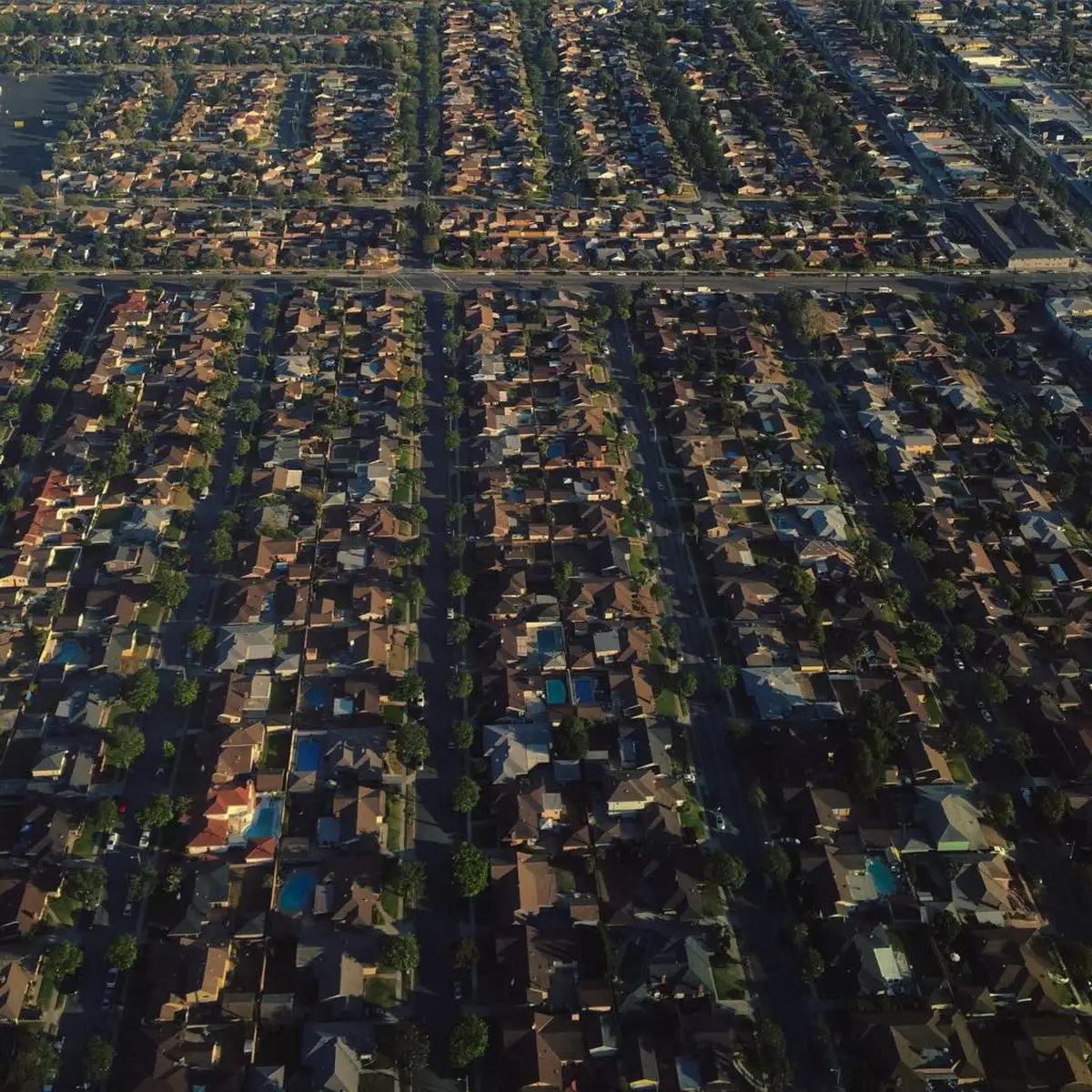
Adelaide’s property market in 2026 is a late-cycle market with wide internal dispersion. According to HtAG Analytics data, the gap between Adelaide’s most affordable and most expensive house sub-markets is now 2.1× — $747,333 in Playford (outer north) versus $1,598,140 in Norwood Payneham & St Peters (inner east). That spread is wider than at any point in the prior decade and is the single most important fact for an Adelaide investor to internalise.
Treating “Adelaide” as one market hides this. A citywide median tells you nothing about whether the affordable north has further to run or whether the premium east is closer to fair value. This is the same trap that LGA-level versus suburb-level analysis exposes — and it is why HtAG models every Adelaide suburb individually rather than reporting a single city figure.

According to HtAG Analytics data, every one of the seven Adelaide house markets analysed sits in the “(+)Decreasing” phase of the Growth Rate Cycle as of May 2026 — positive growth, but decelerating. Adelaide is broadly late-cycle, so the question is no longer “is it growing?” but “how much room is left?”
HtAG Analytics, Growth Rate Cycle (May 2026)
The Six Adelaide Sub-Markets at a Glance
Adelaide’s six house sub-markets divide cleanly by geography and price tier. The table below shows a representative suburb for each, with live HtAG metrics. Read it top to bottom as a value gradient: the inner ring trades growth pedigree for thin yields, while the outer ring offers affordability and stronger cashflow — with caveats covered later.
| Sub-market (representative suburb) | Typical price | Gross yield | RCS overall | GRC phase |
|---|---|---|---|---|
| Inner East — Norwood | $1,598,140 | 2.62% | 65 | (+)Decreasing |
| Inner North — Prospect | $1,325,317 | 2.67% | 78 | (+)Decreasing |
| West — Woodville | $1,345,158 | 2.57% | 55 | (+)Decreasing |
| North-East — Modbury | $964,134 | 3.52% | 79 | (+)Decreasing |
| South — Morphett Vale | $812,941 | 3.91% | 93 | (+)Decreasing |
| North — Salisbury | $807,918 | 3.54% | 37 | (+)Decreasing |
| Outer North — Elizabeth | $747,333 | 3.40% | 27 | (+)Decreasing |
Source: HtAG Analytics, house markets, May 2026. RCS overall is scored 0–100 (higher is stronger). Norwood, Prospect, Modbury, Morphett Vale and Salisbury are High confidence; Woodville and Elizabeth are Medium confidence (smaller sales samples).
How HtAG Scores Adelaide Sub-Markets
HtAG scores every Adelaide suburb on three core lenses: where it sits in its price cycle (the Growth Rate Cycle), how strong its risk-adjusted fundamentals are (the Risk-Calibrated Score), and how stretched its growth is versus its own history (Growth Pattern Deviation). Used together, these separate a suburb that is genuinely strong from one that is simply late in a run.
The Growth Rate Cycle (GRC) tracks the acceleration or deceleration of suburb-level price growth. A “(+)Decreasing” reading — which every Adelaide sub-market currently shows — means prices are still rising but momentum is fading. The Risk-Calibrated Score (RCS) blends three sub-scores: capital growth, cashflow and lower risk, each 0–100. Growth Pattern Deviation (GPD) compares a suburb’s recent growth to its own long-run average: a large positive GPD signals a market running hot relative to its history.

What This Means in Plain English
RCS is a 0–100 report card for a suburb: higher means a better all-round balance of growth potential, rent return and safety. A high Growth Pattern Deviation is a warning light — it means a suburb has already grown a lot faster than it usually does, so more of its run may be behind it than ahead.
On RCS overall, Adelaide’s standouts are not its prestige names. According to HtAG Analytics data, Morphett Vale in the south scores 93/100 and Modbury in the north-east scores 79/100 — both ahead of premium Norwood (65) and Prospect (78). This is a recurring HtAG finding, and it echoes the typical-versus-median-price point: headline price says little about risk-adjusted return.
Inner Adelaide: Premium Growth, Thin Yields
Inner Adelaide offers blue-chip capital-growth pedigree at the cost of the city’s thinnest rental yields. Norwood (inner east) and Prospect (inner north) both sit above $1.3 million with gross yields under 2.7% — meaning rent covers far less of the holding cost than anywhere else in the metro.
Prospect is the stronger risk-adjusted pick of the two. According to HtAG Analytics data, Prospect carries a capital-growth sub-score of 90/100 and a lower-risk sub-score of 89/100, for an RCS overall of 78 on a 2.67% yield. Norwood, despite a higher price ($1,598,140) and lower RCS overall (65), has one feature growth investors prize: a negative Growth Spillover Effect (5-year GSP of −0.05), meaning it has slightly lagged its own council area and may retain spillover headroom while its neighbours have already moved.
According to HtAG Analytics data, inner-Adelaide houses (Norwood, Prospect) yield just 2.57%–2.67% gross — roughly a third less income than the outer ring — and their recent annualised growth has cooled to 5%–7%, the slowest in the city.
HtAG Analytics, Adelaide house markets (May 2026)
For an investor, the inner ring suits a long-hold, growth-led, equity-rich brief where negative cashflow is sustainable. It is a poor fit for a cashflow-first strategy. You can see the full inner-ring picture on the GeoDex heatmap.
The Middle Ring: Adelaide’s Balanced Performers
Adelaide’s middle ring is where growth and yield come closest to balance. Modbury in the north-east is the clearest example: a typical house price of $964,134, a 3.52% gross yield, and an RCS overall of 79 — built on an 88/100 capital-growth sub-score and a 77/100 cashflow sub-score. Few Adelaide suburbs score that evenly on both axes.
Modbury’s Growth Pattern Deviation is also more moderate than the outer north — a 5-year GPD of 0.72 versus Elizabeth’s 1.61 — indicating it is less stretched against its own history despite strong recent growth of roughly 12% annualised. The western sub-market (Woodville, $1,345,158, RCS 55) has run hard, with recent annualised growth near 14%, but it carries Medium data confidence here on a small sales sample, so treat its single-suburb read as indicative rather than definitive.
What This Means in Plain English
The middle ring is the “have your cake” zone — suburbs like Modbury still earn a respectable rent (around 3.5%) while keeping decent growth credentials, and they haven’t sprinted as far ahead of their own track record as the cheaper outer suburbs have.
Outer Adelaide: Affordability and Cashflow — With a Catch
Outer Adelaide delivers the city’s best yields and lowest entry prices — but HtAG’s data flags a clear late-cycle warning. Morphett Vale (south), Salisbury (north) and Elizabeth (outer north) all sit near or below $815,000 with gross yields of 3.40%–3.91%, comfortably the strongest cashflow in the metro.

Morphett Vale is the data’s clear outer-ring winner. According to HtAG Analytics data, it posts an RCS overall of 93/100 — the highest in this analysis — with a 94/100 cashflow sub-score and 716 house sales over the year, the deepest liquidity in the sample. That combination of strong cashflow, capital-growth credentials and exit liquidity is rare.
Salisbury and Elizabeth are a different story. Both offer affordability and yield, but both carry the warning signs of a market that has run hot. Elizabeth’s 5-year Growth Pattern Deviation of 1.61 is the most stretched in the city, its capital-growth sub-score is just 7/100, and its lower-risk sub-score is 2/100. Salisbury’s GPD of 1.26 and volatility index of 9 tell a similar story — strong recent growth (around 11%–12% annualised) but elevated downside risk if the cycle turns.
What This Means in Plain English
Cheap and high-yielding does not automatically mean a good buy. HtAG’s data says Elizabeth and Salisbury have already grown far faster than they normally do, so a larger share of their gains may be in the past — Morphett Vale offers similar yield with much healthier risk scores.
What the Data Says About Adelaide for 2026
For 2026, HtAG’s Adelaide data points to a stock-picker’s market rather than a rising-tide one. With every sub-market in the “(+)Decreasing” GRC phase, broad citywide gains are less likely than selective outperformance by suburbs with genuine fundamentals rather than stretched ones.
The data’s strongest risk-adjusted candidates — Morphett Vale (RCS 93) and Modbury (RCS 79) — share a profile: middle-to-outer location, yields above 3.5%, strong cashflow sub-scores, and Growth Pattern Deviations that are positive but not extreme. The weakest screen — Elizabeth (RCS 27) and Salisbury (RCS 37) — pair attractive headline yields with the city’s most stretched GPD readings and lowest lower-risk sub-scores. HtAG’s wider work on the Australian property forecast for 2026 frames the same late-cycle dynamic at a national level, and the state-level picture is covered in HtAG’s best suburbs to invest in South Australia 2026 guide.
According to HtAG Analytics data, Morphett Vale’s RCS overall of 93/100 sits 66 points above Elizabeth’s 27/100 — despite both being affordable, high-yield outer suburbs. The difference is risk quality, not price.
HtAG Analytics, Risk-Calibrated Score (May 2026)
HtAG validates this approach over time through its Evidence Portal, which tracks how data-led recommendations perform against the market. The lesson for Adelaide is consistent: let the metrics, not the postcode’s reputation, choose the suburb.
Surface This Data Inside Your AI Agent
The HtAG Developer Portal now exposes the data described in this article — and every other HtAG dataset — through MCP (Model Context Protocol) connectors. Investors and buyers’ agents using Claude, Perplexity, Manus AI, ChatGPT (via custom connectors) or any other MCP-compatible AI agent can query HtAG data on any Adelaide suburb directly inside the AI tool they already use.
A typical workflow: paste an Adelaide listing URL into your AI agent, the agent calls the HtAG market endpoints through MCP, returns the price, yield, GRC phase and RCS, and drafts the analysis. The whole sequence takes under 30 seconds and runs on live HtAG warehouse data.
HtAG’s MCP-enabled Developer Portal puts every metric in this article inside your AI agent. Apply for access and run the full analysis on any Australian listing without leaving Claude or Perplexity.
HtAG Analytics Developer Portal (2026)
Browse the endpoint catalogue at developer.htagai.com and submit the HtAG Developer Portal application — approved members receive an API key and an MCP setup guide for their preferred AI tool.
From Data Signal to Portfolio Decision
The GRC, RCS and GPD metrics described in this article are live inside the HtAG Analytics platform — updated each quarter as new ABS, valuation and supply data flows in. Professional buyers’ agents use these signals to time entries, validate briefs, and build conviction before making offers on Adelaide stock.
If you’re building a portfolio and want to see the exact data powering articles like this one, the HtAG Starter Plan gives you access to suburb-level analytics across every Australian market — no lock-in, cancel any time. If you want that same data inside your AI agent, browse the endpoints at developer.htagai.com and submit the Developer Portal application — it takes about two minutes.
Start your HtAG Analytics membership → · Apply for Developer Portal access →
Key Takeaways
- Adelaide is six markets, not one. Typical house prices span 2.1× — from $747,333 (Elizabeth) to $1,598,140 (Norwood) — per HtAG Analytics, May 2026.
- The whole city is late-cycle. All seven sub-markets analysed sit in the GRC “(+)Decreasing” phase — growth positive but decelerating.
- The best risk-adjusted suburbs aren’t the prestige ones. Morphett Vale (RCS 93) and Modbury (RCS 79) outrank Norwood (65) on HtAG’s Risk-Calibrated Score.
- Cheap and high-yield can hide risk. Elizabeth and Salisbury offer 3.4%–3.5% yields but carry the city’s most stretched Growth Pattern Deviation (1.61 and 1.26) and lowest lower-risk scores.
- Match sub-market to brief. Inner ring suits growth-led long holds; the middle and southern rings suit balanced and cashflow strategies.
- Developer Portal access. This data is available through MCP connectors — apply for HtAG Developer Portal access to query Adelaide suburbs inside Claude, Perplexity, Manus AI or any MCP-compatible AI agent.
Frequently Asked Questions
What are the best property investment suburbs in Adelaide in 2026?
On HtAG Analytics’ Risk-Calibrated Score, Morphett Vale (RCS 93/100) in the south and Modbury (RCS 79/100) in the north-east screen strongest among Adelaide’s house sub-markets as of May 2026, combining yields above 3.5% with solid capital-growth credentials. The “best” suburb still depends on your brief — inner suburbs like Prospect suit growth-led strategies, while the southern and middle rings suit cashflow.
Which Adelaide suburbs have the highest rental yield?
According to HtAG Analytics data, Adelaide’s outer and southern suburbs lead on gross yield: Morphett Vale at 3.91%, Salisbury at 3.54%, Modbury at 3.52% and Elizabeth at 3.40% — versus just 2.57%–2.67% in inner suburbs like Woodville, Norwood and Prospect. Higher yield does not always mean lower risk, so check each suburb’s lower-risk and Growth Pattern Deviation scores.
Is Adelaide property still growing in 2026?
Yes, but slowly. Every Adelaide house sub-market analysed by HtAG Analytics sits in the “(+)Decreasing” phase of the Growth Rate Cycle as of May 2026 — meaning prices are still rising, but the rate of growth is decelerating. This is a late-cycle signal, which favours selective suburb-picking over broad citywide exposure.
How do I access HtAG Adelaide suburb data inside Claude or Perplexity?
HtAG data is available through MCP (Model Context Protocol) connectors to any compatible AI agent — Claude, Perplexity, Manus AI, and others. Browse the endpoint catalogue at developer.htagai.com and submit the HtAG Developer Portal application. Approved applicants receive an API key and a setup guide for their preferred AI tool.
Disclaimer
This article is for educational purposes only and does not constitute financial advice. Property investment carries risks, and past performance is not indicative of future results. All prices, yields, scores and projections are derived from HtAG Analytics data and statistical modelling as at May 2026 — they are not guarantees of future performance. Always conduct your own due diligence and consult a qualified financial adviser before making investment decisions.