
Burrum Heads, QLD 4659

Good to know:
Burrum Heads, located in Queensland's postcode 4659, is a serene coastal village situated at the mouth of the Burrum River. Known for its relaxed atmosphere and stunning natural beauty, it is a haven for fishing enthusiasts, with abundant marine life and expansive beaches. The community is tight-knit and friendly, adding to its charm. Burrum Heads offers a peaceful lifestyle with essential amenities, and it's close to Hervey Bay for additional services. Its beautiful scenery, including mangroves and sandy shores, makes it an ideal spot for retirees and holidaymakers alike.
Read More
Burrum Heads QLD 4659. The suburb’s property market data for houses shows a typical price of $952,961, median rent of $613/week and a gross yield of 3.34%. This snapshot positions Burrum Heads QLD 4659 property investment as a market with modest rental returns but material rental market stress (high vacancy) and stretched affordability.
Property market outlook
Burrum Heads house prices sit near $953k while reported yields are 3.34% — above a basic 3% threshold but still modest for investors when you factor likely expenses and rental pressure. Key supply signals are mixed: Stock on Market 0.54% is in the neutral band, while Building Approvals Ratio of 0.11% suggests little imminent new supply (supportive of future scarcity). However Inventory (5.62 months) and Vacancy Rate (7.69%) are both high, indicating elevated available stock and weak long-term rental demand; that combination is a headwind for rental growth and a signal that landlords may face longer marketing times or discounting.
Socio-economic context is below the suggested threshold (IRSAD 902), which can limit longer-term capital appreciation relative to higher-IRSAD coastal or regional growth hotspots. The Renter/Owner ratio (15.0%) and Units/Houses ratio (3.0%) are opportune: the suburb is owner-dominant with very few units, which reduces competition from high-density supply and favours house buyers over unit buyers. Affordability is extreme — Years to Own ~93 years (well above the comfort threshold of 30 years) — meaning local incomes are not aligned with current house prices and owner-occupier demand is fragile unless driven by non-local buyers (sea-changers, retirees, investors).
Data confidence is High, so these signals are reliably measured for decision-making.
Pros
- Typical price near $953k: a clearly defined price point for comparable bidding and negotiation.
- Yield 3.34% — above a minimal screening threshold and providing some cash flow buffer for investors.
- Low Unit share (UH ratio 3.0%) and opportune Renter/Owner ratio (15.0%) — limited competition from units and relatively owner-occupied character, which can protect house values from oversupply of apartments.
- Low Building Approvals Ratio (0.11%) — limited upcoming new-build pressure, supportive for medium-to-long-term supply tightness.
- High data confidence — robust enough for comparative analysis and due diligence.
Cons
- Vacancy Rate 7.69% — very high by HTAG thresholds and signalling elevated rental vacancy risk and potential downward pressure on rents and occupancy.
- Inventory 5.62 months — above the balanced range, indicating sellers’ stock is abundant relative to normal turnover.
- IRSAD 902 — below the neutral threshold; weaker socio-economic indicators can constrain long-term capital growth.
- Years to Own 93 — extreme affordability strain, implying local incomes don’t support current price levels and owner-occupier demand may be limited.
- Clearance Rate 0% and Days on Market 56 — auction activity is minimal and selling timelines are moderate, which can extend time-to-sale for listed assets.
Investment strategies
- Prioritise property-level selection over market-level enthusiasm. With high vacancies and inventory, the right micro-location (street, aspect, shelter from flood/ócean spray) and property condition will materially affect rental uptake and pricing.
- Negotiate on price and settlement terms. Elevated inventory and long affordability suggest vendor motivation exists; buyers’ agents should leverage this to secure pricing or favourable conditions.
- Focus on houses rather than units. The market shows an opportune house-weighted profile (UH ratio 3.0%), reducing competition from new apartment supply and simplifying rental positioning.
- Stress-test cash flows. Use conservative vacancy and effective yield assumptions (assume lower net yield than headline 3.34%) when modelling serviceability, because vacancy is currently an explicit downside risk.
- Consider targeted value-add plays where feasible: cosmetic upgrades, energy-efficiency improvements and minor remodelling can improve rental appeal in a weak rental market, shorten vacancy cycles and justify modest rent premiums.
- Explore alternative rental markets cautiously. Given elevated long-term vacancy, assess short-stay tourism demand and regulatory settings before assuming STR income — if local tourism supports it, short-term could offset long-term vacancy but introduces management and regulatory complexity.
- Time horizon: favour investors with medium-to-long hold periods who can ride out rental market cycles and benefit from low future supply (low approvals). Short-term flip strategies are higher risk here while vacancies remain elevated.
- Use relative market screening. Compare Burrum Heads against nearby coastal communities and wider Fraser Coast LGA metrics (vacancy trends, affordability shifts) — HTAG’s relative metrics will show where limited supply meets improving demand.
Is Burrum Heads QLD 4659 a good suburb to invest in?
Burrum Heads QLD 4659 is a mixed proposition. The house market exhibits structural positives: low new-build approvals, an owner-heavy profile and a clearly defined typical price point. However, material negatives — a very high vacancy rate (7.69%), elevated months of inventory (5.62), low IRSAD and extreme Years to Own (93) — create real risk for rental-dependent investors and those seeking short-term capital growth. For buyers focused on long-term total return and who can buy selectively (good property, small premium in location quality, conservative yield modelling), Burrum Heads can fit a diversified regional allocation. For investors reliant on stable cash flow or quick re-sales, the current data argue for caution and comparative analysis versus nearby markets with stronger rental fundamentals.
About HtAG Analytics Data
Base metrics reported here (per dwelling type unless noted) include Typical Price, Median Rent, Sales and Rentals activity, Δ Change over multiple lookbacks (1M/1Q/1Y/3Y), Gross Rental Yield, Capital Growth (annualised with low/high bounds), Total RoI (Yield + CG), Rent Increase projection, Volatility Index (MAPE-based), Confidence (sales-driven) and the Relative Composite Score™. Supply and demand indicators reported as ranges include IRSAD (opportune ≥951; neutral 920–950; unfavourable <920), Renter/Owner ratio, UH ratio, UHV (units only), Years to Own (affordability; >30 years indicates pressure), Growth Rate Cycle categories, Stock on Market % thresholds (<0.4% low supply; 0.4–1.3% balanced; >1.3% high supply), Inventory months (<2.1 low supply; 2.1–4.5 balanced; >4.5 high supply), BA Ratio thresholds, Hold Period bands, Days on Market bands, Discounting ranges, Vacancy Rate bands (<1% tight rental market; 1–3.5% balanced; >3.5% weak rental market), Buy & Rent Search Index, and Auction Clearance Rate categories. There are additional metrics available beyond this base set, and HTAG reports per-dwelling-type where relevant.
HTAG’s metrics are designed to capture both current market conditions and historical trends to enable relative market analysis down to the suburb and dwelling-type level. In practice this means our measures emphasise purchase-point relevance rather than broad, headline-driven trend reporting. Other providers may rely heavily on public feeds to produce broader trend narratives; HTAG’s methodology focuses on curating and measuring signals that matter for market selection close to the point of purchase, so similarly named metrics can have important differences in measurement and interpretation.
Finally, note that the snapshot above summarises current value metrics for Burrum Heads QLD 4659 but does not replace trend analysis — metric trajectories and their relative importance differ by strategy and investor profile. Market selection always varies with budget, borrowing capacity, risk tolerance and time-horizon; HTAG excels at shortlisting suburbs based on customised criteria rather than one-size-fits-all rankings. Serious investors and buyer-agents should perform relative analysis across comparable suburbs and dwellings aligned to their specific goals before committing capital.
Updated: 1 May 2026
Read Less
Quick Area Stats

Dwellings

Population

EDI

Bushfire Risk Index

Flood Risk Index
Education & Infrastructure
Sign Up to Access

School Rank

Infra. Spend
Market Trends
Essential metrics effectively streamline the process of identifying markets that match your financial situation and investment objectives. Typical Price, Indicative Yield and Total ROI provide a swift means to shortlist areas that resonate with what you’re seeking and can afford. These metrics also serve as valuable general trend indicators, allowing you to visualise transaction volumes and dynamics of change.
1M
1Q
1Y
3Y
5Y
7Y
10Y
1M
1Q
1Y
3Y
5Y
7Y
10Y

1M
1Q
1Y
3Y
5Y
7Y
10Y
The Growth Rate Cycle (GRC) is a metric used to analyse the year-on-year change in property values, providing insights into the growth cycle of a particular area. It uses the “typical price” metric to gauge property values more accurately than median prices, and includes both actual and projected data for the current year.

Fundamental metrics play a vital role in providing a comprehensive analysis of the socio-economic environment within a specific suburb or region. Additionally, the Return on Investment (ROI) and Volatility Index are crucial metrics that aid in evaluating the prospective profitability and the level of risk or stability in the market.
Socio-economics
Sign Up to Access

IRSAD

Renter to Owner

Units to Houses
Projections
Sign Up to Access

Projected Annual ROI

Volatility Index
Quick Area Stats
Sign Up to Access

Annual Sales Volume

Annual Rentals Volume



Stock on Market

Building Approvals

Inventory

Hold Period




Supply metrics are crucial in gauging both the existing volumes of real estate listed for sale and the properties anticipated to enter the market soon. A diminished supply could signal opportunities for price appreciation, particularly when there’s corresponding buyer demand to buoy the market. The Stock on Market and Inventory level metrics (current values) are presented as a 3-month rolling average of monthly data shown in the charts. This means the last 3 months of data are averaged. The BA Ratio represents the proportion of building approvals over the latest 12 months relative to the total dwellings in the area.

Days on Market

Search Index

Vacancy Rate

Clearance Rate




Demand metrics underscore the level of interest that potential property buyers or tenants have in a specific suburb or locality. When demand outstrips the available supply, or if the supply fails to meet the intensity of buyer/renter interest, there’s a potential for prices to climb, underscoring the pivotal relationship between demand dynamics and property value trends. The Days on Market and Clearance Rate metrics (current values) are presented as a 3-month rolling average of monthly data shown in the charts. This means the last 3 months of data are averaged.
We invite you to contribute to the conversation by sharing your thoughts or raising questions about this market in the comment section below.
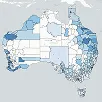

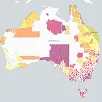


The total adult population (15 years or older) of Burrum Heads 4659 QLD is 2,347, with a median age of 64. Of those, 62.46% are married, 16.11% are divorced or separated, 14.53% are single and 6.69% are widowed.
The average household size is 2.0 people per dwelling, and the median household monthly income is estimated to be $3,960. The median monthly mortgage repayment for households in this suburb is $1,348 which is 34.04% of their earnings.
Source: ABS Census Data (2021)