
Arundel, QLD 4214

Good to know:
Arundel is a suburb located in the northern part of the Gold Coast in Queensland, postcode 4214. It is known for its family-friendly atmosphere, offering a mix of residential housing, parks, and recreational facilities. The suburb is home to the Arundel Plaza Shopping Centre and is adjacent to the Gold Coast University Hospital and Griffith University, making it convenient for both healthcare and education. Arundel also boasts several golf courses, including the well-regarded Arundel Hills Country Club. Easy access to the Pacific Motorway (M1) makes commuting straightforward, while nearby Harbour Town offers extensive retail options.
Read More
Arundel QLD 4214 property market data highlights a house-typical price of $1,447,789, a rolling-year median rent of $889 pw and a gross rental yield of 3.19%. The suburb shows strong socio-economic indicators (IRSAD 1006) and tight listed supply (SoM 0.24%), but affordability is extreme — HTAG’s years-to-own reads 73 years — which has important implications for buyer depth and refinancing risk. Data confidence is High and most supply/demand indicators sit in the neutral-to-opportune range, positioning Arundel as a market where house prices in Arundel are supported by constrained stock and favourable socio-economic fundamentals, while rental returns are modestly above baseline.
Property market outlook
Arundel QLD 4214 houses — outlook is cautiously positive for capital growth but constrained for immediate yield upside. Tight stock on market (0.24% SoM) and a low building approvals ratio (0.08%) indicate limited transactional supply and little near-term new supply, conditions that typically support price appreciation. IRSAD at 1006 is comfortably in the “opportune” range, consistent with above-average household resources that support stability in demand for owner-occupied housing. Inventory at 2.63 months and Days on Market of 43 are both in balanced territory, implying transactions still occur within reasonable marketing windows but without the urgency of a hot seller’s market. Vacancy at 1.5% is balanced; rental demand exists but is not overheated. The dominant risk is affordability: an estimated 73 years to own signals an elevated price-to-income dynamic that limits the pool of owner-occupier first-home buyers and increases reliance on investors and higher-income purchasers — this can slow market turnover and amplify sensitivity to interest-rate or credit shocks.
Pros
- Tight listed supply: SoM 0.24% (opportune) — supports upward pressure on house prices.
- Low near-term development: BA Ratio 0.08% (opportune) — limited additional stock coming online.
- Strong socio-economic profile: IRSAD 1006 (opportune) — positive for long-term capital preservation and resale demand from owner-occupiers.
- Yield above baseline: 3.19% — marginally above the commonly cited 3% threshold, providing modest cashflow for investors.
- High data confidence: reliable monthly sales underpin metrics and reduces noise for comparative work.
Cons
- Very poor affordability: 73 years to own — reduces buyer-depth, risks slower liquidity and more sensitivity to serviceability changes.
- Yield is modest not high: 3.19% is above minimum but low in absolute terms for investors prioritising cashflow.
- Neutral rental tightness: Vacancy 1.5% — acceptable but not a strong renter-driven tailwind.
- Mixed demand signals: Buy Search Index 3 and DOM 43 are neutral; clearance rate recorded as 0% (neutral) — limited auction activity complicates interpreting clearance-rate signals.
- Hold period 9.08 years (neutral) — turnover is neither exceptionally tight nor highly liquid, which can slow repositioning.
Investment strategies
- Long-hold capital-growth focused buy: Given tight supply and favourable IRSAD, target well-located family houses where house prices in Arundel benefit from limited competition and owner-occupier demand. Expect capital growth to drive total returns rather than yield.
- Selectively pursue value-add: Renovation or incremental upgrades can increase rent and saleability in a high-IRSAD suburb; target properties with scope to modernise kitchens/bathrooms or add outdoor amenity to capture premium resale.
- Conservative gearing and stress-testing: With affordability at extreme levels, use conservative serviceability assumptions and ensure buffers for rate rises or temporary vacancy — refinancing/exit options can be constrained if rates move and buyer pool narrows.
- Focus on off-market opportunities and vendor-motivated sales: Low public stock means off-market stock and vendor-solicited deals can bypass competition and secure better pricing or terms.
- Consider smaller houses or lower-priced segments for improved yield: If cashflow is a priority, look to the lower-end house stock where typical prices are lower and yields may lift above the suburb average; expect trade-off in absolute capital growth potential.
- Match tenancy strategy to balanced vacancy: With vacancy ~1.5% and median rent $889 pw, target quality tenants (long-term professionals/families) rather than short-term, to minimise churn and servicing costs.
- Comparative market shortlist: Use HTAG’s relative scoring to compare Arundel against nearby Gold Coast suburbs (e.g. Helensvale, Coomera) to identify the best risk/reward entry points depending on capital-growth vs cashflow objectives.
Is Arundel QLD 4214 a good suburb to invest in?
Arundel QLD 4214 can be a good suburb for investors who prioritise capital growth and can tolerate low-to-moderate rental yields and a narrow buyer pool. Structural positives — low stock on market (0.24%), limited building approvals (0.08%) and IRSAD 1006 — favour price stability and potential appreciation for houses. However, the very high affordability years (73) means buyer depth is limited, raising liquidity and refinancing risk during adverse credit cycles. For buyers seeking immediate cashflow or quick turnover, Arundel’s 3.19% yield and neutral transactional metrics are less compelling; for those planning a multi-year hold and able to manage serviceability risk, Arundel’s supply-constrained profile and strong socio-economic base make it a reasonable target within a diversified portfolio.
About HtAG Analytics Data
HtAG base metrics reported per dwelling type include: Typical Price, Median Rent, Sales, Rentals, % Change vs prior periods, Gross Yield, Capital Growth (annualised projection with low/high bounds), Total ROI (Yield + CG), Rent Increase (projected pa), Volatility Index (MAPE-based), Confidence (data accuracy), Relative Composite Score™, Stock on Market (SoM and SoM%), Inventory (months), Building Approvals & BA Ratio, Hold Period, Days on Market, Discounting, Vacancy Rate, Vacancies, DoRM, Buy & Rent Search Index, Auction Clearance Rates, plus supplementary metrics such as Population, Estimated Dwellings, School Rank, non-residential approvals per capita and Distance to CBD. There are additional advanced metrics available beyond this base set for deeper market segmentation.
HtAG’s metrics are designed to capture both current conditions and historical trend behaviour to enable relative market analysis at suburb and dwelling-type granularity — that orientation differs from some public-data-focused providers. Unlike services that primarily aggregate public feeds to drive broad media narratives, HTAG metrics are curated and measured to reflect the market environment closest to the point of purchase. As a result, while metric names may appear similar to other sources, HTAG’s curation, smoothing and model choices produce distinct nuances in how supply, demand and affordability are represented for a suburb like Arundel.
Finally, the summary above is a snapshot of current value metrics and does not substitute for trend analysis: metric trajectories (rising or falling inventory, shifting vacancy, changing affordability) materially influence investment decisions and vary in importance by strategy. Different investors — based on budget, borrowing capacity, risk appetite and intended hold or refinance timelines — will select different suburbs even within the same city. HTAG specialises in shortlisting and ranking markets against tailored criteria rather than offering one-size-fits-all conclusions; serious investors and buyers’ agents should run relative comparisons across multiple candidate suburbs aligned to their specific objectives.
Updated: 1 May 2026
Read Less
Quick Area Stats

Dwellings

Population

EDI

Bushfire Risk Index

Flood Risk Index
Education & Infrastructure
Sign Up to Access

School Rank

Infra. Spend
Market Trends
Essential metrics effectively streamline the process of identifying markets that match your financial situation and investment objectives. Typical Price, Indicative Yield and Total ROI provide a swift means to shortlist areas that resonate with what you’re seeking and can afford. These metrics also serve as valuable general trend indicators, allowing you to visualise transaction volumes and dynamics of change.
1M
1Q
1Y
3Y
5Y
7Y
10Y
1M
1Q
1Y
3Y
5Y
7Y
10Y

1M
1Q
1Y
3Y
5Y
7Y
10Y
The Growth Rate Cycle (GRC) is a metric used to analyse the year-on-year change in property values, providing insights into the growth cycle of a particular area. It uses the “typical price” metric to gauge property values more accurately than median prices, and includes both actual and projected data for the current year.

Fundamental metrics play a vital role in providing a comprehensive analysis of the socio-economic environment within a specific suburb or region. Additionally, the Return on Investment (ROI) and Volatility Index are crucial metrics that aid in evaluating the prospective profitability and the level of risk or stability in the market.
Socio-economics
Sign Up to Access

IRSAD

Renter to Owner

Units to Houses
Projections
Sign Up to Access

Projected Annual ROI

Volatility Index
Quick Area Stats
Sign Up to Access

Annual Sales Volume

Annual Rentals Volume



Stock on Market

Building Approvals

Inventory

Hold Period




Supply metrics are crucial in gauging both the existing volumes of real estate listed for sale and the properties anticipated to enter the market soon. A diminished supply could signal opportunities for price appreciation, particularly when there’s corresponding buyer demand to buoy the market. The Stock on Market and Inventory level metrics (current values) are presented as a 3-month rolling average of monthly data shown in the charts. This means the last 3 months of data are averaged. The BA Ratio represents the proportion of building approvals over the latest 12 months relative to the total dwellings in the area.

Days on Market

Search Index

Vacancy Rate

Clearance Rate




Demand metrics underscore the level of interest that potential property buyers or tenants have in a specific suburb or locality. When demand outstrips the available supply, or if the supply fails to meet the intensity of buyer/renter interest, there’s a potential for prices to climb, underscoring the pivotal relationship between demand dynamics and property value trends. The Days on Market and Clearance Rate metrics (current values) are presented as a 3-month rolling average of monthly data shown in the charts. This means the last 3 months of data are averaged.
We invite you to contribute to the conversation by sharing your thoughts or raising questions about this market in the comment section below.
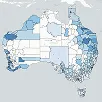

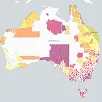


The total adult population (15 years or older) of Arundel 4214 QLD is 9,260, with a median age of 41. Of those, 48.62% are married, 12.85% are divorced or separated, 33.35% are single and 5.23% are widowed.
The average household size is 2.7 people per dwelling, and the median household monthly income is estimated to be $7,512. The median monthly mortgage repayment for households in this suburb is $2,000 which is 26.62% of their earnings.
Source: ABS Census Data (2021)