
Biloela, QLD 4715

Good to know:
Biloela is a charming rural town located in the Shire of Banana in Central Queensland, postcode 4715. It serves as a commercial hub for the surrounding agricultural region, which is known for its cattle farming, cotton, and grain production. The town boasts a welcoming community, excellent schooling options, and healthcare facilities. Key attractions include the Queensland Heritage Park and the Callide Dam, which offers opportunities for fishing and water sports. Biloela's relaxed lifestyle and scenic landscapes make it an appealing choice for those seeking a quieter, country living experience.
Read More
Biloela QLD 4715 shows characteristics of a tight, defensive regional house market. Biloela QLD 4715 property market data lists a typical house price of $437,389, median rent of $350 pw and a gross yield of 4.16% — a yield above the commonly‑cited 3% threshold. Biloela property investment looks supported by low available stock and extremely low vacancy, combined with reasonable affordability (estimated 18 years to own) and an IRSAD of 962, which sits in the favourable range.
Property market outlook
Supply conditions are contractionary: Stock on Market is 0.23% and inventory is 1.75 months for houses, both indicating tight supply that tends to support prices and limit time-to-sell pressure. Vacancy is a standout metric at 0.17% — exceptionally low and indicative of very strong rental take-up and limited available rental stock. Demand indicators are balanced rather than overheated: Days on Market for houses is 38 days (near the balanced band) and the Buy Search Index at 3 is average for the state. Building approvals are modest (BA ratio 0.5%), so near‑term new supply is not a major headwind. Socio‑economic profile (IRSAD 962) is above the neutral threshold, which is supportive of more stable long‑term capital outcomes relative to lower IRSAD suburbs.
Pros
- Low vacancy (0.17%): acute rental tightness that reduces leasing risk and supports upward pressure on rents.
- Yield 4.16%: above the 3% benchmark, offering reasonable cashflow potential for a regional house purchase at the typical price of $437,389.
- Tight sales supply: SoM 0.23% and inventory 1.75 months point to seller-favourable supply dynamics that can underpin capital stability.
- Affordability: estimated 18 years to own improves buyer access and broadens local demand compared with high‑price coastal/capital markets.
- IRSAD 962: above neutral, signalling a relatively favourable socio‑economic profile for longer‑term capital retention.
- Units/Houses ratio 2%: very low unit penetration reduces competition from higher‑density stock and supports traditional house market dynamics.
Cons
- Market scale and volume: regional markets like Biloela can have low transaction volumes, which increases the potential for short‑term price volatility despite the reported high confidence.
- Hold period ~9.6 years (neutral): ownership turnover is average; not as tightly held as some inner‑city suburbs where supply is chronically constrained.
- Modest building approvals (0.5% neutral): while this limits immediate oversupply risk, it also indicates limited infrastructure-driven development that might otherwise boost employment or population growth quickly.
- Clearance rate reported 0.0%: often reflects a lack of auction activity rather than weak demand, but it reduces auction-based market signals for price discovery.
Investment strategies
- Core buy-and-hold for cashflow: With a 4.16% gross yield and extremely low vacancy, a straightforward hold strategy targeting steady rental income is appropriate. Focus on properties with functional layouts and low maintenance exposure to keep real net yields stable.
- Affordable entry, strategic upgrades: Typical price ~ $437k allows acquisition without high leverage blind spots. Small targeted refurbishments (kitchen/bathroom, energy efficiency, insulation) can materially improve rent and appeal to longer-term tenants in a tight rental market.
- Laddered holdings: For investors seeking capital growth exposure in regional markets, stagger purchases across micro‑locations or dwelling ages to average entry cost and diversify timing risk.
- Tenant profile and lease management: Given the low vacancy, screen for longer-term tenants and consider slightly longer lease terms or incentives for stability. Tight rental market enables regular indexed rent reviews in line with local trends.
- Exit/refinance planning: Low transaction turnover suggests extended exit horizons; plan refinancing and servicing buffers for 3–5+ year horizons rather than short flips. Use the suburb’s affordability and IRSAD profile to support refinancing assumptions.
Is Biloela QLD 4715 a good suburb to invest in?
Yes — for investors seeking defensive regional exposure with reliable rental demand and reasonable yield, Biloela QLD 4715 is an attractive option. Key drivers in its favour are the very low vacancy (0.17%), low stock on market and healthy yield (4.16%) at an affordable typical price point. These factors reduce leasing and cashflow risk and support steady income. Caveats: this is a modest‑scale regional market with average turnover and limited new development activity, so capital growth expectations should be tempered versus high-growth metropolitan corridors. Biloela suits buy‑and‑hold income strategies or investors who prioritise rental security and affordability over aggressive short-term capital appreciation.
About HtAG Analytics Data
HtAG reports a base set of suburb metrics (listed here for reference): Typical Price, Median Rent, Sales, Rentals, Δ Change (period comparisons), Yield (gross), Capital Growth (annual estimate with low/high bounds), Total RoI (Yield + CG), Rent Increase (annual projection), Volatility Index (MAPE-based), Confidence (data accuracy indicator), and a Relative Composite Score™. There are additional specialised metrics available on HtAG dashboards (e.g. School Rank, Non‑residential approvals per capita, DoRM, BA Ratio, SoM%, Inventory months, Hold Period) that we do not exhaustively list here.
HtAG’s methodology is designed to capture both current market conditions and historical trends so users can perform relative market analysis at or near the point of purchase. In practice this means our suburb metrics synthesise transaction, rental listing and approvals data into measures that emphasise actionable differences between local markets — not only headline public datasets used for broader media commentary. While metric names may match other providers, HTAG applies distinct curation and measurement nuances to make comparisons more relevant for buyers, investors and agents evaluating specific suburbs like Biloela QLD 4715.
Finally, the snapshot above summarises current value metrics but does not replace trend analysis: metric trajectories and the relative importance of particular indicators vary by strategy and investor constraints (budget, borrowing capacity, risk tolerance and planned hold/refinance/sale horizons). Different investor objectives will lead to different suburb selections. HTAG excels at shortlisting and ranking markets based on tailored criteria rather than a one‑size‑fits‑all view. For serious investors and buyer’s agents, a relative multi‑location analysis that aligns with your financial and timing goals is the necessary next step.
Updated: 1 Jun 2026
Read Less
Quick Area Stats

Dwellings

Population

EDI

Bushfire Risk Index

Flood Risk Index
Education & Infrastructure
Sign Up to Access

School Rank

Infra. Spend
Market Trends
Essential metrics effectively streamline the process of identifying markets that match your financial situation and investment objectives. Typical Price, Indicative Yield and Total ROI provide a swift means to shortlist areas that resonate with what you’re seeking and can afford. These metrics also serve as valuable general trend indicators, allowing you to visualise transaction volumes and dynamics of change.
1M
1Q
1Y
3Y
5Y
7Y
10Y
1M
1Q
1Y
3Y
5Y
7Y
10Y

1M
1Q
1Y
3Y
5Y
7Y
10Y
The Growth Rate Cycle (GRC) is a metric used to analyse the year-on-year change in property values, providing insights into the growth cycle of a particular area. It uses the “typical price” metric to gauge property values more accurately than median prices, and includes both actual and projected data for the current year.

Fundamental metrics play a vital role in providing a comprehensive analysis of the socio-economic environment within a specific suburb or region. Additionally, the Return on Investment (ROI) and Volatility Index are crucial metrics that aid in evaluating the prospective profitability and the level of risk or stability in the market.
Socio-economics
Sign Up to Access

IRSAD

Renter to Owner

Units to Houses
Projections
Sign Up to Access

Projected Annual ROI

Volatility Index
Quick Area Stats
Sign Up to Access

Annual Sales Volume

Annual Rentals Volume



Stock on Market

Building Approvals

Inventory

Hold Period




Supply metrics are crucial in gauging both the existing volumes of real estate listed for sale and the properties anticipated to enter the market soon. A diminished supply could signal opportunities for price appreciation, particularly when there’s corresponding buyer demand to buoy the market. The Stock on Market and Inventory level metrics (current values) are presented as a 3-month rolling average of monthly data shown in the charts. This means the last 3 months of data are averaged. The BA Ratio represents the proportion of building approvals over the latest 12 months relative to the total dwellings in the area.

Days on Market

Search Index

Vacancy Rate

Clearance Rate




Demand metrics underscore the level of interest that potential property buyers or tenants have in a specific suburb or locality. When demand outstrips the available supply, or if the supply fails to meet the intensity of buyer/renter interest, there’s a potential for prices to climb, underscoring the pivotal relationship between demand dynamics and property value trends. The Days on Market and Clearance Rate metrics (current values) are presented as a 3-month rolling average of monthly data shown in the charts. This means the last 3 months of data are averaged.
We invite you to contribute to the conversation by sharing your thoughts or raising questions about this market in the comment section below.
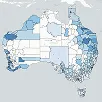

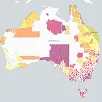


The total adult population (15 years or older) of Biloela 4715 QLD is 4,482, with a median age of 36. Of those, 47.28% are married, 11.31% are divorced or separated, 35.50% are single and 5.98% are widowed.
The average household size is 2.5 people per dwelling, and the median household monthly income is estimated to be $8,968. The median monthly mortgage repayment for households in this suburb is $1,300 which is 14.50% of their earnings.
Source: ABS Census Data (2021)
Biloela seems like a small town but it is important to remember that i services the entire Banana Shire.
It has a very diverse industry with the Australian Government looking at adding a nuclear powerplant here.
It has an extremely tight rental market and very limited supply. Most of the the population live there due to the specialist jobs that exist in mining, power generation and agriculture. There is also a new hospital being built in the coming years.
Strong cashflow comes from a severe limit in housing stock.