
Moura, QLD 4718

Good to know:
Moura is a small town located in the Banana Shire of Central Queensland, with the postcode 4718. Known for its strong agricultural and mining industries, Moura serves as a crucial hub for coal mining operations in the Bowen Basin. The town offers essential amenities such as schools, shops, and medical facilities, making it a self-sufficient community. Moura hosts the annual Coal and Country Festival, reflecting its rich mining heritage. The nearby Dawson River and Moura Weir provide popular spots for fishing, boating, and leisure, adding to the town's balanced rural lifestyle.
Read More
Moura QLD 4718 — compact regional house market with strong gross yield and tight rental conditions. The Moura QLD 4718 property market shows a typical house price of $328,332, median rent of $452 per week and a gross rental yield of 7.16%. This combination makes Moura QLD 4718 property investment attractive for cashflow-focused buyers: house prices in Moura are affordable relative to many coastal and metro markets, while rental income and vacancy metrics support stable yield generation.
Property market outlook
Moura’s house market is defined by low prices, strong rental returns and constrained supply. Key supply metrics (Stock on Market 0.3% — classed as opportune; Building Approvals Ratio 0.0% — opportune) point to limited new and established stock coming to market. Inventory at ~3.02 months sits in the balanced range, while Hold Period (~8.9 years) and Days on Market (78 days) indicate a moderately steady turnover rather than a highly fluid market. Demand-side indicators are supportive: Vacancy Rate 0.51% is tight (opportune) and Buy Search Index = 3 is in the neutral band — there is steady local demand but not an elevated speculative chase. Confidence of data is High, so the snapshot is credible for initial screening.
Pros
- Strong cashflow: 7.16% gross yield is well above common thresholds and suits income-focused investors.
- Low vacancies: 0.51% indicates tight rental market and low downtime between tenants.
- Low stock and development: SoM 0.3% and zero building approvals reduce downside risk from oversupply.
- Affordable entry price: Typical price $328k lowers barriers to entry and supports higher yield outcomes.
- Units are virtually non-existent (Units/Houses ratio 1.0% opportune) — limited apartment competition for landlords and buyers focused on houses.
- High data confidence: reliable sample sizes for trading and rental metrics.
Cons
- Socio-economic measure marginal: IRSAD 920 sits below the noted minimum benchmark (927), implying a less favourable SES profile that can constrain long-term capital growth relative to higher-IRSAD suburbs.
- Modest growth signals: Inventory and turnover are neutral and there’s no recent approvals activity to suggest an imminent uplift in infrastructure-led demand.
- Market size and liquidity: Low sales volumes and a moderate Days on Market (78 days) mean exits can take longer; this matters for investors needing rapid refinancing or disposal.
- Limited upside from development-led appreciation: zero approvals and very low units ratio mean fewer catalysts for rapid re-rating of stock values.
Investment strategies
- Income-first buy-to-let: Moura houses suit investors prioritising immediate cashflow. With a 7%+ gross yield and sub-1% vacancy, expect steady rental receipts; target single-family homes with low maintenance cost profiles to protect net yield.
- Short to medium hold-term income play: Given affordable entry and tight rental conditions, position for a 3–7 year hold to capture rental growth while monitoring socio-economic and employment indicators for capital appreciation potential.
- Renovation light value-add: Because house prices are modest, small targeted refurbishments (kitchen, bathroom, fresh paint, rental-ready landscaping) can increase rent and tenant quality without large capital outlay — a proportionally high uplift relative to purchase price.
- Portfolio diversification role: Use Moura as a satellite holding for yield diversification within a broader portfolio that includes higher-IRSAD or capital-growth markets.
- Due diligence focus: Verify local employment drivers and tenant profile (industry, affordability), check council or state plans for infrastructure or industrial activity, and confirm rental demand seasonality. Low building approvals reduce supply risk but also mean fewer obvious growth catalysts — assess nearby regional hubs for spillover demand.
Is Moura QLD 4718 a good suburb to invest in?
For investors seeking reliable rental income and high gross yields, Moura QLD 4718 is an attractive, low-cost option. The combination of a typical house price around $328k, weekly rent near $452 and a 7.16% yield — plus a vacancy rate at 0.51% — makes it well suited to cashflow-focused strategies. However, for investors whose primary objective is strong long-term capital appreciation, Moura’s IRSAD (920) and limited development activity suggest capital growth prospects are more modest versus higher-SES or growth-corridor suburbs. In short: good for income and affordability; neutral-to-cautious for pure growth plays. Match exposure to investor timeframes and risk tolerance.
About HtAG Analytics Data
Base metrics used in this summary (selected; HTAG offers more): Typical Price; Median Rent; Sales; Rentals; % Change over time; Yield (Gross Rental Yield); Capital Growth (CG) and CG Low/High; Total RoI; Rent Increase projection; Volatility Index; Confidence; Relative Composite Score™. Fundamental context metrics frequently referenced include IRSAD (socio-economic index), RO Ratio (renter/owner), UH Ratio (units/houses), UHV Ratio (unit value share), Years to Own (affordability), Growth Rate Cycle (GRC). Supply and demand indicators include Stock on Market (SoM and SoM%), Inventory (months), Building Approvals & BA Ratio, Hold Period, Days on Market, Discounting, Vacancy Rate, Buy & Rent Search Index, and Auction Clearance Rates.
HtAG’s approach is designed to capture both current conditions and historical trends to deliver relative market analysis that is targeted to the point of purchase. Where broader public datasets often feed high-level commentary and statewide narratives, HTAG metrics are curated and modelled to compare suburbs and postcode markets as closely as possible to an investor’s real transactional context — this is why similarly named metrics can be produced with different curation and measurement nuances compared with other providers.
Note on interpretation for Moura: the snapshot above conveys the current value metrics but does not show trend direction or momentum, which can materially affect decisions (for example, a rising vacancy trend or emerging approvals would change the picture). Some metrics (e.g. yield, vacancy, IRSAD) carry greater weight depending on investor objectives. Market selection is not one-size-fits-all: different budgets, borrowing capacity, risk appetite and intended hold/exit timelines will lead to different suburb choices. HTAG is optimised to shortlist and compare suburbs against individual investment criteria to support those tailored decisions.
Updated: 1 May 2026
Read Less
Quick Area Stats

Dwellings

Population

EDI

Bushfire Risk Index

Flood Risk Index
Education & Infrastructure
Sign Up to Access

School Rank

Infra. Spend
Market Trends
Essential metrics effectively streamline the process of identifying markets that match your financial situation and investment objectives. Typical Price, Indicative Yield and Total ROI provide a swift means to shortlist areas that resonate with what you’re seeking and can afford. These metrics also serve as valuable general trend indicators, allowing you to visualise transaction volumes and dynamics of change.
1M
1Q
1Y
3Y
5Y
7Y
10Y
1M
1Q
1Y
3Y
5Y
7Y
10Y

1M
1Q
1Y
3Y
5Y
7Y
10Y
The Growth Rate Cycle (GRC) is a metric used to analyse the year-on-year change in property values, providing insights into the growth cycle of a particular area. It uses the “typical price” metric to gauge property values more accurately than median prices, and includes both actual and projected data for the current year.

Fundamental metrics play a vital role in providing a comprehensive analysis of the socio-economic environment within a specific suburb or region. Additionally, the Return on Investment (ROI) and Volatility Index are crucial metrics that aid in evaluating the prospective profitability and the level of risk or stability in the market.
Socio-economics
Sign Up to Access

IRSAD

Renter to Owner

Units to Houses
Projections
Sign Up to Access

Projected Annual ROI

Volatility Index
Quick Area Stats
Sign Up to Access

Annual Sales Volume

Annual Rentals Volume



Stock on Market

Building Approvals

Inventory

Hold Period




Supply metrics are crucial in gauging both the existing volumes of real estate listed for sale and the properties anticipated to enter the market soon. A diminished supply could signal opportunities for price appreciation, particularly when there’s corresponding buyer demand to buoy the market. The Stock on Market and Inventory level metrics (current values) are presented as a 3-month rolling average of monthly data shown in the charts. This means the last 3 months of data are averaged. The BA Ratio represents the proportion of building approvals over the latest 12 months relative to the total dwellings in the area.

Days on Market

Search Index

Vacancy Rate

Clearance Rate




Demand metrics underscore the level of interest that potential property buyers or tenants have in a specific suburb or locality. When demand outstrips the available supply, or if the supply fails to meet the intensity of buyer/renter interest, there’s a potential for prices to climb, underscoring the pivotal relationship between demand dynamics and property value trends. The Days on Market and Clearance Rate metrics (current values) are presented as a 3-month rolling average of monthly data shown in the charts. This means the last 3 months of data are averaged.
We invite you to contribute to the conversation by sharing your thoughts or raising questions about this market in the comment section below.
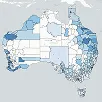

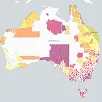


The total adult population (15 years or older) of Moura 4718 QLD is 1,520, with a median age of 34. Of those, 42.70% are married, 13.29% are divorced or separated, 40.13% are single and 3.88% are widowed.
The average household size is 2.5 people per dwelling, and the median household monthly income is estimated to be $8,744. The median monthly mortgage repayment for households in this suburb is $1,062 which is 12.15% of their earnings.
Source: ABS Census Data (2021)