
Basin Pocket, QLD 4305

Good to know:
Basin Pocket is a residential suburb located in Ipswich, Queensland, with the postcode 4305. Situated near the Bremer River, this small and quiet suburb is known for its serene environment and close-knit community. Proximity to the Ipswich CBD provides residents with easy access to amenities, including shopping centres, schools, and parks. The suburb features a mix of older, character homes and more contemporary residences, reflecting its historical roots and ongoing development. The leafy streets and riverside views contribute to Basin Pocket's charm, making it a desirable location for families and professionals alike.
Read More
Basin Pocket QLD 4305 shows a tightly-held house market with modest yields and stretched affordability. Basin Pocket QLD 4305 property market data: typical price $762,235, median rent $527 per week (annualised ~$27,404) and a gross yield of 3.6%. House prices in Basin Pocket are supported by low listed stock and quick sales, but the suburb's IRSAD of 895 and an affordability estimate of 43 years signal structural constraints on future price support.
Property market outlook
Supply is a constraining factor for houses. Stock on Market is very low at 0.34% (opportune), Building Approvals ratio is 0.0% (opportune) and Days on Market at 22 days (opportune) indicates strong transactional velocity. Inventory of 2.18 months sits in the neutral band, implying the market is not severely undersupplied across all metrics but established listings are scarce. Hold period of 8.28 years is in the neutral range — dwellings are neither exceptionally tightly held nor turnover-heavy.
Demand and rental signals are mixed. Vacancy of 2.29% is neutral, and Buy Search Index of 5 is exactly market-average, indicating steady interest rather than an overheated buyer pool. The 3.6% gross yield is above a common 3% threshold, delivering acceptable cash return relative to many inner-city markets, but not high enough to offset weak affordability pressures alone.
Socio-economic risk is notable. IRSAD at 895 is below commonly used benchmarks (below ~920–927), which can limit premium capital growth over time compared with higher-SES suburbs. Affordability of circa 43 years is materially stretched and may reduce the local demand base for future buyers or owner-occupiers if rates or incomes don’t change favourably.
Pros
- Very low active stock (SoM 0.34%) and zero recent building approvals point to limited near-term new supply pressure — supportive for price stability or upside.
- Fast sales rhythm (DOM 22 days) suggests buyers move quickly when properties are listed; advantageous for vendors and helpful for investors wanting rapid deployment.
- Units/Houses ratio 1.0% (opportune) means almost all dwellings are houses — if you want house exposure there is little competition from new unit oversupply.
- Gross rental yield 3.6% is above the 3% floor and acceptable for a low-turnover suburban market.
- Data confidence is Medium — sufficient transaction sample to make cautious decisions.
Cons
- IRSAD 895 is below the neutral threshold; lower socio‑economic ranking can cap aspirational price growth compared with higher-IRSAD suburbs.
- Affordability at ~43 years is high, indicating a stretched buyer base and potential sensitivity to interest rate rises or wage stagnation.
- Vacancy at 2.29% is only neutral — not a strong rental tightness indicator; may limit immediate rental upside.
- Clearance rate reported as 0% (neutral) — many regional/suburban markets have few auctions so clearance stats are not informative here.
- Medium confidence suggests smaller sample sizes than major markets; anomalies are more likely and due diligence is important.
Investment strategies
- Target houses only: with a Units/Houses ratio of 1%, the market is overwhelmingly house-based — focus acquisition strategy on houses (detached, small-lot homes) rather than searching for scarce unit stock.
- Buy into scarcity and time the market: low SoM and zero recent approvals favour buyers who can act quickly when suitable listings appear — maintain finance pre-approval and a short decision timeframe.
- Value-add to improve yield: baseline yield is moderate; consider cosmetic renovation or functional upgrades (kitchen, bathrooms, energy efficiency, storage) that can be executed with limited capex to lift rent and net yield.
- Conservative gearing and cash buffers: stretched affordability (43 years) increases macro sensitivity — structure finance conservatively with stress-testing for higher rates and plan for longer hold periods.
- Hold for capital stability rather than speculative quick flips: low supply and neutral turnover suggest better outcomes for medium–long-term holders rather than short-term traders.
- Monitor socio‑economic flow: track local employment, infrastructure or non-residential approvals that could improve IRSAD and buyer capacity; positive changes materially improve long-term upside.
- Use a local buyers agent: with quick market movement and small stock, a proactive local buyer’s agent increases chances of accessing off-market or quickly listed properties.
Is Basin Pocket QLD 4305 a good suburb to invest in?
Basin Pocket QLD 4305 can be a sensible buy for investors seeking low-supply suburban house exposure and modest rental returns (3.6% yield). The market’s structural scarcity (very low SoM, zero building approvals) supports price resilience, and fast days-on-market implies efficient disposal if required. However, socio-economic constraints (IRSAD 895) and very poor affordability (estimated 43 years to own) are material risks for high-growth expectations. For conservative, long-hold investors targeting houses and willing to accept moderate yields, Basin Pocket is appropriate as a defensive addition. For growth-seeking investors reliant on strong capital appreciation or high rental uplift, this suburb carries limitations unless surrounding economic indicators or infrastructure improvements change the SES profile.
About HtAG Analytics Data
HtAG reports a core set of suburb metrics (the base set shown above) including: Typical Price, Median Rent, Sales and Rental listing counts, % Change over set periods, Gross Rental Yield, Capital Growth projections (annualised with low/high bands), Total RoI (yield + growth), Rent Increase forecasts, Volatility Index, Confidence, Relative Composite Score™, IRSAD, Renter/Owner ratio, Units/Houses ratio, Years to Own (affordability), Growth Rate Cycle (GRC), Stock on Market (SoM and SoM%), Inventory (months), Building Approvals & BA Ratio, Hold Period, Days on Market, Discounting, Vacancy Rate, Vacancies, Days on Rental Market, Buy & Rent Search Index, Auction Clearance Rates, Population and Estimated Dwellings. There are additional advanced metrics and regional adjustments available on suburb dashboards; the list above reflects the primary, independent measures most used in shortlist and relative analysis.
HtAG’s metrics are engineered to capture both current conditions and historical trends with the explicit aim of enabling relative market analysis at or near the point of purchase. That focus distinguishes our outputs from some providers that rely primarily on public aggregates for broader commentary—HTAG’s methodology applies different curation and measurement nuances so similarly named metrics are not direct equivalents to other vendors. In the Basin Pocket context that means our Typical Price, SoM, IRSAD and yield signals are calibrated to the local transactional mix rather than a broad regional average.
Note that the snapshot above describes current value metrics but does not show metric trends, which can materially alter an investment case (for example improving approvals, rising school ranks or changing local employment can shift a suburb’s outlook). Some metrics carry greater weight than others depending on an investor’s strategy and constraints (budget, borrowing power, risk appetite, intended hold or refinance timeframe). HTAG excels at shortlisting and comparing markets against user-specific criteria rather than providing one-size-fits-all recommendations; serious investors and buyer’s agents should run relative analyses across multiple locations aligned to their objectives.
Updated: 1 Jun 2026
Read Less
Quick Area Stats

Dwellings

Population

EDI

Bushfire Risk Index

Flood Risk Index
Education & Infrastructure
Sign Up to Access

School Rank

Infra. Spend
Market Trends
Essential metrics effectively streamline the process of identifying markets that match your financial situation and investment objectives. Typical Price, Indicative Yield and Total ROI provide a swift means to shortlist areas that resonate with what you’re seeking and can afford. These metrics also serve as valuable general trend indicators, allowing you to visualise transaction volumes and dynamics of change.
1M
1Q
1Y
3Y
5Y
7Y
10Y
1M
1Q
1Y
3Y
5Y
7Y
10Y

1M
1Q
1Y
3Y
5Y
7Y
10Y
The Growth Rate Cycle (GRC) is a metric used to analyse the year-on-year change in property values, providing insights into the growth cycle of a particular area. It uses the “typical price” metric to gauge property values more accurately than median prices, and includes both actual and projected data for the current year.

Fundamental metrics play a vital role in providing a comprehensive analysis of the socio-economic environment within a specific suburb or region. Additionally, the Return on Investment (ROI) and Volatility Index are crucial metrics that aid in evaluating the prospective profitability and the level of risk or stability in the market.
Socio-economics
Sign Up to Access

IRSAD

Renter to Owner

Units to Houses
Projections
Sign Up to Access

Projected Annual ROI

Volatility Index
Quick Area Stats
Sign Up to Access

Annual Sales Volume

Annual Rentals Volume



Stock on Market

Building Approvals

Inventory

Hold Period




Supply metrics are crucial in gauging both the existing volumes of real estate listed for sale and the properties anticipated to enter the market soon. A diminished supply could signal opportunities for price appreciation, particularly when there’s corresponding buyer demand to buoy the market. The Stock on Market and Inventory level metrics (current values) are presented as a 3-month rolling average of monthly data shown in the charts. This means the last 3 months of data are averaged. The BA Ratio represents the proportion of building approvals over the latest 12 months relative to the total dwellings in the area.

Days on Market

Search Index

Vacancy Rate

Clearance Rate




Demand metrics underscore the level of interest that potential property buyers or tenants have in a specific suburb or locality. When demand outstrips the available supply, or if the supply fails to meet the intensity of buyer/renter interest, there’s a potential for prices to climb, underscoring the pivotal relationship between demand dynamics and property value trends. The Days on Market and Clearance Rate metrics (current values) are presented as a 3-month rolling average of monthly data shown in the charts. This means the last 3 months of data are averaged.
We invite you to contribute to the conversation by sharing your thoughts or raising questions about this market in the comment section below.

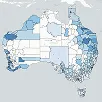

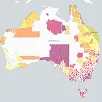


The total adult population (15 years or older) of Basin Pocket 4305 QLD is 749, with a median age of 37. Of those, 33.38% are married, 17.89% are divorced or separated, 42.19% are single and 7.34% are widowed.
The average household size is 2.3 people per dwelling, and the median household monthly income is estimated to be $6,784. The median monthly mortgage repayment for households in this suburb is $1,259 which is 18.56% of their earnings.
Source: ABS Census Data (2021)