
Eagleby, QLD 4207

Good to know:
Eagleby, located in Queensland with the postcode 4207, is a suburb nestled between Brisbane and the Gold Coast. It offers a blend of urban and semi-rural living, appealing to families and retirees with its tranquil environment. The suburb is characterized by extensive parklands and the Logan River, providing ample outdoor recreational opportunities. It has essential amenities including schools, shopping centres, and healthcare facilities. Commuters appreciate its proximity to major highways and public transport options. Eagleby’s community vibe and scenic surroundings make it a desirable place to live.
Read More
Eagleby QLD 4207 houses show a typical price of $902,591 with a rolling-year median rent of $569pw and a gross yield of 3.28% — the numbers define the current Eagleby QLD 4207 property market. House prices in Eagleby are supported by tight for-sale stock and a very low rental vacancy, yet long-run affordability metrics and a low IRSAD score are constraints investors must factor into underwriting and exit planning.
Property market outlook
Eagleby houses combine tight transactional supply (SoM 0.36% — low) and brisk demand (DOM 20 days; Vacancy 0.74%) which is supportive of near-term price stability and rental security. Inventory sits at a balanced 2.53 months and Building Approvals Ratio at 1.73% indicates modest near-term new supply — not enough to materially weaken established market dynamics. However, the suburb’s IRSAD of 848 is well below neutral thresholds and Years to Own at 66 years signals extreme affordability pressure; both imply a smaller owner-occupier buying pool and a higher reliance on lower-income households. For investors this equates to reliable rental demand but a structurally challenged capital-growth backdrop relative to higher-IRSAD markets.
Pros
- Tight for-sale stock: SoM 0.36% (opportune) — low advertised supply supports price resilience.
- Strong rental tightness: Vacancy 0.74% (opportune) — low vacancy reduces rental risk and supports rent growth potential.
- Quick transaction pace: DOM 20 days (opportune) — short days-on-market indicate active buyer interest for houses.
- Reasonable yield for market: 3.28% (above the 3% floor) — acceptable cashflow for some investors in this price band.
- Data confidence is high: sample size and reporting confidence rated High — reliable inputs for comparative analysis.
Cons
- Low socio-economic index: IRSAD 848 (unfavourable) — lower relative affluence can limit long-term capital growth compared with neutral/opportune IRSAD suburbs.
- Very poor affordability: Years to Own = 66 (well above 30) — extreme affordability pressure can cap domestic demand and increase market sensitivity to rate rises.
- Yield modest for the price point: 3.28% on a ~$903k typical house is modest — lower cushion against rate-driven servicing cost increases.
- Buyer profile risk: Renter/Owner ratio at 45% (neutral but high side) suggests reliance on renters; tenant-driven neighbourhood dynamics can increase turnover and maintenance load.
- Clearance rate reported 0% (neutral) — reflects few auctions, which limits one indicator of price discovery in the local market.
Investment strategies
- Cashflow-first buys: target properties with minor value-adding opportunities (kitchen/bath upgrades, landscaping) to lift rent and marginally improve yield without relying on strong capital growth. Underwrite to a conservative yield (assume slower rent growth) given modest starting yield.
- Tenancy security focus: invest in well-maintained three-bedroom houses or family-oriented floorplans that match local demand; reduced vacancy risk and long leases will protect income given low market yield.
- Stretch negotiation and hold-discipline: because affordability is weak, buyers can seek price concessions or vendor terms; prefer 5–10+ year hold horizons and plan for refinancing scenarios if rates rise.
- Risk-weighted leverage: use conservative gearing (lower LVR) to insulate against interest-rate volatility and the suburb’s lower socio-economic resilience.
- Monitor supply catalysts: track local building approvals and planned infrastructure — even small increases in approvals could materially alter supply dynamics and affect price upside.
- Shortlist for relative value plays: use Eagleby in a portfolio alongside higher-growth, higher-IRSAD suburbs to balance cashflow and capital growth objectives. Buyers agents can leverage strong rental indicators to source stock for investors seeking steady occupancy rather than rapid appreciation.
Is Eagleby QLD 4207 a good suburb to invest in?
Eagleby QLD 4207 houses are an attractive option for investors prioritising rental security and low vacancy over aggressive capital appreciation. Tight stock and sub-1% vacancy support stable cashflow and low downtime, but the suburb’s low IRSAD and extreme Years-to-Own figure constrain the depth of owner-occupier demand and long-term capital upside. If your strategy is cashflow-focused, long hold and risk-managed gearing, Eagleby houses can fit well. If your mandate is rapid capital growth or short-term flipping, other suburbs with stronger socio-economic profiles and better affordability dynamics are preferable.
About HtAG Analytics Data
HtAG reports a base set of suburb metrics for each dwelling type, including Typical Price, Median Rent, Sales and Rentals activity, % Change over time, Gross Rental Yield, Capital Growth forecast (with low/high bounds), Total RoI, projected Rent Increase, Volatility Index, Confidence, Relative Composite Score™, and supply/demand indicators such as Stock on Market (SoM) and SoM%, Inventory (months), Building Approvals & BA Ratio, Hold Period, Days on Market, Discounting, Vacancy Rate, Buy & Rent Search Index, Auction Clearance Rates, plus contextual metrics (Population, Estimated Dwellings, School Rank, non-residential approvals per capita, Annual Sales Volume, Distance to nearest CBD GPO). There are additional advanced metrics available on HTAG suburb dashboards beyond this base set.
HtAG’s methodology is designed to capture both current market conditions and historical trends to enable relative market comparisons at the point of purchase. Unlike providers that primarily surface public aggregates for broad trend narratives, HTAG metrics are curated and modelled specifically to compare suburbs against each other with a buyer’s or agent’s decision in mind. Even where metric names overlap with other services, HTAG’s data curation, modelling choices and the way we measure localised supply/demand nuances produce distinct signals for investors.
Finally, the snapshot above shows current value metrics for Eagleby houses but does not incorporate metric trends, which can materially alter an investment outcome. Some metrics carry greater weight than others depending on strategy, budget and holding period. Market selection always varies by investor objectives, borrowing capacity and risk appetite; HTAG excels at shortlisting markets against bespoke criteria rather than offering one-size-fits-all advice. For serious investors and buyer agents, perform relative analysis across a tailored set of suburbs aligned to your specific goals.
Updated: 1 May 2026
Read Less
Quick Area Stats

Dwellings

Population

EDI

Bushfire Risk Index

Flood Risk Index
Education & Infrastructure
Sign Up to Access

School Rank

Infra. Spend
Market Trends
Essential metrics effectively streamline the process of identifying markets that match your financial situation and investment objectives. Typical Price, Indicative Yield and Total ROI provide a swift means to shortlist areas that resonate with what you’re seeking and can afford. These metrics also serve as valuable general trend indicators, allowing you to visualise transaction volumes and dynamics of change.
1M
1Q
1Y
3Y
5Y
7Y
10Y
1M
1Q
1Y
3Y
5Y
7Y
10Y

1M
1Q
1Y
3Y
5Y
7Y
10Y
The Growth Rate Cycle (GRC) is a metric used to analyse the year-on-year change in property values, providing insights into the growth cycle of a particular area. It uses the “typical price” metric to gauge property values more accurately than median prices, and includes both actual and projected data for the current year.

Fundamental metrics play a vital role in providing a comprehensive analysis of the socio-economic environment within a specific suburb or region. Additionally, the Return on Investment (ROI) and Volatility Index are crucial metrics that aid in evaluating the prospective profitability and the level of risk or stability in the market.
Socio-economics
Sign Up to Access

IRSAD

Renter to Owner

Units to Houses
Projections
Sign Up to Access

Projected Annual ROI

Volatility Index
Quick Area Stats
Sign Up to Access

Annual Sales Volume

Annual Rentals Volume



Stock on Market

Building Approvals

Inventory

Hold Period




Supply metrics are crucial in gauging both the existing volumes of real estate listed for sale and the properties anticipated to enter the market soon. A diminished supply could signal opportunities for price appreciation, particularly when there’s corresponding buyer demand to buoy the market. The Stock on Market and Inventory level metrics (current values) are presented as a 3-month rolling average of monthly data shown in the charts. This means the last 3 months of data are averaged. The BA Ratio represents the proportion of building approvals over the latest 12 months relative to the total dwellings in the area.

Days on Market

Search Index

Vacancy Rate

Clearance Rate




Demand metrics underscore the level of interest that potential property buyers or tenants have in a specific suburb or locality. When demand outstrips the available supply, or if the supply fails to meet the intensity of buyer/renter interest, there’s a potential for prices to climb, underscoring the pivotal relationship between demand dynamics and property value trends. The Days on Market and Clearance Rate metrics (current values) are presented as a 3-month rolling average of monthly data shown in the charts. This means the last 3 months of data are averaged.
We invite you to contribute to the conversation by sharing your thoughts or raising questions about this market in the comment section below.
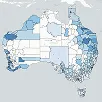

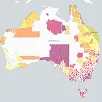


The total adult population (15 years or older) of Eagleby 4207 QLD is 10,793, with a median age of 37. Of those, 37.14% are married, 17.45% are divorced or separated, 38.76% are single and 6.62% are widowed.
The average household size is 2.4 people per dwelling, and the median household monthly income is estimated to be $5,156. The median monthly mortgage repayment for households in this suburb is $1,300 which is 25.21% of their earnings.
Source: ABS Census Data (2021)