
New Beith, QLD 4124

Good to know:
New Beith, QLD 4124, is a semi-rural suburb located within the City of Logan, south of Brisbane. Known for its large residential blocks and scenic natural environment, it provides a tranquil lifestyle away from the hustle and bustle of city living. The suburb is characterised by lush greenery, offering plenty of open space and picturesque landscapes. While amenities within New Beith are limited, nearby suburbs like Greenbank and Flagstone provide essential services, shopping, and schools. It is an ideal locale for families and individuals seeking a spacious and peaceful living environment.
Read More
New Beith QLD 4124 is a high-value outer‑metropolitan housing market with a Typical Price of $1,529,481, a rolling-year Median Rent of $994 per week and a Gross Rental Yield of 3.38%. HTAG property market data shows a strong socio‑economic profile (IRSAD 1071), extremely low rental vacancy (0.22%) but stretched affordability (56 years). House prices in New Beith are supported by tight rental stock and a near‑absence of units, yet rising new approvals and elevated inventory point to meaningful near‑term supply risk.
Property market outlook
New Beith QLD 4124 is a predominantly house market that currently favours owners and capital growth more than yield investors. Positive signals: very low vacancy and a high IRSAD score indicate affluence and structural rental tightness, which supports rent growth and downside protection for house prices. Neutral to cautionary signals: SoM at 0.56% and Days on Market of 63 imply balanced transactional activity, but Inventory at 5.92 months and a Building Approvals Ratio of 2.96% indicate above‑average incoming supply that may cap short‑term price acceleration. Yield of 3.38% is modest — acceptable for long‑term buy‑and‑hold strategies but low for cashflow-focused portfolios. High data confidence means these observations are based on reliable transactional activity.
Pros
- Very low Vacancy Rate (0.22%): strong rental demand and low turnover support rent increases and minimise vacancy risk.
- High IRSAD (1071): demographic affluence correlates with resilient demand and better prospects for long‑term capital growth.
- Predominantly detached houses (Units/Houses ratio 0.0%): scarcity of units reduces product substitution and concentrates demand on houses.
- Yield above 3% (3.38%): better than many high‑price markets that drop below 3%, providing a basic income floor for investors.
- High confidence score: robust dataset for this suburb makes comparisons and decisions more reliable.
Cons
- Very high Affordability years (56 years): market is highly price‑sensitive to interest rate or income shocks and relies on well‑resourced buyers — adds downside risk if credit conditions tighten.
- Inventory 5.92 months and Building Approvals Ratio 2.96%: elevated existing listings and significant recent approvals suggest near‑term supply growth that could moderate price momentum.
- Moderate yields for high capital outlay: $1.53m typical price with 3.38% gross yield requires substantial capital or leverage, reducing cashflow resilience.
- Renter/Owner ratio neutral (23%): not an investor‑dominated market; rental demand exists but owner‑occupiers largely drive prices, which can limit yield arbitrage opportunities.
- Clearance Rate 0% (neutral): limited auction data reduces this signal’s usefulness for gauging vendor urgency.
Investment strategies
- Growth‑oriented house plays: target well‑located established houses that are functionally superior to new builds (better blocks, aspect, private outdoor space). In a market with high approvals, selective acquisitions of proven, tightly held pockets reduce supply risk.
- Focus on rental tightness rather than yield: with vacancy at 0.22% and modest yields, prioritise properties likely to attract high‑quality tenants and deliver steady rent growth (proximity to schools, amenity, transport nodes).
- Value add renovations with cautious capex: modest improvements (kitchen/bath, landscaping) can lift rent and appeal in a market where tenants compete for limited stock, improving net return without competing directly with new supply.
- Stagger exposure to new supply: if considering off‑the‑plan or new‑build stock, model sales absorption and rental comparables carefully — the BA Ratio near 3% signals active construction; negotiate price or incentives accordingly.
- Consider neighbouring suburbs for yield: if cashflow is a priority, shortlist adjacent suburbs with lower typical prices and similar demand indicators to improve gross yield without sacrificing capital growth potential.
- Use leverage selectively and stress‑test serviceability: high typical prices and long affordability metrics mean portfolios are sensitive to interest rate moves — structure debt with buffers and exit/refinance plans.
- Commission relative suburb shortlists: for buyers agents, prioritise micro‑locations within New Beith with low recent approvals, shorter hold periods, and superior amenity to improve long‑term capital growth odds.
Is New Beith QLD 4124 a good suburb to invest in?
New Beith QLD 4124 can suit investors focused on long‑term capital appreciation and secure tenancy rather than immediate cashflow. The combination of a high IRSAD, extremely low vacancy and a dominant house market supports capital resilience and rental stability. However, the suburb’s very high typical price, stretched affordability (56 years) and rising new supply caution against aggressive, yield‑dependent strategies. For buyers agents and investors, New Beith is a market to pursue selectively: seek tightly held pockets, avoid competing solely on price with new development stock, and prioritise assets that capture rental scarcity or offer clear amenity advantages.
About HtAG Analytics Data
Base metrics reported for suburbs typically include: Typical Price, Median Rent, Sales, Rentals, % Change over various periods, Gross Rental Yield, Capital Growth (annualised) with low/high bands, Total RoI, Rent Increase projection, Volatility Index, Confidence, Relative Composite Score™, SoM and SoM% (Stock on Market), Inventory (months supply), Building Approvals & BA Ratio, Hold Period, Days on Market, Discounting, Vacancy Rate, Vacancies, DoRM, Buy & Rent Search Index, Auction Clearance Rate, IRSAD, Renter/Owner Ratio, Units/Houses Ratio, UHV Ratio (units only), Years to Own (Affordability), Growth Rate Cycle (GRC) and other context metrics (population, estimated dwellings, school rank, non‑residential approvals per capita, annual sales volume, distance to CBD). These are the core measures; HTAG dashboards include additional derived indicators and time‑series for deeper analysis.
HTAG’s methodology prioritises suburb‑level comparability and purchase‑point relevance. In the context of New Beith QLD 4124, our metrics combine current market conditions (pricing, rents, vacancy) with historical trend‑based forecasts to assess relative opportunity at the point of purchase. That approach differs from providers that focus primarily on public aggregates or headline trends; HTAG’s curations and model nuances aim to reflect how a market actually behaves where buyers transact and tenants rent.
It’s important to treat the snapshot above as a current value profile rather than a full directional forecast — metric trends and their relative weight vary by investor strategy. Some indicators (e.g. vacancy, approvals, affordability) carry more tactical importance depending on whether you prioritise cashflow, capital growth or time‑to‑exit. Different investors with different budgets, borrowing capacity, risk tolerance and timeframes will therefore shortlist different suburbs. HTAG specialises in shortlisting and ranking markets against bespoke criteria rather than offering one‑size‑fits‑all recommendations; serious investors and buyer’s agents should use relative analysis across comparable locations and time horizons before committing.
Updated: 1 May 2026
Read Less
Quick Area Stats

Dwellings

Population

EDI

Bushfire Risk Index

Flood Risk Index
Education & Infrastructure
Sign Up to Access

School Rank

Infra. Spend
Market Trends
Essential metrics effectively streamline the process of identifying markets that match your financial situation and investment objectives. Typical Price, Indicative Yield and Total ROI provide a swift means to shortlist areas that resonate with what you’re seeking and can afford. These metrics also serve as valuable general trend indicators, allowing you to visualise transaction volumes and dynamics of change.
1M
1Q
1Y
3Y
5Y
7Y
10Y
1M
1Q
1Y
3Y
5Y
7Y
10Y

1M
1Q
1Y
3Y
5Y
7Y
10Y
The Growth Rate Cycle (GRC) is a metric used to analyse the year-on-year change in property values, providing insights into the growth cycle of a particular area. It uses the “typical price” metric to gauge property values more accurately than median prices, and includes both actual and projected data for the current year.

Fundamental metrics play a vital role in providing a comprehensive analysis of the socio-economic environment within a specific suburb or region. Additionally, the Return on Investment (ROI) and Volatility Index are crucial metrics that aid in evaluating the prospective profitability and the level of risk or stability in the market.
Socio-economics
Sign Up to Access

IRSAD

Renter to Owner

Units to Houses
Projections
Sign Up to Access

Projected Annual ROI

Volatility Index
Quick Area Stats
Sign Up to Access

Annual Sales Volume

Annual Rentals Volume



Stock on Market

Building Approvals

Inventory

Hold Period




Supply metrics are crucial in gauging both the existing volumes of real estate listed for sale and the properties anticipated to enter the market soon. A diminished supply could signal opportunities for price appreciation, particularly when there’s corresponding buyer demand to buoy the market. The Stock on Market and Inventory level metrics (current values) are presented as a 3-month rolling average of monthly data shown in the charts. This means the last 3 months of data are averaged. The BA Ratio represents the proportion of building approvals over the latest 12 months relative to the total dwellings in the area.

Days on Market

Search Index

Vacancy Rate

Clearance Rate




Demand metrics underscore the level of interest that potential property buyers or tenants have in a specific suburb or locality. When demand outstrips the available supply, or if the supply fails to meet the intensity of buyer/renter interest, there’s a potential for prices to climb, underscoring the pivotal relationship between demand dynamics and property value trends. The Days on Market and Clearance Rate metrics (current values) are presented as a 3-month rolling average of monthly data shown in the charts. This means the last 3 months of data are averaged.
We invite you to contribute to the conversation by sharing your thoughts or raising questions about this market in the comment section below.
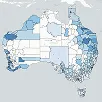

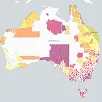


The total adult population (15 years or older) of New Beith 4124 QLD is 4,172, with a median age of 35. Of those, 62.46% are married, 6.54% are divorced or separated, 29.24% are single and 1.77% are widowed.
The average household size is 3.5 people per dwelling, and the median household monthly income is estimated to be $10,732. The median monthly mortgage repayment for households in this suburb is $2,289 which is 21.33% of their earnings.
Source: ABS Census Data (2021)