
South Launceston, TAS 7249

Good to know:
South Launceston, located in Tasmania with the postcode 7249, is a charming suburb just south of the Launceston CBD. Known for its friendly community and leafy streets, it offers a mix of heritage homes and contemporary residences. Key amenities include lovely parks, cafes, and proximity to the Launceston General Hospital, making it a convenient location for healthcare professionals. The area boasts several schools, both primary and secondary, catering well to families. Excellent public transport links provide easy access to the city's shopping, dining, and cultural attractions.
Read More
South Launceston TAS 7249 houses show a typical price of $700,150 with a rolling-year median rent of $543pw and a gross yield of 4.04% — the data indicates a tight local property market with low advertised stock and fast selling times but stretched affordability (37 years). For investors and buyers agents, South Launceston TAS 7249 property investment reads as a market with supportive supply dynamics and solid yield for houses, offset by longer-than-preferred affordability and the need to underwrite serviceability carefully.
Property market outlook
South Launceston houses are in a supply-constrained phase. Stock on market of 0.33% and inventory of 1.29 months are both in the “opportune” zones (low supply), which typically supports price resilience and upside. Days on market at 19 days signals above-average demand and a market that moves quickly. IRSAD at 964 sits in the opportune range, implying socio-economic characteristics that normally support longer-term capital growth relative to lower-scored areas.
At the same time, affordability is an important limiter: a 37‑year affordability estimate (years to own) exceeds the 30‑year threshold commonly used as a rough stress indicator, meaning higher interest rates or tighter lending could materially reduce the buyer pool and slow upside should financing conditions deteriorate. Vacancy at 1.01% is technically balanced but close to a stronger rental-tight environment (<1%); combined with a 4.04% yield this points to acceptable income returns and rental stability for houses.
Pros
- Low supply dynamic: Stock on market 0.33% and inventory 1.29 months support price stability and reduced negotiation margins for sellers.
- Fast market turnover: 19 days on market indicates strong buyer activity — useful for buyers agents preparing quick, confident bids.
- Solid gross yield: 4.04% is above the typical 3% threshold, delivering reasonable cashflow potential for house investors in the suburb.
- Socio-economic backdrop: IRSAD 964 is supportive of longer-term capital gains relative to lower‑scoring areas.
- Data confidence: Confidence is High, so metrics are reliable for shortlisting and comparative work.
Cons
- Affordability stretched: 37 years to own is materially above the 30‑year benchmark; this restricts the depth of the owner‑occupier buyer pool and increases sensitivity to rate rises.
- Limited new supply buffer: BA Ratio 0.41% is neutral but not high enough to suggest significant future dwelling uplift — the market may remain supply-constrained.
- Renter/Owner ratio at 44% sits in the neutral band; a relatively large renter cohort can increase volatility around vacancy and rental demand should broader economic conditions worsen.
- Clearance rate reported as 0% (unknown) — auction market signals are unavailable; rely instead on private treaty indicators such as DOM and SoM.
Investment strategies
- Core buy-and-hold houses: Given tight supply, opportune inventory and 4%+ yields, prioritise established houses (not land‑bank speculative lots) for 5–10+ year holds to capture rental income and potential capital growth as demand persists.
- Underwrite conservatively: Stress-test acquisitions for higher rates and longer refinance timeframes because affordability (37 years) increases rate sensitivity. Maintain cash buffers and conservative gearing.
- Target stock with immediate rent-up or value-add: Properties that can be modernised to lift rental yield and reduce vacancy risk will compound returns faster in a low‑supply market.
- Act with speed but control: Fast DOM suggests bids must be prepared, but valuation discipline is essential given stretched affordability; structure conditional offers where practical (finance/inspection) to avoid overpaying.
- Monitor new approvals and nearby suburbs: BA Ratio is neutral — any uptick in approvals nearby could shift the balance. Cross-compare with adjacent suburbs for relative value if serviceability limits purchase price in South Launceston.
- Lease‑up & tenant selection focus: With a renter proportion close to the upper neutral boundary, maintain robust tenant screening and property presentation to keep vacancy near the current 1% level or lower.
Is South Launceston TAS 7249 a good suburb to invest in?
Yes — with caveats. For house-focused investors seeking a blend of reasonable yield (4.04%), low advertised supply and quick market turnover, South Launceston TAS 7249 is attractive for buy-and-hold strategies and modest value‑add plays. The opportune supply metrics and supportive IRSAD suggest favourable structural conditions for capital growth over time. However, the suburb’s 37‑year affordability profile increases sensitivity to interest rate cycles and buyer demand deterioration; investors must underwrite worst‑case serviceability scenarios and maintain conservative leverage. In short: good for disciplined, long‑term house investors and buyers agents who can act quickly and stress-test financing assumptions.
About HtAG Analytics Data
Base metrics used in this summary (not exhaustive): Typical Price, Median Rent, Sales, Rentals, Δ Change (periodic price/rent change), Yield (gross), Capital Growth (annualised ML estimate), Total RoI (Yield + CG), Rent Increase (annualised estimate), Volatility Index (MAPE based), Confidence, Stock on Market (SoM & SoM%), Inventory / Months of Supply, Building Approvals & BA Ratio, Hold Period, Days on Market, Vacancy Rate, Buy & Rent Search Index, Auction Clearance Rates, IRSAD, Renter/Owner ratio, Unit/House mix ratios. There are additional advanced metrics available on HTAG dashboards (e.g. school rank, non‑res approvals per capita, GPO distance) that inform finer strategic choices.
The guiding principle behind HTAG metrics is to capture both present market conditions and historical trends to enable direct, relative market comparison at or close to the point of purchase. Unlike some public-data providers that tailor outputs to broad media narratives, HTAG’s methodology is calibrated to shortlist and compare specific suburbs for transactional decisions. That means similarly named metrics may be calculated differently here — HTAG places emphasis on localised sales cadence, inventory dynamics and volatility-adjusted forecasting to reflect practical buying and holding scenarios.
Finally, the snapshot above summarises current value metrics for South Launceston TAS 7249 but does not replace trend analysis; metric trajectories and their relative importance vary by investor profile. Different budgets, borrowing capacity, risk tolerance and intended hold/refinance timelines will point investors to different suburbs. HTAG excels at producing customised shortlists and relative analyses tailored to those specific criteria rather than a one‑size‑fits‑all recommendation.
Updated: 1 Jul 2026
Read Less
Quick Area Stats

Dwellings

Population

EDI

Bushfire Risk Index

Flood Risk Index
Education & Infrastructure
Sign Up to Access

School Rank

Infra. Spend
Market Trends
Essential metrics effectively streamline the process of identifying markets that match your financial situation and investment objectives. Typical Price, Indicative Yield and Total ROI provide a swift means to shortlist areas that resonate with what you’re seeking and can afford. These metrics also serve as valuable general trend indicators, allowing you to visualise transaction volumes and dynamics of change.
1M
1Q
1Y
3Y
5Y
7Y
10Y
1M
1Q
1Y
3Y
5Y
7Y
10Y

1M
1Q
1Y
3Y
5Y
7Y
10Y
The Growth Rate Cycle (GRC) is a metric used to analyse the year-on-year change in property values, providing insights into the growth cycle of a particular area. It uses the “typical price” metric to gauge property values more accurately than median prices, and includes both actual and projected data for the current year.

Fundamental metrics play a vital role in providing a comprehensive analysis of the socio-economic environment within a specific suburb or region. Additionally, the Return on Investment (ROI) and Volatility Index are crucial metrics that aid in evaluating the prospective profitability and the level of risk or stability in the market.
Socio-economics
Sign Up to Access

IRSAD

Renter to Owner

Units to Houses
Projections
Sign Up to Access

Projected Annual ROI

Volatility Index
Quick Area Stats
Sign Up to Access

Annual Sales Volume

Annual Rentals Volume



Stock on Market

Building Approvals

Inventory

Hold Period




Supply metrics are crucial in gauging both the existing volumes of real estate listed for sale and the properties anticipated to enter the market soon. A diminished supply could signal opportunities for price appreciation, particularly when there’s corresponding buyer demand to buoy the market. The Stock on Market and Inventory level metrics (current values) are presented as a 3-month rolling average of monthly data shown in the charts. This means the last 3 months of data are averaged. The BA Ratio represents the proportion of building approvals over the latest 12 months relative to the total dwellings in the area.

Days on Market

Search Index

Vacancy Rate

Clearance Rate




Demand metrics underscore the level of interest that potential property buyers or tenants have in a specific suburb or locality. When demand outstrips the available supply, or if the supply fails to meet the intensity of buyer/renter interest, there’s a potential for prices to climb, underscoring the pivotal relationship between demand dynamics and property value trends. The Days on Market and Clearance Rate metrics (current values) are presented as a 3-month rolling average of monthly data shown in the charts. This means the last 3 months of data are averaged.
We invite you to contribute to the conversation by sharing your thoughts or raising questions about this market in the comment section below.
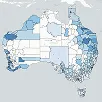

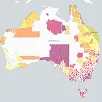


The total adult population (15 years or older) of South Launceston 7249 TAS is 4,107, with a median age of 36. Of those, 34.62% are married, 13.78% are divorced or separated, 44.22% are single and 7.21% are widowed.
The average household size is 2.2 people per dwelling, and the median household monthly income is estimated to be $7,544. The median monthly mortgage repayment for households in this suburb is $1,279 which is 16.95% of their earnings.
Source: ABS Census Data (2021)