
Kealba, VIC 3021

Good to know:
Kealba is a suburban area located within the City of Brimbank in Melbourne, Victoria, with the postcode 3021. Nestled between the Maribyrnong River and the Western Ring Road, it offers tranquil residential living with easy access to major roads. The suburb features several parks, including Green Gully Reserve, great for outdoor activities and leisure. Schools such as Keilor Downs College serve the educational needs of families. Kealba is known for its multicultural community and proximity to shopping centres in neighbouring suburbs like Keilor Downs and St Albans, making it a convenient and diverse place to live.
Read More
Kealba VIC 3021 shows a tightly held, low-supply house market with modest rental returns. Kealba VIC 3021 property market data: typical house price $836,560, median rent $507 per week and gross yield 3.15% — marginally above a common 3% threshold. House prices in Kealba are supported by a solid IRSAD (961) and low vacancy, while affordability (46 years) is an outlier that will shape demand dynamics and buyer capacity.
Property market outlook
Kealba houses look structurally positioned for capital stability rather than strong immediate yield. Supply indicators are consistently tight: Stock on Market 0.3% (low), inventory 1.61 months (low), BA Ratio 0.08% (very low) and a long hold period (11.19 years). Together these signal constrained established supply and limited near-term new supply — conditions that are typically supportive of ongoing price resilience. Demand-side metrics reinforce that: DOM at 27 days and vacancy 0.81% point to active buyer and tenant markets. Socio-economic status (IRSAD 961) is in the opportune range, which historically correlates with better long-term capital growth potential for house markets. However affordability at 46 years is materially stretched and represents a key structural constraint on buyer breadth and market turnover. Overall outlook: steadier capital growth potential with modest yield; market favours owners and long-term holders rather than yield-focused short-term investors.
Pros
- Tight supply dynamics: SoM 0.3% and inventory 1.61 months indicate a seller-leaning established market that supports price retention and upside.
- Low upcoming supply: BA Ratio 0.08% suggests limited new stock, reducing downside risk from construction-led oversupply.
- Tightly held stock: Hold period 11.19 years reduces churn and supports scarcity-value for available houses.
- Rental market strength: Vacancy 0.81% and median rent $507pw produce a stable rental backdrop and low tenant turnover risk.
- Socio-economic profile: IRSAD 961 is in the opportune band, supporting long-term appeal for owner-occupiers and higher-quality tenants.
- High data confidence: Confidence is High, improving reliability of these signals for transactions and comparative analysis.
Cons
- Affordability stress: 46 years to own (based on standard assumptions) is well above comfortable thresholds and limits the pool of first-home and mortgage-constrained buyers — a brake on rapid market expansion.
- Modest yield: Gross yield 3.15% is only just above 3% and low relative to many investor targets; cashflow may be tight without leverage strategies or tax structuring.
- Neutral demand signals: Buy Search Index 5 and clearance rate ~66.7% are not strongly bullish; they indicate steady but not frothy buyer engagement.
- Renter/Owner ratio neutral (18%): While not a direct negative, it implies a balanced tenure profile that may reduce investor rental premium opportunities compared with higher renter-concentration areas.
Investment strategies
- Capital-growth primary, yield secondary: Target Kealba houses as long-term growth plays enabled by scarcity and favourable socio-economic indicators. Expect appreciation to be a bigger component of returns than rental yield.
- Focus on value-add house opportunities: Given the low unit share (UH ratio 9%), look for renovation, addition or subdivision potential (subject to council controls) to improve conversion to higher-value stock and boost returns.
- Buyer-agent sourcing and timing: Use buyer-agent expertise to secure well-located stock quickly — DOM is low and competition can be material for desirable parcels.
- Finance and cashflow planning: Because yield is modest, structure finance with buffer for servicing (interest-only or offset strategies), and consider investors comfortable with negative gearing or longer hold periods.
- Tenant-focused upgrades: With vacancy under 1%, modest investment in amenity upgrades (air-conditioning, storage, landscaping) can allow selective rent premium capture and reduce re-leasing downtime.
- Portfolio tilt: Kealba suits investors seeking lower turnover, low supply risk and socio-economic stability. Pair purchases here with higher-yield assets elsewhere if immediate cashflow is a priority.
Is Kealba VIC 3021 a good suburb to invest in?
Yes — for the right investor profile. Kealba VIC 3021 is best suited to investors and buyers agents targeting long-term capital growth in established house markets where supply is constrained and socio-economic fundamentals are solid. The tight supply and low vacancy reduce downside rental risk and support price resilience. However, affordability is a clear constraint (46 years), and gross yield is modest (3.15%), so Kealba is less appropriate for investors prioritising immediate positive cashflow or quick turnover. If your strategy tolerates lower yield for stronger scarcity-driven capital outcomes and you can absorb interest-rate/cashflow variability, Kealba warrants serious consideration. For short-term speculative plays or pure yield chasing, look to suburbs with higher yields and more favourable affordability metrics.
About HtAG Analytics Data
HtAG Analytics reports core suburb-level metrics intended to reflect both current conditions and relative market position. Key metrics we report (base set) include: Typical Price, Median Rent, Sales and Rentals activity, % Change over time, Gross Rental Yield, Capital Growth (annualised estimate with low/high bounds), Total RoI (yield + capital growth), Rent Increase (projected p.a.), Volatility Index, Confidence (data reliability), Relative Composite Score, IRSAD, Renter/Owner ratio, Unit/House ratio, Years to Own (affordability), Growth Rate Cycle (GRC), Stock on Market (SoM) and SoM%, Inventory (months), Building Approvals & BA Ratio, Hold Period, Days on Market, Discounting, Vacancy Rate, Buy & Rent Search Index and Auction Clearance Rates. There are additional advanced metrics (population, estimated dwellings, school rank, non-residential approvals per capita, annual sales volume, distance to CBD) available on our dashboards.
The guiding principle behind HtAG metrics is accurate, relative market analysis that captures both current market conditions and historical trends at the suburb level — optimised for decision points near the actual purchase. Unlike broad public-data providers that serve macro narratives, HtAG curates and measures inputs with granular methodologies designed to compare markets as closely as possible to the point of purchase. As a result, similarly named metrics may differ in construction and nuance from other services.
Finally, this summary provides a snapshot of Kealba VIC 3021 house-level metrics but does not replace a trend-based or comparative shortlist analysis. Metric trends, the relative weight of specific indicators for your strategy, and personal budget, borrowing capacity, risk tolerance and timeframes will materially influence which suburbs are appropriate. HtAG excels at shortlisting locations tailored to those individual criteria rather than offering one-size-fits-all recommendations.
Updated: 1 May 2026
Read Less
Quick Area Stats

Dwellings

Population

EDI

Bushfire Risk Index

Flood Risk Index
Education & Infrastructure
Sign Up to Access

School Rank

Infra. Spend
Market Trends
Essential metrics effectively streamline the process of identifying markets that match your financial situation and investment objectives. Typical Price, Indicative Yield and Total ROI provide a swift means to shortlist areas that resonate with what you’re seeking and can afford. These metrics also serve as valuable general trend indicators, allowing you to visualise transaction volumes and dynamics of change.
1M
1Q
1Y
3Y
5Y
7Y
10Y
1M
1Q
1Y
3Y
5Y
7Y
10Y

1M
1Q
1Y
3Y
5Y
7Y
10Y
The Growth Rate Cycle (GRC) is a metric used to analyse the year-on-year change in property values, providing insights into the growth cycle of a particular area. It uses the “typical price” metric to gauge property values more accurately than median prices, and includes both actual and projected data for the current year.

Fundamental metrics play a vital role in providing a comprehensive analysis of the socio-economic environment within a specific suburb or region. Additionally, the Return on Investment (ROI) and Volatility Index are crucial metrics that aid in evaluating the prospective profitability and the level of risk or stability in the market.
Socio-economics
Sign Up to Access

IRSAD

Renter to Owner

Units to Houses
Projections
Sign Up to Access

Projected Annual ROI

Volatility Index
Quick Area Stats
Sign Up to Access

Annual Sales Volume

Annual Rentals Volume



Stock on Market

Building Approvals

Inventory

Hold Period




Supply metrics are crucial in gauging both the existing volumes of real estate listed for sale and the properties anticipated to enter the market soon. A diminished supply could signal opportunities for price appreciation, particularly when there’s corresponding buyer demand to buoy the market. The Stock on Market and Inventory level metrics (current values) are presented as a 3-month rolling average of monthly data shown in the charts. This means the last 3 months of data are averaged. The BA Ratio represents the proportion of building approvals over the latest 12 months relative to the total dwellings in the area.

Days on Market

Search Index

Vacancy Rate

Clearance Rate




Demand metrics underscore the level of interest that potential property buyers or tenants have in a specific suburb or locality. When demand outstrips the available supply, or if the supply fails to meet the intensity of buyer/renter interest, there’s a potential for prices to climb, underscoring the pivotal relationship between demand dynamics and property value trends. The Days on Market and Clearance Rate metrics (current values) are presented as a 3-month rolling average of monthly data shown in the charts. This means the last 3 months of data are averaged.
We invite you to contribute to the conversation by sharing your thoughts or raising questions about this market in the comment section below.
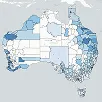

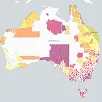


The total adult population (15 years or older) of Kealba 3021 VIC is 2,672, with a median age of 39. Of those, 46.48% are married, 12.43% are divorced or separated, 36.23% are single and 4.53% are widowed.
The average household size is 2.7 people per dwelling, and the median household monthly income is estimated to be $7,060. The median monthly mortgage repayment for households in this suburb is $1,625 which is 23.02% of their earnings.
Source: ABS Census Data (2021)