
Elmore, VIC 3558

Good to know:
Elmore is a quaint rural town located in Victoria, with postcode 3558. Situated approximately 40 kilometres north-east of Bendigo, Elmore is nestled along the Campaspe River. Known for its strong agricultural roots, the town is celebrated for the annual Elmore Field Days, a significant agricultural event attracting visitors from across the country. The friendly community enjoys amenities including local schools, parks, historical buildings, and a relaxed lifestyle. Elmore offers a charming blend of country living with close proximity to larger regional centres.
Read More
Elmore VIC 3558 shows a low typical house price ($495,111) but very limited rental evidence (median rent $0 and reported yield 0.0%, below the usual 3% benchmark). This snapshot of the Elmore VIC 3558 property market highlights mixed signals: rental vacancy is tight (0.79% — supportive of rental demand), yet inventory is elevated (5.08 months — a near-term supply overhang). Confidence in the data is Medium, so treat rental figures and yield with caution and validate with local listings.
Property market outlook
Elmore VIC 3558 house market sits at a modest price point with constrained rental data. House prices in Elmore are affordable in absolute terms, but affordability by local income is stretched (estimated 35 years to own, above the 30-year threshold). Socio-economic score (IRSAD 901) is below neutral, which tends to suppress long-term price re-rating relative to higher-SES suburbs. Supply/demand signals are mixed: Stock on Market is balanced (0.42%) while Inventory (5.08 months) signals elevated selling stock that can cap price momentum in the short term. At the same time, Vacancy Rate of 0.79% is opportune — if genuine rental listings exist this implies tight rental conditions and potential for rental upside. The absence of a median rent value in the data produces a zero yield figure; this is a data gap rather than definitive evidence that rents are zero. Overall, Elmore property investment warrants a cautious, evidence-led approach: suitable for selective long-hold strategies or owner-occupiers, less attractive on raw yield metrics until rental data is confirmed.
Pros
- Vacancy Rate 0.79% (opportune): indicates tight rental stock if rental listings are present — supports rental demand and potential rent growth.
- Units/Houses ratio 1.0% (opportune): market dominated by houses, meaning less competition from units and simpler market comparables for house buyers.
- Stock on Market 0.42% (neutral/near balanced): no surge of listings relative to total dwellings, which limits immediate downward price pressure from active listings.
- Hold period 9.05 years (neutral): reasonably held stock — not hyper-speculative turnover, which reduces volatility risk.
Cons
- Median rent reported as $0 and Yield 0.0%: a clear data gap or very low rental turnover. For yield-focused investors this is a red flag until local rent evidence is obtained.
- Inventory 5.08 months (unfavourable): elevated months of supply that can slow or reverse near-term capital growth.
- IRSAD 901 (unfavourable): below neutral socio-economic threshold — historically correlates with weaker long-run capital appreciation versus higher-SES suburbs.
- Affordability 35 years (unfavourable): households require a long period to fully own, which can limit owner-occupier demand and increase sensitivity to interest rate moves.
- Confidence: Medium — key metrics (notably median rent) should be validated with on-ground checks and local agent intel.
Investment strategies
- Do not buy for yield without confirmation: treat the reported 0% yield as an absence of rent data. Before committing, obtain current local rental listings, agent rent appraisals and neighbouring-town comps. If confirmed rent is low, the suburb is unsuitable for income-focused buyers.
- Value-add / discount purchases: with elevated inventory and neutral days-on-market, negotiate on price. Target properties that can be cosmetically upgraded to increase rent and rental appeal (if a lettable market exists).
- Low-leverage, longer hold: given the low IRSAD and stretched affordability, structure purchases conservatively — smaller deposits, realistic servicing buffers and a longer hold timeframe to ride out possible price stagnation.
- Owner-occupier or hybrid strategy: Elmore may be more attractive to owner-occupiers or buyers who can occupy initially and rent later. This reduces immediate yield dependence and allows time for rental market clarity to emerge.
- Comparative shortlist: use nearby regional towns for relative value — if neighbouring suburbs show stronger socio-economic metrics or clearer rental markets, prioritise those. Buyers agents should run relative analysis across a small cluster rather than rely on Elmore in isolation.
- Due diligence checklist: confirm actual advertised rents, recent rental listings (>21 days), local population trends, council building approvals and any planned infrastructure. Given Medium confidence, source on-ground evidence before finalising offers.
Is Elmore VIC 3558 a good suburb to invest in?
Elmore VIC 3558 is not an obvious pick for investors seeking immediate rental income or high yields — the headline 0% yield reflects missing rent data rather than proven income potential. For growth investors prepared to buy at a discount, hold long and limit leverage, there may be selective opportunities, particularly given the low unit competition and tight calculated vacancy. However, unfavourable IRSAD and elevated inventory increase risk for near-term capital appreciation. The prudent view: a cautious, data-driven selective play for buyers who can verify rental demand on the ground and negotiate price — not a turnkey yield market.
About HtAG Analytics Data
Base metrics reported (sample): Typical Price, Median Rent, Sales, Rentals, Δ Change (periodic % change), Yield (Gross Rental Yield), Capital Growth (annualised CG estimate with low/high bounds), Total RoI (Yield + CG), Rent Increase (forecast p.a.), Volatility Index (MAPE-based), Confidence (data quality), Relative Composite Score™. There are additional metrics in our dashboards (e.g. school rank, non-residential approvals per capita, distance to CBD, detailed sales histories) that are not listed above.
Selected metric ranges and interpretation used in this report (examples):
- IRSAD: Unfavourable < 920; Neutral 920–950; Opportune > 950.
- Renter/Owner ratio (RO): Unfavourable > 45%; Neutral 15–45%; Opportune < 15%.
- Units/Houses ratio (UH): Unfavourable > 50%; Neutral 10–50%; Opportune < 10%.
- Stock on Market % (SoM%): Low supply < 0.4%; Balanced 0.4–1.3%; High supply > 1.3%.
- Inventory (months): Low supply < 2.1; Balanced 2.1–4.5; High supply > 4.5.
- Vacancy Rate: Low demand > 3.5%; Balanced 1–3.5%; High demand < 1%.
- Days on Market (sales): Low demand > 90; Balanced 35–90; High demand 0–35.
HtAG’s guiding principle is to capture both current market conditions and historical trends to enable relative market analysis oriented to the point of purchase. In practice, that means our suburb-level metrics are curated and measured to support comparing nearby or similar markets for an investor’s specific objectives. Unlike providers that focus on broad public datasets for macro commentary, HTAG’s metrics are designed and tuned to inform shortlists and purchase-level decisions; similar metric names can therefore reflect different underlying curation and measurement choices.
Finally, the summary above is a snapshot of current value metrics for Elmore VIC 3558 and does not replace trend analysis. Metric trajectories, the relative weight you place on different indicators, and each investor’s budget, borrowing capacity and time horizon materially change market selection. HTAG excels at shortlisting and ranking suburbs against individual criteria rather than offering one-size-fits-all recommendations — use this snapshot as the starting point and run relative analysis across comparables before making an acquisition decision.
Updated: 1 Jun 2026
Read Less
Quick Area Stats

Dwellings

Population

EDI

Bushfire Risk Index

Flood Risk Index
Education & Infrastructure
Sign Up to Access

School Rank

Infra. Spend
Market Trends
Essential metrics effectively streamline the process of identifying markets that match your financial situation and investment objectives. Typical Price, Indicative Yield and Total ROI provide a swift means to shortlist areas that resonate with what you’re seeking and can afford. These metrics also serve as valuable general trend indicators, allowing you to visualise transaction volumes and dynamics of change.
1M
1Q
1Y
3Y
5Y
7Y
10Y
1M
1Q
1Y
3Y
5Y
7Y
10Y

1M
1Q
1Y
3Y
5Y
7Y
10Y
The Growth Rate Cycle (GRC) is a metric used to analyse the year-on-year change in property values, providing insights into the growth cycle of a particular area. It uses the “typical price” metric to gauge property values more accurately than median prices, and includes both actual and projected data for the current year.

Fundamental metrics play a vital role in providing a comprehensive analysis of the socio-economic environment within a specific suburb or region. Additionally, the Return on Investment (ROI) and Volatility Index are crucial metrics that aid in evaluating the prospective profitability and the level of risk or stability in the market.
Socio-economics
Sign Up to Access

IRSAD

Renter to Owner

Units to Houses
Projections
Sign Up to Access

Projected Annual ROI

Volatility Index
Quick Area Stats
Sign Up to Access

Annual Sales Volume

Annual Rentals Volume



Stock on Market

Building Approvals

Inventory

Hold Period




Supply metrics are crucial in gauging both the existing volumes of real estate listed for sale and the properties anticipated to enter the market soon. A diminished supply could signal opportunities for price appreciation, particularly when there’s corresponding buyer demand to buoy the market. The Stock on Market and Inventory level metrics (current values) are presented as a 3-month rolling average of monthly data shown in the charts. This means the last 3 months of data are averaged. The BA Ratio represents the proportion of building approvals over the latest 12 months relative to the total dwellings in the area.

Days on Market

Search Index

Vacancy Rate

Clearance Rate




Demand metrics underscore the level of interest that potential property buyers or tenants have in a specific suburb or locality. When demand outstrips the available supply, or if the supply fails to meet the intensity of buyer/renter interest, there’s a potential for prices to climb, underscoring the pivotal relationship between demand dynamics and property value trends. The Days on Market and Clearance Rate metrics (current values) are presented as a 3-month rolling average of monthly data shown in the charts. This means the last 3 months of data are averaged.
We invite you to contribute to the conversation by sharing your thoughts or raising questions about this market in the comment section below.
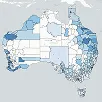

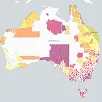


The total adult population (15 years or older) of Elmore 3558 VIC is 712, with a median age of 52. Of those, 42.56% are married, 15.59% are divorced or separated, 33.43% are single and 9.27% are widowed.
The average household size is 2.1 people per dwelling, and the median household monthly income is estimated to be $5,312. The median monthly mortgage repayment for households in this suburb is $1,083 which is 20.39% of their earnings.
Source: ABS Census Data (2021)