
Main Ridge, VIC 3928

Good to know:
Main Ridge is a picturesque rural suburb located on the Mornington Peninsula in Victoria, with the postcode 3928. Known for its rolling hills and verdant landscapes, Main Ridge offers a tranquil retreat from the hustle and bustle of city life. The area is celebrated for its vineyards, wineries, and gourmet produce, making it a popular destination for food and wine enthusiasts. Main Ridge is also home to several boutique farms, orchards, and artisanal producers. The community is tight-knit and enjoys a peaceful, semi-rural lifestyle, surrounded by natural beauty and close to the serene beaches of the peninsula.
Read More
Main Ridge VIC 3928 has a very high-value house market with typical price $2,956,226, median rent $695pw and an indicative gross yield of 1.22% — the data shows a high-wealth, tightly held market where capital appreciation, not rental return, drives investment outcomes. This Main Ridge VIC 3928 property market combines low listed supply and limited development with very stretched affordability (116 years), so house prices in Main Ridge are supported by affluent owner-occupiers and investors able to accept negative cashflow or long holding periods.
Property market outlook
Main Ridge’s house market is structurally tight. Low stock on market (0.37% SoM) and an effective zero building approvals ratio point to constrained new supply, reinforced by a long average hold period (12.46 years). These supply characteristics are supportive of capital growth over time. Demand signals are mixed: a Buy Search Index of 9 (well above the 5 state average) shows strong buyer interest online, while Days on Market around 66 days and a vacancy rate of 2.63% sit in the neutral range — transactions occur without aggressive discounting but rental markets are not under acute pressure. The suburb’s IRSAD of 1099 places it well into the high socio‑economic band, consistent with the high typical price and low renter share (RO ratio 11%). Expect a low-yield, capital-growth-biased market where price stability and preservation of value matter more than yield.
Pros
- Tight supply dynamics: SoM 0.37% (low) and BA Ratio 0.0% indicate limited immediate upside in listings and little near-term new-build competition — supportive for price retention.
- Strong socio-economic profile: IRSAD 1099 indicates affluent buyers and buyer capacity to sustain high price points.
- Tightly held stock: Hold period 12.46 years reduces churn and downside inventory risk.
- Solid online demand: Buy Search Index of 9 signals above-average buyer interest relative to state norms.
- Low unitisation: UH ratio 0.0% suggests predominantly houses/large lots — appealing for investors targeting land value and owner‑occupied markets.
Cons
- Extremely low rental yield: 1.22% gross is well below the conventional 3% threshold, implying significant negative cashflow unless financed with substantial equity or owner-occupier subsidy.
- Severe affordability pressure: Affordability index 116 years (>>30 years threshold) means a very small buyer pool is margin-sensitive; sales are likely driven by cash buyers or high-serviceability borrowers.
- Rental market not tight enough to offset low yields: Vacancy 2.63% is neutral rather than low (<1%), so landlords can’t expect strong rental upside in the short term.
- Limited development/deployment pathways: BA Ratio 0.0% and low unit presence restrict value-add strategies such as medium-density redevelopment or strata investment.
- Data confidence medium: assessment should be cross-checked with transaction-level evidence and local agents for price discovery.
Investment strategies
- Capital-growth focused buy-and-hold: The market suits well‑capitalised investors and SMSFs targeting long-term capital appreciation rather than immediate cash returns. Expect returns to be driven by land scarcity and buyer demand for lifestyle/amenity rather than rental yield.
- Owner-occupier-orientated portfolio plays: Consider purchasing with significant owner‑occupier use or hybrid occupancy to reduce holding cost pressure when yields are insufficient to be commercially tenable.
- Equity-heavy financing and long hold horizon: Plan for extended holding periods and structural negative cashflow; ensure serviceability and refinancing capacity under rate stress tests.
- Value-add via land or large-lot optimisation: With low unitisation and tight approvals, opportunities may exist around permitted boundary adjustments, granny flats where allowed, or careful planning for ancillary accommodation — but expect low planning throughput.
- Use selective short-stay only with caution: Given neutral vacancy and local council rules (check local regs), short-stay may improve returns in some lifestyle markets, but this is operationally intensive and carries regulatory uncertainty.
- Avoid yield-only strategies: Traditional yield-driven investment or portfolio replacement plans (income-first) are unsuitable here unless supplemented with tax strategies and other income sources.
Is Main Ridge VIC 3928 a good suburb to invest in?
Main Ridge VIC 3928 is a specialist play: it is appropriate for investors who prioritise capital preservation and long-term price appreciation, have substantial equity or cash flow capacity, and can tolerate very low rental yields and extreme affordability metrics. It is not suitable for investors seeking reliable rental income or rapid cashflow breakeven — the 1.22% gross yield and 116‑year affordability signal that returns must come from capital growth and patient holding periods. For buyers agents and high-net-worth investors seeking lifestyle blocks, premium house sites or long-term value retention in a low‑supply market, Main Ridge remains marketable. For yield-driven or leverage-dependent investors, consider suburbs with stronger yields and better affordability metrics.
About HtAG Analytics Data
HtAG reports a core set of suburb-level metrics for houses and units (listed here are the primary ones): Typical Price, Median Rent, Sales and Rentals volumes, % Change over multiple periods, Gross Rental Yield, Capital Growth (annualised with low/high bounds), Total RoI (Yield + CG), Rent Increase forecast, Volatility Index, Confidence score, Relative Composite Score™, IRSAD, Renter/Owner ratio, Units/Houses ratio, UHV ratio (units only), Years to Own (Affordability), Growth Rate Cycle (GRC), Stock on Market (SoM) and SoM%, Inventory (months), Building Approvals & BA Ratio, Hold Period, Days on Market, Discounting, Vacancy Rate, Vacancies, Buy & Rent Search Index, Auction Clearance Rates, Population and Estimated Dwellings. There are additional advanced metrics and sub-variants per dwelling type not exhaustively listed here.
HtAG’s methodology is designed to capture both current market conditions and historical trends to support relative market analysis at or near the point of purchase. That means our metrics emphasise suburb-scale dynamics and transaction-level signals relevant to investors and buyers agents, rather than only broad public aggregates. Other providers may surface similar metric names but rely on different inputs or aggregation philosophies — for example, some public datasets target macro narratives. HTAG’s curation involves specific measurement choices and nuances intended to make suburb comparisons more actionable for decision-making at the local level.
Finally, note the summary above is a snapshot of current value metrics and does not replace trend analysis. Metric trends and the relative weighting of metrics matter — some indicators (e.g. supply tightness, affordability, socio-economic profile) have outsized impact depending on strategy and investor constraints. Different investors with different budgets, borrowing capacities, risk appetites and time horizons will select different suburbs. HTAG specialises in shortlisting and ranking markets against an investor’s individual criteria rather than offering a one-size-fits-all recommendation. For execution-grade decisions, conduct relative comparison across a basket of candidate suburbs aligned to your investment objectives.
Updated: 1 Jun 2026
Read Less
Quick Area Stats

Dwellings

Population

EDI

Bushfire Risk Index

Flood Risk Index
Education & Infrastructure
Sign Up to Access

School Rank

Infra. Spend
Market Trends
Essential metrics effectively streamline the process of identifying markets that match your financial situation and investment objectives. Typical Price, Indicative Yield and Total ROI provide a swift means to shortlist areas that resonate with what you’re seeking and can afford. These metrics also serve as valuable general trend indicators, allowing you to visualise transaction volumes and dynamics of change.
1M
1Q
1Y
3Y
5Y
7Y
10Y
1M
1Q
1Y
3Y
5Y
7Y
10Y

1M
1Q
1Y
3Y
5Y
7Y
10Y
The Growth Rate Cycle (GRC) is a metric used to analyse the year-on-year change in property values, providing insights into the growth cycle of a particular area. It uses the “typical price” metric to gauge property values more accurately than median prices, and includes both actual and projected data for the current year.

Fundamental metrics play a vital role in providing a comprehensive analysis of the socio-economic environment within a specific suburb or region. Additionally, the Return on Investment (ROI) and Volatility Index are crucial metrics that aid in evaluating the prospective profitability and the level of risk or stability in the market.
Socio-economics
Sign Up to Access

IRSAD

Renter to Owner

Units to Houses
Projections
Sign Up to Access

Projected Annual ROI

Volatility Index
Quick Area Stats
Sign Up to Access

Annual Sales Volume

Annual Rentals Volume



Stock on Market

Building Approvals

Inventory

Hold Period




Supply metrics are crucial in gauging both the existing volumes of real estate listed for sale and the properties anticipated to enter the market soon. A diminished supply could signal opportunities for price appreciation, particularly when there’s corresponding buyer demand to buoy the market. The Stock on Market and Inventory level metrics (current values) are presented as a 3-month rolling average of monthly data shown in the charts. This means the last 3 months of data are averaged. The BA Ratio represents the proportion of building approvals over the latest 12 months relative to the total dwellings in the area.

Days on Market

Search Index

Vacancy Rate

Clearance Rate




Demand metrics underscore the level of interest that potential property buyers or tenants have in a specific suburb or locality. When demand outstrips the available supply, or if the supply fails to meet the intensity of buyer/renter interest, there’s a potential for prices to climb, underscoring the pivotal relationship between demand dynamics and property value trends. The Days on Market and Clearance Rate metrics (current values) are presented as a 3-month rolling average of monthly data shown in the charts. This means the last 3 months of data are averaged.
We invite you to contribute to the conversation by sharing your thoughts or raising questions about this market in the comment section below.
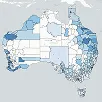

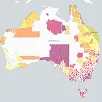


The total adult population (15 years or older) of Main Ridge 3928 VIC is 407, with a median age of 56. Of those, 57.99% are married, 14.00% are divorced or separated, 23.34% are single and 4.42% are widowed.
The average household size is 2.2 people per dwelling, and the median household monthly income is estimated to be $10,124. The median monthly mortgage repayment for households in this suburb is $2,550 which is 25.19% of their earnings.
Source: ABS Census Data (2021)