
Emerald, VIC 3782

Good to know:
Emerald, located in Victoria with the postcode 3782, is a charming town nestled in the Dandenong Ranges. Known for its lush greenery and serene atmosphere, Emerald boasts the picturesque Emerald Lake Park, a popular spot for picnics, paddle boating, and walking trails. The Puffing Billy Railway, a historic steam train, attracts tourists and adds a nostalgic charm. The town has a tight-knit community, good schools, and essential amenities, making it ideal for families and nature lovers. Its proximity to Melbourne, about 44 kilometres away, allows for a tranquil yet accessible lifestyle.
Read More
Emerald VIC 3782 — house market. The Emerald VIC 3782 property market shows a Typical Price of $1,039,136, a rolling-year Median Rent of $670 pw and a gross rental Yield of 3.35% (above the 3% threshold). Confidence in the underlying data is High. House prices in Emerald are supported by tight supply, a strong socio‑economic profile (IRSAD 1051) and short days-on-market, but affordability is stretched (estimated 41 years to own), which is an important constraint for price elasticity and future buyer pools.
Property market outlook
Emerald’s house market is supply-constrained and demand-anchored. Supply metrics are strongly supportive of capital stability: Stock on Market is only 0.23% (low), Inventory is 1.73 months (low), Building Approvals Ratio is 0.0% and hold periods (~9.7 years) are in the neutral band — overall this points to low new and established stock availability, which ordinarily supports price growth if demand persists. Days on Market at 18 days and a Buy Search Index of 6 indicate active buyer interest and transaction velocity.
Demand signals are mixed-to-favourable. Vacancy is 2.02%, placing the rental market in a balanced range — enough room for leasing but not tight enough to drive large rent spikes. Median rent of $670 pw yields a modest 3.35% gross return; that’s above a common minimum threshold for investors but not high enough for yield-seeking strategies. The low Renter/Owner ratio (8%) and very low Units/Houses ratio (2%) mean Emerald is overwhelmingly owner-occupied and house-dominant; that structure tends to preserve capital values but limits rental stock depth and tenant churn.
Affordability is a material risk. An estimated 41 years to own is well above the 30-year threshold, signalling that local incomes relative to house prices are stretched. That can reduce the pool of first-home and local owner-occupier buyers, increase reliance on higher‑income purchasers or external demand (e.g. lifestyle buyers), and raise market sensitivity to interest-rate moves. IRSAD of 1051 (opportune) supports resilient demand from higher socio‑economic cohorts, which mitigates some affordability pressure.
Pros
- Tight supply dynamics: SoM 0.23% and Inventory 1.73 months are strongly supportive of price resilience and upside.
- Socio‑economic strength: IRSAD 1051 signals above-average buying power and amenity-driven demand.
- Market liquidity: short Days on Market (18 days) and high Confidence in the data indicate transactions occur quickly and reliably.
- Owner-occupied, house-dominant market: low Renter/Owner (8%) and Units/Houses (2%) ratios reduce speculative unit risk and promote price stability.
- Yield above minimum: 3.35% gross yield exceeds a common 3% investor threshold, enabling modest cashflow for long-term holders.
Cons
- Low affordability: 41 years to own is an outlier and constrains demand elasticity; bigger price corrections are possible if lending costs rise.
- Moderate rental upside: vacancy at 2.02% is neutral, so strong rental growth is not guaranteed; yield is modest, limiting income-focused strategies.
- Limited new supply may reduce turnover and opportunity: BA Ratio 0.0% and very low unit stock constrain entry points for investors seeking multiple or opportunistic acquisitions.
- Narrow investor appeal: heavy owner-occupier skew and low unit availability mean fewer tenants and less diversification for portfolio managers relying on high-rental-demand suburbs.
Investment strategies
- Long-term capital-growth buy-and-hold (houses): Emerald’s tight supply, strong IRSAD and quick market clearance favour long-term capital appreciation. Focus on established detached houses rather than units, given the very low units ratio.
- Target mid-to-high end houses attractive to owner-occupiers and lifestyle buyers: with affordability stretched, buyers will be selective — properties with superior presentation, outdoor space and low maintenance will outperform.
- Conservative gearing and stress-testing: because affordability is high, structure purchases with conservative LVRs and stress-test for rate increases and rental voids. This reduces refinance and cashflow risk if market sentiment softens.
- Value-add where feasible: modest renovations that enhance amenity and reduce time on market can improve both saleability and rentability in a discerning owner-occupier market.
- Selective yield plays: the 3.35% gross yield is reasonable but not generous — combine yield expectations with capital-growth focus rather than chasing immediate cashflow. Consider duplex or subdivision opportunities only where zoning and approvals support supply uplift.
- Use relative market screening: compare Emerald to neighbouring suburbs with similar socio-economic profiles but slightly better affordability or higher rental yields to optimise entry price.
Is Emerald VIC 3782 a good suburb to invest in?
Emerald VIC 3782 is a compelling market for investors focused on long-term capital growth in a lifestyle/owner-occupier dominated area. Tight supply metrics (low SoM, low months of inventory, zero recent approvals) and a high IRSAD point to structural support for house prices. However, the suburb’s stretched affordability (41 years to own) and only-moderate rental yield (3.35%) mean it is less suited to aggressive yield-seeking or highly leveraged short-term strategies. In short: good for disciplined, lower-leverage investors and buyers agents targeting capital appreciation and low-turnover, well-presented houses — less attractive for investors prioritising immediate cashflow or high tenant pool depth.
About HtAG Analytics Data
Base metrics referenced above (reported per dwelling type unless noted) include Typical Price, Median Rent, Sales, Rentals, % Change (Δ) over multiple horizons, Gross Rental Yield, Capital Growth (CG) with low/high bounds, Total RoI (Yield + CG), projected Rent Increase, Volatility Index (MAPE-based), Confidence, and a Relative Composite Score™. There are additional metrics available in our dashboards (e.g. DoRM, Auction Clearance Rates, School Rank, Building Approvals per capita) — the list above is the base set commonly used for suburb-level comparison.
HtAG’s methodology is built to capture both current market conditions and historical trends for relative market analysis near the point of purchase. That focus differentiates HTAG from some public-data centric providers: while other services aggregate public feeds for broad trend commentary, HTAG’s metrics are curated and measured to better reflect micro-market signals that matter to buyers agents and investors making location-specific decisions. Similar metric names may exist across providers, but HTAG’s data curation and measurement nuances are designed to support comparative shortlist generation and purchase-level judgement.
Note that the snapshot above reports current value metrics and does not substitute for trend examination; metric trajectories (direction and volatility) and the relative weight you assign to different indicators materially affect suitability. Different investors, borrowing capacities and timeframes will lead to different suburb choices — HTAG is structured to shortlist and rank markets against bespoke investor criteria rather than offering one-size-fits-all conclusions. For acquisition decisions, perform relative analysis across candidate suburbs and align metrics with your risk appetite, time horizon and finance profile.
Updated: 1 Jun 2026
Read Less
Quick Area Stats

Dwellings

Population

EDI

Bushfire Risk Index

Flood Risk Index
Education & Infrastructure
Sign Up to Access

School Rank

Infra. Spend
Market Trends
Essential metrics effectively streamline the process of identifying markets that match your financial situation and investment objectives. Typical Price, Indicative Yield and Total ROI provide a swift means to shortlist areas that resonate with what you’re seeking and can afford. These metrics also serve as valuable general trend indicators, allowing you to visualise transaction volumes and dynamics of change.
1M
1Q
1Y
3Y
5Y
7Y
10Y
1M
1Q
1Y
3Y
5Y
7Y
10Y

1M
1Q
1Y
3Y
5Y
7Y
10Y
The Growth Rate Cycle (GRC) is a metric used to analyse the year-on-year change in property values, providing insights into the growth cycle of a particular area. It uses the “typical price” metric to gauge property values more accurately than median prices, and includes both actual and projected data for the current year.

Fundamental metrics play a vital role in providing a comprehensive analysis of the socio-economic environment within a specific suburb or region. Additionally, the Return on Investment (ROI) and Volatility Index are crucial metrics that aid in evaluating the prospective profitability and the level of risk or stability in the market.
Socio-economics
Sign Up to Access

IRSAD

Renter to Owner

Units to Houses
Projections
Sign Up to Access

Projected Annual ROI

Volatility Index
Quick Area Stats
Sign Up to Access

Annual Sales Volume

Annual Rentals Volume



Stock on Market

Building Approvals

Inventory

Hold Period




Supply metrics are crucial in gauging both the existing volumes of real estate listed for sale and the properties anticipated to enter the market soon. A diminished supply could signal opportunities for price appreciation, particularly when there’s corresponding buyer demand to buoy the market. The Stock on Market and Inventory level metrics (current values) are presented as a 3-month rolling average of monthly data shown in the charts. This means the last 3 months of data are averaged. The BA Ratio represents the proportion of building approvals over the latest 12 months relative to the total dwellings in the area.

Days on Market

Search Index

Vacancy Rate

Clearance Rate




Demand metrics underscore the level of interest that potential property buyers or tenants have in a specific suburb or locality. When demand outstrips the available supply, or if the supply fails to meet the intensity of buyer/renter interest, there’s a potential for prices to climb, underscoring the pivotal relationship between demand dynamics and property value trends. The Days on Market and Clearance Rate metrics (current values) are presented as a 3-month rolling average of monthly data shown in the charts. This means the last 3 months of data are averaged.
We invite you to contribute to the conversation by sharing your thoughts or raising questions about this market in the comment section below.

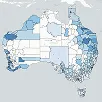

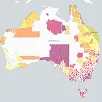


The total adult population (15 years or older) of Emerald 3782 VIC is 4,795, with a median age of 43. Of those, 52.76% are married, 11.89% are divorced or separated, 31.35% are single and 3.92% are widowed.
The average household size is 2.8 people per dwelling, and the median household monthly income is estimated to be $9,596. The median monthly mortgage repayment for households in this suburb is $2,000 which is 20.84% of their earnings.
Source: ABS Census Data (2021)