
Narre Warren South, VIC 3805

Good to know:
Narre Warren South, nestled in Melbourne's south-eastern suburbs within Victoria's postcode 3805, offers a family-friendly environment with a blend of residential and semi-rural charm. Known for its spacious parks, such as Hillsmeade Reserve and Coral Park, it's a haven for outdoor enthusiasts. The suburb features various educational institutions like Narre Warren South P-12 College, making it attractive for families. With convenient access to multiple shopping centres, including Casey Central and nearby Westfield Fountain Gate, residents enjoy modern amenities and services. Its community vibe and accessibility to Melbourne CBD make it a desirable place to live.
Read More
Narre Warren South VIC 3805 shows a typical house price of $972,090, median rent of $610 pw and a gross rental yield of 3.26% — figures that define the current Narre Warren South VIC 3805 property market for houses and are reported with High confidence. This summary focuses on Narre Warren South VIC 3805 property investment for houses: house prices in Narre Warren South sit below inner‑city Melbourne levels but affordability is stretched (estimated 43 years to own), while demand indicators (83% clearance rate, sub‑3% vacancy) and low unit supply point to continued buyer competition.
Property market outlook
Narre Warren South houses sit in a balanced-to-supportive market for capital growth. IRSAD of 995 (opportune) indicates socio-economic capacity above the minimum threshold, supporting price resilience. Supply signals are relatively tight: UH ratio 1.0% (very low unit share) and a BA Ratio of 0.05% (low approvals) suggest limited new supply pressure for houses. Sales liquidity is reasonable — Days on Market at 41 days and Inventory at 3.38 months are in the neutral band — yet auction clearance at 83.33% is a clear demand-positive signal that can sustain upward price momentum. Yield at 3.26% is marginally above a 3% rule-of-thumb, so income is modest but adequate for many portfolios. The standout risk is affordability (43 years), which is materially high and can constrain local owner-occupier demand and extend selling horizons during downturns.
Pros
- Strong demand signal: 83.33% clearance rate is favourable and indicates competitive buying activity at auctions.
- Socio‑economic profile supportive: IRSAD 995 indicates above-average relative advantage, which tends to underpin long‑term capital growth potential.
- Low unit penetration: UH ratio 1.0% reduces competition from higher-density product and keeps established-house stock prized.
- Low upcoming supply: Building Approvals Ratio 0.05% suggests limited new housing stock coming online, supporting price stability.
- Solid data confidence: High confidence improves reliability of short‑term reads and market comparisons.
Cons
- Poor affordability: 43 years to own is significantly above the 30‑year concern threshold — a material constraint on market breadth and mortgage resilience.
- Modest rental return: 3.26% gross yield is barely above common lender/investor comfort levels; investors seeking cashflow may find this thin.
- Neutral supply/demand balance: Stock on Market 0.45% and Inventory 3.38 months are neutral rather than tight, so upside requires continued demand.
- Renter/Owner ratio at 17% sits in the neutral band — limited rental pool growth potential relative to high‑renter markets.
Investment strategies
- Capital-growth primary: Target long‑hold (5–10+ years) strategies that rely on capital appreciation driven by strong auction clearance rates, low approvals and favourable socio‑economic profile. Expect modest yield; structure finances accordingly.
- Value-add/renovation plays: Given established-house dominance and relatively low supply, selective renovations that improve amenity (study, outdoor living) can accelerate resale value in a competitive auction market.
- Conservative leverage and stress‑testing: High affordability means buyer pools are sensitive to rate increases. Use conservative serviceability buffers and plan for longer hold‑periods if rates rise.
- Tactical cashflow layering: If yield is critical, consider higher‑yielding neighbouring suburbs or diversify into units elsewhere while holding Narre Warren South houses for capital growth.
- Monitor near-term signals: Watch changes in building approvals, inventory, vacancy and clearance rates. Any increase in approvals or sustained rises in inventory would alter supply dynamics quickly.
- Buyers’ agent angle: For owner-occupiers or investors seeking growth, prioritise properties with strong local amenity, access to transport and schools (IRSAD benefits) to reduce time-on-market and maximise auction outcomes.
Is Narre Warren South VIC 3805 a good suburb to invest in?
Narre Warren South VIC 3805 is a reasonable market for growth‑oriented investors prepared to accept modest rental yields and a potentially long ownership horizon. The suburb’s favourable IRSAD, very strong auction clearance rate and low new‑supply signals are supportive of capital appreciation. However, stretched affordability (43 years) and only neutral inventory/DOM imply the market is less resilient to interest‑rate shocks and may require longer holding periods. For buyers focused on medium-to-long-term capital gains and comfortable with thin cashflow buffers, Narre Warren South houses merit consideration; for investors prioritising immediate positive cashflow or shorter exit horizons, supplementary markets may be needed.
About HtAG Analytics Data
Base metrics reported (selection): Typical Price, Median Rent, Sales, Rentals, Δ Change (periodic price/rent change), Yield (Gross Rental Yield), Capital Growth (per annum estimate with low/high bounds), Total RoI (Yield + Capital Growth), Rent Increase (projected p.a.), Volatility Index (MAPE based), Confidence (data reliability), Relative Composite Score™. There are additional advanced and supply/demand metrics available on HTAG suburb dashboards.
Metric ranges and interpretation (selected examples): IRSAD — Unfavourable <920, Neutral 920–950, Opportune >950; RO Ratio — Unfavourable >45%, Neutral 15–45%, Opportune <15%; UH Ratio — Unfavourable >50%, Neutral 10–50%, Opportune <10%; Years to Own (Affordability) — >30 years = reduced affordability; Supply measures — SoM% low <0.4% balanced 0.4–1.3% high >1.3%; Inventory months low <2.1 balanced 2.1–4.5 high >4.5. These ranges are core indicators; HTAG provides further metrics and context beyond this base set.
HTAG methodology in context: HTAG metrics are designed to capture both current market conditions and historical trends to support relative market analysis at or very near the point of purchase. That focus differentiates HTAG from providers whose public datasets are optimised for broader trend reporting or media narratives. Although similar metric names are used across vendors, HTAG’s curation, spatial mapping and temporal framing are tailored for transaction‑level comparisons and shortlist generation for investors and buyer agents.
A note on interpretation and usage: The snapshot above summarises current value metrics for Narre Warren South houses but does not replace analysis of trends and metric weighting over time — both of which materially affect investment outcomes. Some indicators (for example affordability or approvals) carry greater strategic significance depending on an investor’s budget, leverage capacity, risk tolerance and desired holding period. HTAG is built to shortlist and rank suburbs against bespoke criteria rather than offer one‑size‑fits‑all verdicts; for serious investors and real‑estate professionals, relative analysis across a set of comparable suburbs aligned to specific goals is essential.
Updated: 1 Jun 2026
Read Less
Quick Area Stats

Dwellings

Population

EDI

Bushfire Risk Index

Flood Risk Index
Education & Infrastructure
Sign Up to Access

School Rank

Infra. Spend
Market Trends
Essential metrics effectively streamline the process of identifying markets that match your financial situation and investment objectives. Typical Price, Indicative Yield and Total ROI provide a swift means to shortlist areas that resonate with what you’re seeking and can afford. These metrics also serve as valuable general trend indicators, allowing you to visualise transaction volumes and dynamics of change.
1M
1Q
1Y
3Y
5Y
7Y
10Y
1M
1Q
1Y
3Y
5Y
7Y
10Y

1M
1Q
1Y
3Y
5Y
7Y
10Y
The Growth Rate Cycle (GRC) is a metric used to analyse the year-on-year change in property values, providing insights into the growth cycle of a particular area. It uses the “typical price” metric to gauge property values more accurately than median prices, and includes both actual and projected data for the current year.

Fundamental metrics play a vital role in providing a comprehensive analysis of the socio-economic environment within a specific suburb or region. Additionally, the Return on Investment (ROI) and Volatility Index are crucial metrics that aid in evaluating the prospective profitability and the level of risk or stability in the market.
Socio-economics
Sign Up to Access

IRSAD

Renter to Owner

Units to Houses
Projections
Sign Up to Access

Projected Annual ROI

Volatility Index
Quick Area Stats
Sign Up to Access

Annual Sales Volume

Annual Rentals Volume



Stock on Market

Building Approvals

Inventory

Hold Period




Supply metrics are crucial in gauging both the existing volumes of real estate listed for sale and the properties anticipated to enter the market soon. A diminished supply could signal opportunities for price appreciation, particularly when there’s corresponding buyer demand to buoy the market. The Stock on Market and Inventory level metrics (current values) are presented as a 3-month rolling average of monthly data shown in the charts. This means the last 3 months of data are averaged. The BA Ratio represents the proportion of building approvals over the latest 12 months relative to the total dwellings in the area.

Days on Market

Search Index

Vacancy Rate

Clearance Rate




Demand metrics underscore the level of interest that potential property buyers or tenants have in a specific suburb or locality. When demand outstrips the available supply, or if the supply fails to meet the intensity of buyer/renter interest, there’s a potential for prices to climb, underscoring the pivotal relationship between demand dynamics and property value trends. The Days on Market and Clearance Rate metrics (current values) are presented as a 3-month rolling average of monthly data shown in the charts. This means the last 3 months of data are averaged.
We invite you to contribute to the conversation by sharing your thoughts or raising questions about this market in the comment section below.
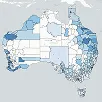

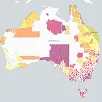


The total adult population (15 years or older) of Narre Warren South 3805 VIC is 24,117, with a median age of 34. Of those, 53.51% are married, 8.45% are divorced or separated, 35.00% are single and 3.01% are widowed.
The average household size is 3.4 people per dwelling, and the median household monthly income is estimated to be $8,696. The median monthly mortgage repayment for households in this suburb is $1,937 which is 22.27% of their earnings.
Source: ABS Census Data (2021)