
Seaford, VIC 3198

Good to know:
Seaford is a vibrant coastal suburb located in Victoria, approximately 36 kilometres southeast of Melbourne's CBD. Known for its stunning 5-kilometre sandy beach along Port Phillip Bay, Seaford offers a relaxed lifestyle with ample opportunities for water activities and picnics. The suburb boasts the picturesque Seaford Wetlands, a haven for birdwatchers and nature enthusiasts. It features a mix of residential areas, local shops, cafes, and essential amenities. With convenient access to the Nepean Highway and Seaford railway station, it's well-connected for commuters. Seaford caters to families, professionals, and retirees seeking a balanced coastal lifestyle.
Read More
Seaford VIC 3198 property market data shows a typical house price of $952,427, median rent of $607 per week and a gross yield of 3.31%. This Seaford VIC 3198 property investment snapshot highlights tight established supply, compact rental inventory and reasonable rental demand, while also flagging stretched affordability and weak auction clearance performance. Data confidence is high.
Property market outlook
Seaford VIC 3198 house prices sit close to the metropolitan median for middle-ring bayside suburbs and are supported by structural supply tightness: stock on market is extremely low at 0.31% and months of inventory for houses is 1.93 — both measures that typically underpin upward price pressure. Hold periods of 11.4 years indicate owners are tightly held, reducing churn and reinforcing supply constraint. Rental fundamentals are also robust for landlords: median rent is $607pw and vacancy sits at 0.98%, indicating a sub-1% vacancy environment that supports rent growth and lower downtime between tenancies. On the other hand, affordability is stretched — the appraisal shows 45 years to own under the standard assumptions — which constrains the buyer pool, can slow transactional turnover and elevates sensitivity to interest rate moves. Auction clearance rates are weak (33.33%), signalling either vendor pricing mismatch or a market that is transacting more by private treaty; this divergence warrants local market intelligence before bidding or listing at auction.
Pros
- Supply fundamentals supportive: SoM 0.31% and inventory 1.93 months point to tight supply that is typically supportive of capital growth.
- Tightly held stock: average hold period 11.4 years reduces available listings and helps underpin price resilience.
- Strong rental tightness: vacancy 0.98% and median rent $607pw support rental income stability and rent-growth potential.
- Socio-economic profile: IRSAD 988 is in the opportune range, consistent with stronger demand from higher income cohorts and better long-term capital growth prospects.
- Data confidence: high confidence in the reported metrics improves reliability for comparative analysis.
Cons
- Affordability stress: 45 years to own is materially above the 30-year threshold, narrowing the pool of marginal buyers and increasing susceptibility to rate shocks.
- Low auction clearance (33.33%): weak auction outcomes suggest local demand at auctions is soft or vendors are mispricing, which can translate to longer selling times or price negotiation risk for sellers.
- Yield is modest: 3.31% gross is above the 3% benchmark but remains low for income-focused investors — capital growth is the likely primary return lever.
- Building approvals ratio neutral (0.63%): while not high, approvals indicate moderate medium-term supply risk that should be monitored if development activity increases.
Investment strategies
- Growth-focused buy-and-hold: Seaford’s tight supply, long hold periods and favourable IRSAD make it suited to investors targeting long-term capital appreciation rather than short-term yield. Plan for a multi-year hold (7–10+ years).
- Value-add renovations: modest yield means buyers can improve cashflow and total return by renovating, adding bathrooms/bedrooms or improving presentation to capture higher rents and better resale outcomes.
- Selective use of gearing and loan structuring: because affordability is stretched, structure finance conservatively with buffer for rate rises. Longer-term fixed-rate components may suit investors planning extended holds.
- Off-market / buyers-agent sourcing: with SoM very low and vendors holding longer, off-market opportunities and vendor-introduced sales are more likely to find under-circulation assets — engage a buyers agent or local networks.
- Auction caution and negotiation: the low clearance rate implies auctions can underperform. For buyers, favour private treaty negotiations or conditional offers; for sellers, price to market or accept private treaty to avoid extended time on market.
- Consider product mix: units/houses ratio is neutral (32% units), but yields on houses in this market typically outperform units slightly — prioritise well-located houses for lower risk of oversupply and stronger capital growth prospects.
Is Seaford VIC 3198 a good suburb to invest in?
Yes — for investors whose primary objective is capital growth and who can tolerate modest gross yields and stretched entry prices. House prices near $950k, tight supply (SoM 0.31%, inventory 1.93 months), low vacancy (0.98%) and a high IRSAD (988) create a structurally supportive environment for medium-to-long-term price appreciation. However, the 45‑year affordability metric and a low auction clearance rate (33.33%) demand caution: this market is sensitive to financing conditions and vendor pricing. Income-focused investors should be selective — yields are only just above the 3% threshold — while growth investors and buyers-agents seeking low-turnover, tightly held suburbs will find Seaford aligned with their strategy if they plan for longer holding periods and active asset management.
About HtAG Analytics Data
HtAG reports a core set of suburb-level metrics designed for comparative investment analysis. Key metrics (base set) include:
- Typical Price (improved over median to better reflect suburb-level values)
- Median Rent (rolling-year, houses and units)
- Sales and Rentals (monthly online counts)
- Percent Change versus referent periods (1M, 1Q, 1Y, 3Y)
- Gross Rental Yield (current month)
- Capital Growth estimates (per annum with low/high bounds)
- Total RoI (Gross Yield + Capital Growth)
- Rent Increase (projected per annum)
- Volatility Index (MAPE-based)
- Confidence (based on average monthly sales)
- Supply measures: Stock on Market (SoM), SoM%, Inventory (months), Building Approvals and BA Ratio, Hold Period
- Demand measures: Days on Market, Discounting, Vacancy Rate, DoRM, Buy & Rent Search Index, Auction Clearance Rates
(There are additional advanced metrics — population, dwellings, school rank, infrastructure proxies, annual sales volume and distance to CBD — not exhaustively listed here.)
HtAG’s guiding methodology emphasises capturing current market conditions together with historical trends to enable relative market analysis at the point of purchase. Unlike some providers that primarily surface public datasets for broad commentary, HtAG calibrates metrics and measurement approaches specifically to assess and compare suburbs as discrete markets for acquisition. Although metric names may be similar across vendors, HtAG’s curation, normalisation and trend modelling contain distinct nuances targeted at buyer-level decision-making.
Note on interpretation and next steps: the snapshot above reports current value metrics for Seaford VIC 3198 houses but does not replace trend analysis — metric trajectories (rising or falling vacancy, changing affordability, clearance rate shifts) materially affect risk and timing. Some metrics will matter more than others depending on your budget, gearing capacity, risk tolerance and intended hold/exit timeframe. Market selection is not one-size-fits-all; HTAG excels at shortlisting markets against bespoke investor criteria and performing relative comparisons across suburbs aligned to your objectives. For serious acquisition decisions, pair this snapshot with a short‑list comparison of comparable suburbs, trend analysis and on-ground intelligence.
Updated: 1 May 2026
Read Less
Quick Area Stats

Dwellings

Population

EDI

Bushfire Risk Index

Flood Risk Index
Education & Infrastructure
Sign Up to Access

School Rank

Infra. Spend
Market Trends
Essential metrics effectively streamline the process of identifying markets that match your financial situation and investment objectives. Typical Price, Indicative Yield and Total ROI provide a swift means to shortlist areas that resonate with what you’re seeking and can afford. These metrics also serve as valuable general trend indicators, allowing you to visualise transaction volumes and dynamics of change.
1M
1Q
1Y
3Y
5Y
7Y
10Y
1M
1Q
1Y
3Y
5Y
7Y
10Y

1M
1Q
1Y
3Y
5Y
7Y
10Y
The Growth Rate Cycle (GRC) is a metric used to analyse the year-on-year change in property values, providing insights into the growth cycle of a particular area. It uses the “typical price” metric to gauge property values more accurately than median prices, and includes both actual and projected data for the current year.

Fundamental metrics play a vital role in providing a comprehensive analysis of the socio-economic environment within a specific suburb or region. Additionally, the Return on Investment (ROI) and Volatility Index are crucial metrics that aid in evaluating the prospective profitability and the level of risk or stability in the market.
Socio-economics
Sign Up to Access

IRSAD

Renter to Owner

Units to Houses
Projections
Sign Up to Access

Projected Annual ROI

Volatility Index
Quick Area Stats
Sign Up to Access

Annual Sales Volume

Annual Rentals Volume



Stock on Market

Building Approvals

Inventory

Hold Period




Supply metrics are crucial in gauging both the existing volumes of real estate listed for sale and the properties anticipated to enter the market soon. A diminished supply could signal opportunities for price appreciation, particularly when there’s corresponding buyer demand to buoy the market. The Stock on Market and Inventory level metrics (current values) are presented as a 3-month rolling average of monthly data shown in the charts. This means the last 3 months of data are averaged. The BA Ratio represents the proportion of building approvals over the latest 12 months relative to the total dwellings in the area.

Days on Market

Search Index

Vacancy Rate

Clearance Rate




Demand metrics underscore the level of interest that potential property buyers or tenants have in a specific suburb or locality. When demand outstrips the available supply, or if the supply fails to meet the intensity of buyer/renter interest, there’s a potential for prices to climb, underscoring the pivotal relationship between demand dynamics and property value trends. The Days on Market and Clearance Rate metrics (current values) are presented as a 3-month rolling average of monthly data shown in the charts. This means the last 3 months of data are averaged.
We invite you to contribute to the conversation by sharing your thoughts or raising questions about this market in the comment section below.
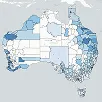

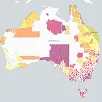


The total adult population (15 years or older) of Seaford 3198 VIC is 14,187, with a median age of 40. Of those, 37.48% are married, 16.79% are divorced or separated, 40.06% are single and 5.69% are widowed.
The average household size is 2.3 people per dwelling, and the median household monthly income is estimated to be $8,324. The median monthly mortgage repayment for households in this suburb is $1,850 which is 22.22% of their earnings.
Source: ABS Census Data (2021)