
Maddingley, VIC 3340

Good to know:
Maddingley, VIC 3340 is a picturesque suburb located within the Bacchus Marsh area, roughly 50 kilometres west of Melbourne's CBD. Known for its blend of rural charm and modern convenience, Maddingley features a mix of historical homes and new developments. The suburb is home to the Bacchus Marsh Grammar School and Maddingley Park, a popular recreational spot with sporting facilities and picnic areas. Essential amenities such as shops, cafes, and healthcare services are easily accessible, while public transport options, including a train station, provide convenient connectivity to Melbourne and beyond.
Read More
Maddingley VIC 3340 property market snapshot: typical price $754,100 (houses), median rent $518 per week and a gross rental yield of 3.57%. This Maddingley property investment profile points to a mid‑price house market with yields slightly above a common 3% investor threshold, a high-confidence dataset and a mix of supply/demand signals consistent with a balanced but slightly tight housing market.
Overall the data shows supportive socio‑economic fundamentals (IRSAD 1004) and low listed stock on market (SoM 0.38%) that compresses resale supply, while affordability is stretched (33 years to own) which may cap near‑term price elasticity. Vacancy and days on market are in the neutral band, suggesting steady rental demand rather than acute tightening.
Property market outlook
Maddingley VIC 3340 house prices are operating from a typical price of $754k with rents around $518pw and yield ~3.6%. IRSAD 1004 indicates above‑average socio‑economic status, which supports medium‑term capital growth potential relative to lower‑IRSAD areas. Supply indicators are mixed: SoM% at 0.38% is low‑supply/opportune for price support, while inventory at 2.93 months and BA Ratio 0.76% are both in the neutral range suggesting no imminent flood of new stock. Demand metrics (DoM 39 days, vacancy 1.18%, Buy Search Index 4) are broadly balanced — not overheated but not weak. The affordability metric (33 years) is a notable constraint: higher years‑to‑own reduce broad market access and can moderate buyer competition and price acceleration.
Pros
- Yield above 3% (3.57%): provides acceptable income return for many investors in this price band.
- IRSAD 1004: socio‑economic conditions are supportive of capital preservation and selective growth.
- Low Stock on Market (0.38%): tight resale availability for houses, supportive of price stability and potential upside.
- High confidence in the data: more reliable signals for decision‑making.
- Low Unit share (UH Ratio 4%): predominantly house market limits competition from apartment oversupply; clearer comparables for houses.
Cons
- Affordability stretched at 33 years: higher servicing burden may limit buyer pool and slow price growth.
- Inventory (2.93 months) and BA Ratio (0.76%) neutral rather than tight: there is enough supply cycling through to prevent rapid upwards price spikes.
- Renter/Owner ratio 24% is neutral: not a particularly investor‑heavy market to drive strong rental growth from demand imbalance.
- Vacancy 1.18% neutral: rentals are steady but not in a landlord’s market; limited immediate upside in compressing vacancies further.
- Clearance Rate reported 0.0% (neutral): low auction activity reduces a clear directional signal from auction markets.
Investment strategies
- Buy and hold — income + capital growth: Maddingley suits medium‑term buy‑and‑hold for investors seeking stable rental yield around 3.5% and exposure to modest capital growth backed by favourable IRSAD and tight resale stock. Expect steady rather than explosive capital gains.
- Target quality houses, not cheap apartments: with UH Ratio at 4%, focus on established houses where demand and comparables are strongest.
- Serviceability sensitive buyers: account for stretched affordability — stress test scenarios with higher rates and longer hold periods. Consider lower leverage or higher deposit to reduce refinancing and servicing risk.
- Renovation with uplift: modest cosmetic upgrades that shorten days on market and increase rent can improve total RoI in a market where rental demand is stable but not scarce.
- Shortlist relative markets: compare Maddingley to proximate suburbs with lower years-to-own or stronger rent growth if you require higher capital upside or better cashflow cover. HTAG’s relative scoring will help prioritise adjacent pockets with similar fundamentals but different affordability dynamics.
- Stagger acquisitions: given neutral supply metrics, pace purchases across cycles to avoid buying at temporary price peaks; use sales velocity (DoM) and clearance trends as tactical entry signals.
Is Maddingley VIC 3340 a good suburb to invest in?
Maddingley VIC 3340 is a pragmatic suburb for investors focused on stable income and measured capital gains rather than speculative leaps. Strengths include a supportive socio‑economic profile (IRSAD 1004), low stock on market and a yield above typical minimum thresholds. Key constraints are stretched affordability (33 years) and otherwise neutral demand/supply indicators which temper upside potential. For conservative investors and buyers’ agents targeting houses in a low‑supply environment with reliable rental performance, Maddingley is worth consideration; for aggressive growth strategies or cashflow‑dependent buys, neighbouring markets with lower years‑to‑own or stronger rental uplift may be preferable.
About HtAG Analytics Data
HtAG base metrics reported here (per dwelling type unless noted) include: Typical Price, Median Rent, Sales, Rentals, % Change vs referent periods, Gross Rental Yield, Capital Growth (annualised estimate with low/high bounds), Total RoI (Yield + Capital Growth), Rent Increase (annualised), Volatility Index (MAPE‑based), Confidence (data reliability), Relative Composite Score™. Additional metrics commonly used in our dashboards include IRSAD, Renter/Owner ratio, Unit/House ratios, Years to Own (Affordability), Growth Rate Cycle (GRC), Stock on Market (SoM & SoM%), Inventory (months), Building Approvals & BA Ratio, Hold Period, Days on Market, Discounting, Vacancy Rate, Buy & Rent Search Index, Auction Clearance Rates, Population, Estimated Dwellings, School Rank and local infrastructure proxies.
The guiding principle behind HtAG metrics is to capture both current market conditions and historical trends so we can perform relative market analysis closely aligned to the point of purchase. In the Maddingley VIC 3340 context that means our figures combine recent listing/sales activity, rental listings and longer‑term trends to benchmark the suburb against peers. Unlike some public data providers that emphasise broad, media‑oriented trend reporting, HtAG’s methodology is tuned to short‑listing and comparing specific suburbs for investment decisions; similar metric names may therefore be calculated and curated differently, producing distinct nuances in interpretation.
Note that this snapshot highlights current value metrics for Maddingley VIC 3340 but does not replace trend analysis — metric trajectories (rent and price momentum, changing vacancy or new approvals) materially affect investment outcomes. Some metrics carry greater weight depending on strategy and investor constraints; for example affordability dominates for owner‑occupier investors while vacancy and yield may dominate for yield‑focused buyers. Market selection varies by budget, borrowing capacity, risk appetite and intended hold or refinance timeframe; HTAG excels at shortlisting markets to match those individual criteria rather than offering one‑size‑fits‑all rankings. For serious investors and buyer’s agents, we recommend running relative analyses across a set of comparable suburbs aligned to your objectives.
Updated: 1 May 2026
Read Less
Quick Area Stats

Dwellings

Population

EDI

Bushfire Risk Index

Flood Risk Index
Education & Infrastructure
Sign Up to Access

School Rank

Infra. Spend
Market Trends
Essential metrics effectively streamline the process of identifying markets that match your financial situation and investment objectives. Typical Price, Indicative Yield and Total ROI provide a swift means to shortlist areas that resonate with what you’re seeking and can afford. These metrics also serve as valuable general trend indicators, allowing you to visualise transaction volumes and dynamics of change.
1M
1Q
1Y
3Y
5Y
7Y
10Y
1M
1Q
1Y
3Y
5Y
7Y
10Y

1M
1Q
1Y
3Y
5Y
7Y
10Y
The Growth Rate Cycle (GRC) is a metric used to analyse the year-on-year change in property values, providing insights into the growth cycle of a particular area. It uses the “typical price” metric to gauge property values more accurately than median prices, and includes both actual and projected data for the current year.

Fundamental metrics play a vital role in providing a comprehensive analysis of the socio-economic environment within a specific suburb or region. Additionally, the Return on Investment (ROI) and Volatility Index are crucial metrics that aid in evaluating the prospective profitability and the level of risk or stability in the market.
Socio-economics
Sign Up to Access

IRSAD

Renter to Owner

Units to Houses
Projections
Sign Up to Access

Projected Annual ROI

Volatility Index
Quick Area Stats
Sign Up to Access

Annual Sales Volume

Annual Rentals Volume



Stock on Market

Building Approvals

Inventory

Hold Period




Supply metrics are crucial in gauging both the existing volumes of real estate listed for sale and the properties anticipated to enter the market soon. A diminished supply could signal opportunities for price appreciation, particularly when there’s corresponding buyer demand to buoy the market. The Stock on Market and Inventory level metrics (current values) are presented as a 3-month rolling average of monthly data shown in the charts. This means the last 3 months of data are averaged. The BA Ratio represents the proportion of building approvals over the latest 12 months relative to the total dwellings in the area.

Days on Market

Search Index

Vacancy Rate

Clearance Rate




Demand metrics underscore the level of interest that potential property buyers or tenants have in a specific suburb or locality. When demand outstrips the available supply, or if the supply fails to meet the intensity of buyer/renter interest, there’s a potential for prices to climb, underscoring the pivotal relationship between demand dynamics and property value trends. The Days on Market and Clearance Rate metrics (current values) are presented as a 3-month rolling average of monthly data shown in the charts. This means the last 3 months of data are averaged.
We invite you to contribute to the conversation by sharing your thoughts or raising questions about this market in the comment section below.
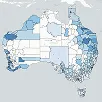

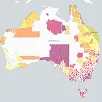


The total adult population (15 years or older) of Maddingley 3340 VIC is 4,203, with a median age of 33. Of those, 46.11% are married, 12.75% are divorced or separated, 36.62% are single and 4.50% are widowed.
The average household size is 2.7 people per dwelling, and the median household monthly income is estimated to be $8,652. The median monthly mortgage repayment for households in this suburb is $1,766 which is 20.41% of their earnings.
Source: ABS Census Data (2021)