
Lakes Entrance, VIC 3909

Good to know:
Lakes Entrance, VIC 3909, is a picturesque coastal town situated in East Gippsland, roughly 320 km east of Melbourne. Renowned for its stunning waterways, the town serves as the gateway to the Gippsland Lakes, Australia's largest inland network of waterways. With a rich maritime history, Lakes Entrance offers an array of water-based activities such as fishing, boating, and swimming. Its scenic Ninety Mile Beach provides ample opportunities for relaxation. The town features a welcoming community, various seafood eateries, and is popular among both tourists and retirees seeking a serene coastal lifestyle.
Read More
Lakes Entrance VIC 3909 houses show a typical price of $557,650, median rent of $477/week and a gross yield of 4.45% — so Lakes Entrance VIC 3909 property investment currently offers above‑average rental return for houses but mixed signals on growth. The core market indicators point to decent rental demand (vacancy ~1.22%) and a tightly held stock profile (hold period 11.4 years) but weaker affordability (44 years) and elevated months-of-supply (8.55 months) that could cap near‑term price upside. House prices in Lakes Entrance are therefore more attractive to yield-focused, longer‑term investors than to short-term capital gain hunters.
Property market outlook
- Demand vs supply: Inventory of 8.55 months signals high available supply (unfavourable) that will likely create negotiating leverage for buyers and upward pressure on discounting; however Building Approvals Ratio of 0.28% is low (opportune) which limits medium‑term pipeline supply. Hold period of 11.42 years (favourable) also suggests many properties are tightly held, reducing churn and supporting longer‑term scarcity.
- Affordability and socio‑economic context: An affordability estimate of 44 years is high — this is a significant constraint for owner‑occupier entry and can dampen owner‑driven price demand. IRSAD of 901 is below the neutral threshold (unfavourable), indicating a lower socio‑economic profile that typically reduces long‑run premium growth versus higher‑IRSAD suburbs.
- Rental fundamentals: Median rent $477/wk gives a gross yield of 4.45% which is comfortably above a typical 3% minimum — attractive for income investors. Vacancy at 1.22% sits in the neutral range and, together with the yield, points to a workable rental market for investors prepared to hold.
- Market activity: Days on market at 84 days and a Buy Search Index of 5 are neutral; auction clearance reported at 0% (neutral for this market type). Data confidence is High, so these signals are reliably measured.
Pros
- Solid gross yield (4.45%) for houses — attractive cashflow relative to many metro markets.
- Low Building Approvals Ratio and long hold period support longer‑term supply constraints, which can underpin future capital growth when demand returns.
- Vacancy rate around 1.2% indicates tenants are available and sustained rental demand exists.
- High confidence in the data allows investors to rely on reported metrics for decision making.
Cons
- Affordability is stretched (44 years), limiting pool of owner‑occupiers and slowing organic demand for price appreciation.
- Inventory (8.55 months) is high — a clear short‑term headwind for price growth and a sign of excess market listings or slower turnover.
- IRSAD 901 is below the neutral threshold; lower socio‑economic scores generally reduce long‑term premium growth potential versus more affluent suburbs.
- Days on market (84) and neutral buyer search activity imply sales velocity is moderate; combined with high inventory this can extend time to transact or compress prices.
Investment strategies
- Income-first buy-and-hold: Target well-priced houses that deliver the 4%+ gross yields on offer. The yield profile suits investors who prioritise cashflow over quick capital gains.
- Negotiate on price and terms: Elevated months of supply suggests buyers can secure discounts or favourable conditions (longer settlement, inclusions) — use a value-based negotiation strategy.
- Asset management to lift returns: Consider modest value-add renovations that improve rental appeal (kitchen/bathroom refresh, energy efficiency) to boost rent and reduce vacancy downtime; given the yield, ROI on targeted refurbishments can be attractive.
- Long horizon capital growth: If aiming for growth, accept a longer holding period. The low BA ratio and long hold periods support a thesis that supply constraints will eventually favour price growth once demand normalises.
- Selective market timing: Avoid relying on short-term capital appreciation. Monitor changes in inventory, local employment, infrastructure announcements, and affordability metrics — improved affordability or a reduction in months‑supply would be the clearest near‑term catalysts.
- Tenant profile and property selection: Given IRSAD and affordability constraints, favour robust, affordable housing stock (3‑bed family homes, low maintenance) that appeals to working families and long‑term tenants.
Is Lakes Entrance VIC 3909 a good suburb to invest in?
Lakes Entrance VIC 3909 can be a good suburb to invest in for income-focused property investors seeking above‑market gross yields and stable rental demand. The combination of a 4.45% gross yield, low vacancy and long hold periods provides a defensive income play. However, the suburb is less compelling for investors prioritising rapid capital growth: affordability (44 years) and IRSAD (901) are headwinds, and the high months‑supply (8.55 months) increases short‑term price risk. If you are prepared to buy selectively, negotiate on price, and hold for the medium‑to‑long term while managing the asset to maintain rental income, Lakes Entrance houses match a conservative, yield-oriented strategy.
About HtAG Analytics Data
HtAG reports a core set of suburb metrics (typical price, median rent, yield, sales, rentals, % change over time, capital growth projections with low/high ranges, total RoI, rent increase, volatility index, confidence, SoM/SoM%, inventory/months of supply, building approvals and BA ratio, hold period, days on market, discounting, vacancy rate, buy & rent search index, auction clearance and several advanced context metrics such as population, estimated dwellings, school rank and non‑residential approvals). This list is a base set — HTAG dashboards include additional measures and breakdowns per dwelling type to support deeper analysis.
The guiding principle behind HTAG metrics is to capture both current market conditions and historical trends so suburbs can be compared relative to one another at or near the point of purchase. In a suburb context such as Lakes Entrance, that means our metrics are assembled to reflect the local balance of supply, demand and socio‑economic factors rather than only broad state or national signals. Other providers that publish public datasets may be optimised for high‑level trend reporting; HTAG’s methods focus on comparative, purchase‑level nuance — so similarly named metrics may be calculated or curated differently to better support real transactional decisions.
It’s also important to remember this summary is a snapshot of current value metrics and doesn’t substitute for trend analysis — metric trajectories and the relative weighting of indicators often determine investment outcomes. Different investors and strategies will select different suburbs because budgets, borrowing capacity, risk appetite and time horizons vary. HTAG excels at shortlisting markets tailored to individual criteria rather than offering one‑size‑fits‑all recommendations. For professional decisions in Lakes Entrance VIC 3909, perform a relative analysis against peer suburbs and sequence metrics (trend, confidence and volatility) to align market selection with your strategy.
Updated: 1 Jun 2026
Read Less
Quick Area Stats

Dwellings

Population

EDI

Bushfire Risk Index

Flood Risk Index
Education & Infrastructure
Sign Up to Access

School Rank

Infra. Spend
Market Trends
Essential metrics effectively streamline the process of identifying markets that match your financial situation and investment objectives. Typical Price, Indicative Yield and Total ROI provide a swift means to shortlist areas that resonate with what you’re seeking and can afford. These metrics also serve as valuable general trend indicators, allowing you to visualise transaction volumes and dynamics of change.
1M
1Q
1Y
3Y
5Y
7Y
10Y
1M
1Q
1Y
3Y
5Y
7Y
10Y

1M
1Q
1Y
3Y
5Y
7Y
10Y
The Growth Rate Cycle (GRC) is a metric used to analyse the year-on-year change in property values, providing insights into the growth cycle of a particular area. It uses the “typical price” metric to gauge property values more accurately than median prices, and includes both actual and projected data for the current year.

Fundamental metrics play a vital role in providing a comprehensive analysis of the socio-economic environment within a specific suburb or region. Additionally, the Return on Investment (ROI) and Volatility Index are crucial metrics that aid in evaluating the prospective profitability and the level of risk or stability in the market.
Socio-economics
Sign Up to Access

IRSAD

Renter to Owner

Units to Houses
Projections
Sign Up to Access

Projected Annual ROI

Volatility Index
Quick Area Stats
Sign Up to Access

Annual Sales Volume

Annual Rentals Volume



Stock on Market

Building Approvals

Inventory

Hold Period




Supply metrics are crucial in gauging both the existing volumes of real estate listed for sale and the properties anticipated to enter the market soon. A diminished supply could signal opportunities for price appreciation, particularly when there’s corresponding buyer demand to buoy the market. The Stock on Market and Inventory level metrics (current values) are presented as a 3-month rolling average of monthly data shown in the charts. This means the last 3 months of data are averaged. The BA Ratio represents the proportion of building approvals over the latest 12 months relative to the total dwellings in the area.

Days on Market

Search Index

Vacancy Rate

Clearance Rate




Demand metrics underscore the level of interest that potential property buyers or tenants have in a specific suburb or locality. When demand outstrips the available supply, or if the supply fails to meet the intensity of buyer/renter interest, there’s a potential for prices to climb, underscoring the pivotal relationship between demand dynamics and property value trends. The Days on Market and Clearance Rate metrics (current values) are presented as a 3-month rolling average of monthly data shown in the charts. This means the last 3 months of data are averaged.
We invite you to contribute to the conversation by sharing your thoughts or raising questions about this market in the comment section below.
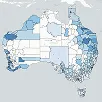

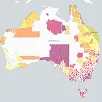


The total adult population (15 years or older) of Lakes Entrance 3909 VIC is 4,392, with a median age of 55. Of those, 45.49% are married, 16.89% are divorced or separated, 28.26% are single and 9.36% are widowed.
The average household size is 2.1 people per dwelling, and the median household monthly income is estimated to be $4,808. The median monthly mortgage repayment for households in this suburb is $1,227 which is 25.52% of their earnings.
Source: ABS Census Data (2021)