
Yea, VIC 3717

Good to know:
Yea is a picturesque town located in Victoria, with the postcode 3717. It is situated approximately 100 kilometres northeast of Melbourne, making it a popular spot for day trips and weekend getaways from the city. Known for its charming historic buildings and lush natural surroundings, Yea offers a serene lifestyle with a strong community spirit. Key attractions include the Yea Wetlands, historic Yea Railway Station, and the nearby Goulburn River. The town provides a range of amenities, including cafes, shops, and schools, and hosts regular local markets and cultural events.
Read More
Yea VIC 3717 property investment at a glance: typical house price $654,155, median weekly rent $461 and a gross yield of 3.66%. This snapshot of the Yea property market and property market data shows a semi‑regional market with solid socio‑economic indicators (IRSAD 962), tight rental conditions (vacancy 0.91%) but stretched affordability (44 years) and elevated months of inventory (6.13). House prices in Yea are supported by low new-build pressure and limited unit stock, but price growth upside is tempered by weaker buyer affordability and current supply sitting above balanced thresholds.
Property market outlook
Yea VIC 3717 is a small, tightly‑defined market for houses. The yield of 3.66% is above a common 3% threshold, so rental income is reasonable for a regional market, while the vacancy rate at 0.91% signals firm rental demand and scope for rent growth. IRSAD at 962 is opportune — local socio‑economic conditions favour stability in demand for established stock. However, affordability at 44 years is a clear constraint: prospective owner‑occupiers face materially longer pay‑off horizons than the 30‑year benchmark, which erodes pool of finance‑ready buyers and can blunt transactional demand.
Supply indicators are mixed. Stock on market at 0.64% is neutral, but inventory at 6.13 months is in the unfavourable/high‑supply band, implying sellers may face longer sales processes and price pressure if listings accumulate. Building approvals ratio of 0.16% is opportune (low pipeline supply), which should limit medium‑term new‑build competition for established houses. Unit to house ratio of 6% is opportune — units are scarce relative to houses, reducing intra‑suburb competition for house buyers.
Demand metrics are generally steady: days on market of 49 days is neutral, Buy Search Index at 5 is average, and auction clearance recorded as 0% (common for regional markets) should be read as neutral. Data confidence is high, so these signals can be used for comparative analysis with other short‑listed markets.
Pros
- Rental tightness: vacancy 0.91% indicates low rental competition and underpins rental growth potential.
- Reasonable yield: 3.66% gross yield is above the 3% baseline for viability in many investor models.
- Socio‑economic strength: IRSAD 962 (opportune) supports more stable demand and buyer quality relative to lower‑scoring areas.
- Low future supply pressure: building approvals ratio 0.16% suggests limited immediate new supply inflows.
- Low unit mix: units/houses ratio 6% (opportune) benefits house investors due to limited unit substitution.
Cons
- Poor affordability: 44 years to own is well above the 30‑year threshold — this reduces owner‑occupier demand and increases reliance on investors and cash buyers.
- Elevated inventory: 6.13 months signals a softer sales market and increased downside risk to short‑term capital growth.
- Modest yields for leverage: while above 3%, a 3.66% gross yield is modest for highly leveraged strategies, increasing sensitivity to interest rate movements.
- Buyer pool neutrality: renter/owner ratio 17% is neutral — neither strongly investor‑driven nor dominated by home owners, limiting predictable demand drivers.
- Regional auction data: clearance rate 0% is neutral but offers no high‑volume auction evidence of strong transactional demand.
Investment strategies
- Income‑plus growth (buy‑and‑hold houses): Use the low vacancy and reasonable yield to target long‑term cashflow while relying on modest capital growth driven by limited new approvals and healthy IRSAD. Prioritise properties that can be rented quickly and require minimal vacancy downtime.
- Value‑add renovations: With average days on market and higher inventory, buyers can target cosmetically dated houses that can be upgraded to improve rent and increase appeal to the limited owner‑occupier cohort. Even small uplift in rent materially improves net yield in this market.
- Price‑selective acquisition: Given stretched affordability and elevated inventory, avoid paying premium prices. Prioritise below‑typical‑price stock or longer‑hold motivated sellers to create immediate equity buffer.
- Conservative gearing and stress‑testing: Because yields are modest and affordability weak, run conservative servicing scenarios (higher rates, vacancy buffers). Aim for lower loan‑to‑value or larger cash cushions.
- Shortlist with comparative analysis: Use Yea alongside similar regional markets that have lower months of inventory or stronger buyer affordability to decide rotation/timing. HTAG relative metrics can help identify whether Yea is the better buy within a regional set.
Is Yea VIC 3717 a good suburb to invest in?
Yea VIC 3717 can be a good suburb for a buy‑and‑hold investor focused on steady rental income and capital appreciation over a multi‑year horizon, provided acquisitions are price‑disciplined. Strengths are low vacancy, an opportune IRSAD score, limited unit stock and low building approvals — factors that support longer‑term value retention. Key risks are stretched affordability (44 years) and above‑balanced inventory (6.13 months), which increase the chance of short‑term price softness. For investors seeking strong immediate cashflow or high yield leverage plays, the market is only marginally suitable; for patient investors targeting moderate growth plus rental stability, Yea is a viable addition when purchases are made below typical price and with conservative finance settings.
About HtAG Analytics Data
HtAG reports a base set of suburb metrics that include typical price, median rent, sales and rental listings counts, % change over time, gross rental yield, capital growth projections with low/high bands, total RoI, projected rent increase, volatility index (MAPE‑based), confidence (data accuracy), Relative Composite Score™, IRSAD, renter/owner ratio, unit/house mix, years‑to‑own (affordability), growth rate cycle (GRC), stock on market (SoM and SoM%), inventory/months of supply, building approvals and BA ratio, hold period, days on market, discounting, vacancy rate, rentals listed (vacancies), DoRM, buy & rent search index, auction clearance rates, population, estimated dwellings, school rank and proximity to CBD (GPO distance). There are more advanced metrics available on HTAG dashboards beyond this base set.
The guiding principle behind HTAG metrics is to capture both current market conditions and historical trends to enable relative, point‑of‑purchase analysis. In a suburb context like Yea VIC 3717 that means our metrics are calibrated to reflect local sales velocity, rental listings and supply pipelines rather than only high‑level public series. Other providers may emphasise public feeds for broader trend reporting; HTAG focuses on comparing suburbs near the decision point, with data curation and measurement nuances tailored to suburb‑level investment selection.
Note that the summary above is a current snapshot of value metrics for Yea VIC 3717 and does not incorporate metric trends or weightings that can change a recommendation materially. Some metrics matter more than others depending on strategy (for example yield vs affordability for yield‑focused investors). Different investors with varying budgets, borrowing capacity, risk appetite and timeframes will select different suburbs; HTAG is designed to shortlist markets against individual criteria rather than apply one‑size‑fits‑all guidance. For serious acquisition work, perform a relative analysis of a set of locations that match your objectives and stress‑test finance assumptions.
Updated: 1 May 2026
Read Less
Quick Area Stats

Dwellings

Population

EDI

Bushfire Risk Index

Flood Risk Index
Education & Infrastructure
Sign Up to Access

School Rank

Infra. Spend
Market Trends
Essential metrics effectively streamline the process of identifying markets that match your financial situation and investment objectives. Typical Price, Indicative Yield and Total ROI provide a swift means to shortlist areas that resonate with what you’re seeking and can afford. These metrics also serve as valuable general trend indicators, allowing you to visualise transaction volumes and dynamics of change.
1M
1Q
1Y
3Y
5Y
7Y
10Y
1M
1Q
1Y
3Y
5Y
7Y
10Y

1M
1Q
1Y
3Y
5Y
7Y
10Y
The Growth Rate Cycle (GRC) is a metric used to analyse the year-on-year change in property values, providing insights into the growth cycle of a particular area. It uses the “typical price” metric to gauge property values more accurately than median prices, and includes both actual and projected data for the current year.

Fundamental metrics play a vital role in providing a comprehensive analysis of the socio-economic environment within a specific suburb or region. Additionally, the Return on Investment (ROI) and Volatility Index are crucial metrics that aid in evaluating the prospective profitability and the level of risk or stability in the market.
Socio-economics
Sign Up to Access

IRSAD

Renter to Owner

Units to Houses
Projections
Sign Up to Access

Projected Annual ROI

Volatility Index
Quick Area Stats
Sign Up to Access

Annual Sales Volume

Annual Rentals Volume



Stock on Market

Building Approvals

Inventory

Hold Period




Supply metrics are crucial in gauging both the existing volumes of real estate listed for sale and the properties anticipated to enter the market soon. A diminished supply could signal opportunities for price appreciation, particularly when there’s corresponding buyer demand to buoy the market. The Stock on Market and Inventory level metrics (current values) are presented as a 3-month rolling average of monthly data shown in the charts. This means the last 3 months of data are averaged. The BA Ratio represents the proportion of building approvals over the latest 12 months relative to the total dwellings in the area.

Days on Market

Search Index

Vacancy Rate

Clearance Rate




Demand metrics underscore the level of interest that potential property buyers or tenants have in a specific suburb or locality. When demand outstrips the available supply, or if the supply fails to meet the intensity of buyer/renter interest, there’s a potential for prices to climb, underscoring the pivotal relationship between demand dynamics and property value trends. The Days on Market and Clearance Rate metrics (current values) are presented as a 3-month rolling average of monthly data shown in the charts. This means the last 3 months of data are averaged.
We invite you to contribute to the conversation by sharing your thoughts or raising questions about this market in the comment section below.
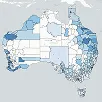

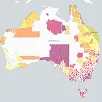


The total adult population (15 years or older) of Yea 3717 VIC is 1,544, with a median age of 56. Of those, 46.31% are married, 15.87% are divorced or separated, 28.30% are single and 9.20% are widowed.
The average household size is 2.1 people per dwelling, and the median household monthly income is estimated to be $5,688. The median monthly mortgage repayment for households in this suburb is $1,408 which is 24.75% of their earnings.
Source: ABS Census Data (2021)