
Caboolture South, QLD 4510

Good to know:
Caboolture South, located in Queensland's postcode 4510, is a suburb within the Moreton Bay Region. Nestled on the southern bank of the Caboolture River, this suburb enjoys a blend of residential and semi-rural landscapes. It offers convenient access to amenities with the neighbouring Caboolture providing essential services, shopping centres, and schools. The area is family-friendly with several parks and recreational facilities. Caboolture South is well-connected via major roads and public transport, making it an attractive option for those commuting to Brisbane or the Sunshine Coast.
Read More
Caboolture South QLD 4510 has a current typical house price of $882,359, a median weekly rent of $597 and a gross yield of 3.52% — so the Caboolture South property market shows modest rental returns above the 3% benchmark but stretched price-to-income dynamics. This Caboolture South QLD 4510 property market snapshot for houses highlights a mix of demand strength (short DOM) and supply risk (elevated building approvals) against a low SES base (IRSAD 853) and very poor affordability (62 years).
Property market outlook
- Price/rent fundamentals: Typical house prices near $882k with median rent $597pw give a 3.52% gross yield — acceptable for long-term investors but low for cashflow-focused strategies. House prices in Caboolture South have to be viewed in the context of a low IRSAD (853) which historically limits premium appreciation and changes buyer profile.
- Supply/demand balance: Active stock on market (SoM%) 0.44% and inventory ~3.04 months are both in the neutral zone, indicating neither severe shortage nor oversupply at present. However building approvals ratio of 4.3% is high (unfavourable) and implies material new supply coming through in the near-to-medium term that could cap price growth and place downward pressure on rents when completed.
- Demand signals: Days on Market of 28 days is opportune and indicates houses are turning relatively quickly — a sign of ongoing transactional demand. Vacancy rate 1.24% sits in the neutral band; rental demand is steady but not overheating.
- Structural constraints: IRSAD 853 (unfavourable) and an affordability estimate of 62 years (very elevated) are important structural headwinds. High years-to-own shrinks the owner-occupier base, making local prices more sensitive to investor flows, external migration or macro credit conditions.
- Reliability: Confidence = High, so the metric set is robust for preliminary market screening.
Pros
- Strong turnover speed: 28 days DOM for houses suggests good liquidity and the ability to transact without extended marketing periods.
- Yield above minimum threshold: 3.52% gross yield exceeds the common 3% benchmark, giving modest rental income support.
- Low unitisation: Units/Houses ratio 4.0% is opportune — the market is predominantly houses, reducing competition from higher-density apartment supply in the established stock.
- Neutral vacancy: 1.24% vacancy indicates rentals are reasonably occupied, limiting short-term rental risk.
Cons
- Very poor affordability: 62 years to own signals households are highly stretched; affordability is an extreme negative for broad-based demand and long-run price resilience.
- Low socioeconomic index: IRSAD 853 is below neutral, which typically constrains premium capital gains and correlates with more cyclical price behaviour.
- Elevated future supply risk: Building approvals ratio 4.3% is well into the unfavourable range — substantial construction activity is likely to add stock and weigh on growth and rents upon completion.
- Modest yields for cashflow investors: While above 3%, a 3.52% gross yield is still low for investors dependent on cashflow after interest, fees and maintenance.
- Reliance on investor/external demand: Neutral RO ratio (44%) plus affordability stresses mean the buyer pool may skew away from local owner-occupiers, increasing sensitivity to macro conditions and credit availability.
Investment strategies
- Long-hold, value-add house play: Given modest yield and structural affordability limits, houses in Caboolture South suit investors prepared to hold for several years and drive returns via capital growth or renovation-led value uplifts. Target stock where cosmetic upgrades or modest extensions materially lift rental value and market appeal.
- Target micro-markets with constrained new supply: Use suburb-level searches to identify pockets (closer to transport, schools or amenity) where new approvals are lower than the suburb average. These pockets are likely to outperform if broad approvals bring oversupply elsewhere.
- Conservative gearing and stress-testing: Because affordability is weak and approvals are high, avoid aggressive leverage. Stress-test rents and interest rate scenarios — low yields mean margin for error is small if rates rise.
- Stagger acquisitions and monitor completion pipelines: If building approvals ratio remains elevated, phase purchases to avoid being exposed when large completions hit the market. Keep watch on ABS approvals and local council pipeline data.
- Consider hybrid strategies: For investors seeking some yield, pair a lower-yield Caboolture South house with stronger-cashflow assets elsewhere to balance portfolio volatility. Alternatively, seek houses on larger lots with subdivision or dual-living potential where planning permits.
- Active rental management: Maintain low vacancy with proactive tenancy management, and upgrade to energy-efficient fittings and amenity that appeal to the local renter profile to support rent growth.
Is Caboolture South QLD 4510 a good suburb to invest in?
Caboolture South QLD 4510 can be a reasonable garden‑style house investment for buyers who understand the trade-offs: liquidity is good (short DOM), rental occupancy is stable and yields are modestly positive. However, structural constraints (IRSAD 853) and extremely poor affordability (62 years) reduce the likelihood of strong, broad-based capital growth unless you can buy selectively below suburb typical price or add value through renovations. The most significant near-term risk is the high building approvals ratio (4.3%) — incoming supply could cap price and rent upside. In short: suitable for patient, locally selective investors who prioritise long holds and active asset management; less suitable for short-term speculative plays or highly geared cashflow strategies.
About HtAG Analytics Data
Base metrics used in this summary include Typical Price, Median Rent, Sales and Rentals activity, % Change over reference periods, Gross Rental Yield, Capital Growth estimates (with low/high bounds), Total RoI, Rent Increase projections, Volatility Index, Confidence and the Relative Composite Score™. There are additional metrics available (supply indicators such as Stock on Market, Inventory/Months of Supply, Building Approvals & BA Ratio, Hold Period; demand indicators such as Days on Market, Discounting, Vacancy Rate, Buy & Rent Search Index, Auction Clearance Rates; plus demographic and infrastructure proxies like IRSAD, RO Ratio, UH Ratio, School Rank and estimated dwellings).
HtAG metrics are designed to capture both current market conditions and historical trend behaviour to support relative market analysis tailored to the point of purchase. Unlike providers whose public datasets primarily serve broad media narratives, HTAG measures and curates indicators specifically to analyse and compare local markets at suburb and dwelling-type levels. While some metric names are similar across vendors, our data curation, scaling and measurement approach includes distinct nuances to make comparisons more relevant for investors and buyer’s agents evaluating specific purchase locations.
Note that the snapshot above summarises current value metrics and does not incorporate metric trends, which can materially affect decisions. Some metrics carry greater weight depending on investor strategy and timeframe; this nuance is important for a complete view. Market selection always differs by budget, borrowing capacity, risk appetite and intended hold/refinance/sell horizons — HTAG excels at shortlisting markets based on individual criteria rather than one-size-fits-all rankings. For serious investors and property professionals, perform relative analysis across a set of locations aligned to your objectives before committing capital.
Updated: 1 May 2026
Read Less
Quick Area Stats

Dwellings

Population

EDI

Bushfire Risk Index

Flood Risk Index
Education & Infrastructure
Sign Up to Access

School Rank

Infra. Spend
Market Trends
Essential metrics effectively streamline the process of identifying markets that match your financial situation and investment objectives. Typical Price, Indicative Yield and Total ROI provide a swift means to shortlist areas that resonate with what you’re seeking and can afford. These metrics also serve as valuable general trend indicators, allowing you to visualise transaction volumes and dynamics of change.
1M
1Q
1Y
3Y
5Y
7Y
10Y
1M
1Q
1Y
3Y
5Y
7Y
10Y

1M
1Q
1Y
3Y
5Y
7Y
10Y
The Growth Rate Cycle (GRC) is a metric used to analyse the year-on-year change in property values, providing insights into the growth cycle of a particular area. It uses the “typical price” metric to gauge property values more accurately than median prices, and includes both actual and projected data for the current year.

Fundamental metrics play a vital role in providing a comprehensive analysis of the socio-economic environment within a specific suburb or region. Additionally, the Return on Investment (ROI) and Volatility Index are crucial metrics that aid in evaluating the prospective profitability and the level of risk or stability in the market.
Socio-economics
Sign Up to Access

IRSAD

Renter to Owner

Units to Houses
Projections
Sign Up to Access

Projected Annual ROI

Volatility Index
Quick Area Stats
Sign Up to Access

Annual Sales Volume

Annual Rentals Volume



Stock on Market

Building Approvals

Inventory

Hold Period




Supply metrics are crucial in gauging both the existing volumes of real estate listed for sale and the properties anticipated to enter the market soon. A diminished supply could signal opportunities for price appreciation, particularly when there’s corresponding buyer demand to buoy the market. The Stock on Market and Inventory level metrics (current values) are presented as a 3-month rolling average of monthly data shown in the charts. This means the last 3 months of data are averaged. The BA Ratio represents the proportion of building approvals over the latest 12 months relative to the total dwellings in the area.

Days on Market

Search Index

Vacancy Rate

Clearance Rate




Demand metrics underscore the level of interest that potential property buyers or tenants have in a specific suburb or locality. When demand outstrips the available supply, or if the supply fails to meet the intensity of buyer/renter interest, there’s a potential for prices to climb, underscoring the pivotal relationship between demand dynamics and property value trends. The Days on Market and Clearance Rate metrics (current values) are presented as a 3-month rolling average of monthly data shown in the charts. This means the last 3 months of data are averaged.
We invite you to contribute to the conversation by sharing your thoughts or raising questions about this market in the comment section below.

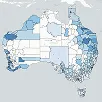

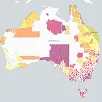


The total adult population (15 years or older) of Caboolture South 4510 QLD is 6,062, with a median age of 36. Of those, 37.20% are married, 15.75% are divorced or separated, 41.16% are single and 5.74% are widowed.
The average household size is 2.5 people per dwelling, and the median household monthly income is estimated to be $5,524. The median monthly mortgage repayment for households in this suburb is $1,500 which is 27.15% of their earnings.
Source: ABS Census Data (2021)