
Prospect, SA 5082

Good to know:
Prospect, SA 5082, is an inner northern suburb of Adelaide, located approximately 5 km from the city's CBD. Known for its charming tree-lined streets and character homes, Prospect offers a blend of historic cottages and modern residences. The area boasts a vibrant café culture, with numerous dining options along Prospect Road, along with boutique shops and art galleries. Educational facilities are ample, with several schools in proximity. The suburb has excellent public transport links, making commuting easy. Prospect’s community atmosphere and close proximity to city attractions make it a popular choice for families and professionals alike.
Read More
Prospect SA 5082 is a high‑value inner metropolitan suburb where the property market for houses shows Typical Price $1,325,317, Median Rent $681 pw and a gross rental Yield of 2.67% (below the common 3% cashflow threshold). Prospect SA 5082 property investment profiles as a tight‑supply, low‑vacancy market with strong socioeconomic indicators (IRSAD 1054) but stretched affordability (Years to Own 51). House prices in Prospect have demand signals that support capital growth, while rental yields are low — positioning the suburb more for growth‑focused investors than yield seekers.
Property market outlook
Prospect’s house market is supply constrained and rent‑tight. Stock on Market 0.24% and Inventory 1.02 months are in the “opportune” range, indicating limited for‑sale supply relative to dwelling stock. Vacancy 0.58% and Days on Market 28 days point to robust leasing demand and quick turnarounds for landlords. IRSAD 1054 signals a relatively affluent catchment, which historically correlates with stronger long‑term price growth. Countervailing risks are the very high Affordability years (51), which narrows the owner‑occupier buyer pool and can blunt trading liquidity, and a 50% auction Clearance Rate that suggests auctions are not consistently converting to sales. Data Confidence is High, so these signals are reliable for near‑term decision making.
Pros
- Tight supply: SoM 0.24% and Inventory 1.02 months — constrained listings support price resilience and upside.
- Rental market strength: Vacancy 0.58% and DoM 28 days — low vacancy and quick leasing support rental security.
- Strong socioeconomic profile: IRSAD 1054 — favourable for premium capital growth over time.
- High data confidence — the metrics carry strong reliability for market comparisons and planning.
- Balanced building approvals: BA Ratio 0.39% — not an imminent oversupply risk from new build activity.
Cons
- Low gross yields: 2.67% — below the 3% benchmark; weak cashflow for investors relying on rental income.
- Severe affordability pressure: 51 years to own — reduces entry‑level demand and can impair market liquidity at price peaks.
- Auction performance: 50% clearance — auction channels are underperforming relative to high‑demand markets.
- Neutral demand signals: Buy Search Index 3 and Renter/Owner 35% indicate demand is not overly strong online search‑wise; unit/house mix (26% units) is neutral, offering limited diversification within the suburb.
- Hold period near neutral: 9.58 years — turnover is average; not exceptionally tightly held.
Investment strategies
- Growth‑centric buy-and-hold: Prospect is better suited to investors targeting long‑term capital appreciation given strong IRSAD and supply tightness. Expect lower cashflow initially; plan for longer hold periods (7–15+ years) to capture capital gains.
- Equity / gearing play: Use equity or deposit strength to secure property despite low yield. Low yield suggests many purchases will require serviceability and buffer planning rather than immediate positive cashflow.
- Value‑add renovations targeted to premiumisation: Small to medium upgrades that lift amenity and rental grade (kitchen, bathrooms, energy efficiency) can help lift rents marginally and improve buyer appeal on resale in a high‑socioeconomic market.
- Consider alternatives for yield: If cashflow is critical, Prospect houses under current metrics are sub‑optimal. Strategies include targeting smaller properties, different dwelling types where yields are higher, or diversifying across markets to balance total portfolio income.
- Limited development arbitrage: BA Ratio ~0.39% and low SoM reduce the likelihood of immediate oversupply, but development and dual‑occupancy opportunities should be validated with council/DA risk and local comparables — not assumed.
Is Prospect SA 5082 a good suburb to invest in?
Prospect SA 5082 is a good suburb for investors prioritising capital growth and capital preservation in an inner‑urban, high‑socioeconomic market. The combination of tight supply, low vacancy and quick leasing supports price stability and rent security, while IRSAD >1050 underpins demand for premium stock. However, low gross rental yields (2.67%) and extreme affordability pressure (51 years to own) mean the suburb is less suitable for investors who require immediate positive cashflow or who have limited borrowing capacity. Suitability depends on strategy: long‑term growth and equity‑rich buyers — yes; short‑term yield or novice, high‑leverage investors — probably not.
About HtAG Analytics Data
Base metrics reported per dwelling type include: Typical Price, Median Rent (pw), Sales and Rentals counts, % Change over time horizons, Gross Rental Yield, Capital Growth (annual estimate + low/high bounds), Total RoI (Yield + CG), Rent Increase estimate, Volatility Index, Confidence score and Relative Composite Score™. Fundamental context metrics commonly used: IRSAD, Renter/Owner ratio, Unit/House ratio, Unit Value ratio (units), Years to Own (Affordability), and Growth Rate Cycle (GRC). Supply and demand indicators include Stock on Market (SoM and SoM%), Inventory (months), Building Approvals & BA Ratio, Hold Period, Days on Market, Discounting, Vacancy Rate and DoRM, Buy & Rent Search Index and Auction Clearance Rates. There are additional advanced metrics (population, estimated dwellings, school rank, infrastructure spend proxies, annual sales volume, distance to CBD etc.) that supplement the base set.
HtAG’s approach is designed to measure both current conditions and longer‑term trends to enable relative market analysis at the suburb level — a practical focus for investors closer to the point of purchase. Unlike some providers that concentrate on broader public datasets aimed at macro narratives, HTAG metrics are curated and modelled to reflect local market dynamics and to support decision making for buy/sell timing and shortlist generation.
Finally, the snapshot above describes current value metrics but does not incorporate metric trends or weighting priorities that materially influence decisions. Some metrics carry greater influence depending on an investor’s budget, borrowing capacity, risk tolerance and intended hold/refinance horizons. Market selection is not one‑size‑fits‑all; HTAG excels at shortlisting and ranking suburbs based on bespoke investor criteria so that different strategies point to different suburbs even within the same city. For serious investors and buyer’s agents, a relative analysis across a tailored set of locations aligned to financial parameters and timeframes is essential.
Updated: 1 May 2026
Read Less
Quick Area Stats

Dwellings

Population

EDI

Bushfire Risk Index

Flood Risk Index
Education & Infrastructure
Sign Up to Access

School Rank

Infra. Spend
Market Trends
Essential metrics effectively streamline the process of identifying markets that match your financial situation and investment objectives. Typical Price, Indicative Yield and Total ROI provide a swift means to shortlist areas that resonate with what you’re seeking and can afford. These metrics also serve as valuable general trend indicators, allowing you to visualise transaction volumes and dynamics of change.
1M
1Q
1Y
3Y
5Y
7Y
10Y
1M
1Q
1Y
3Y
5Y
7Y
10Y

1M
1Q
1Y
3Y
5Y
7Y
10Y
The Growth Rate Cycle (GRC) is a metric used to analyse the year-on-year change in property values, providing insights into the growth cycle of a particular area. It uses the “typical price” metric to gauge property values more accurately than median prices, and includes both actual and projected data for the current year.

Fundamental metrics play a vital role in providing a comprehensive analysis of the socio-economic environment within a specific suburb or region. Additionally, the Return on Investment (ROI) and Volatility Index are crucial metrics that aid in evaluating the prospective profitability and the level of risk or stability in the market.
Socio-economics
Sign Up to Access

IRSAD

Renter to Owner

Units to Houses
Projections
Sign Up to Access

Projected Annual ROI

Volatility Index
Quick Area Stats
Sign Up to Access

Annual Sales Volume

Annual Rentals Volume



Stock on Market

Building Approvals

Inventory

Hold Period




Supply metrics are crucial in gauging both the existing volumes of real estate listed for sale and the properties anticipated to enter the market soon. A diminished supply could signal opportunities for price appreciation, particularly when there’s corresponding buyer demand to buoy the market. The Stock on Market and Inventory level metrics (current values) are presented as a 3-month rolling average of monthly data shown in the charts. This means the last 3 months of data are averaged. The BA Ratio represents the proportion of building approvals over the latest 12 months relative to the total dwellings in the area.

Days on Market

Search Index

Vacancy Rate

Clearance Rate




Demand metrics underscore the level of interest that potential property buyers or tenants have in a specific suburb or locality. When demand outstrips the available supply, or if the supply fails to meet the intensity of buyer/renter interest, there’s a potential for prices to climb, underscoring the pivotal relationship between demand dynamics and property value trends. The Days on Market and Clearance Rate metrics (current values) are presented as a 3-month rolling average of monthly data shown in the charts. This means the last 3 months of data are averaged.
We invite you to contribute to the conversation by sharing your thoughts or raising questions about this market in the comment section below.
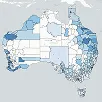

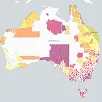


The total adult population (15 years or older) of Prospect 5082 SA is 12,045, with a median age of 37. Of those, 46.38% are married, 10.00% are divorced or separated, 39.22% are single and 4.38% are widowed.
The average household size is 2.5 people per dwelling, and the median household monthly income is estimated to be $9,872. The median monthly mortgage repayment for households in this suburb is $1,929 which is 19.54% of their earnings.
Source: ABS Census Data (2021)