
Kingston, TAS 7050

Good to know:
Kingston, located in Tasmania and bearing the postcode 7050, is a picturesque suburb approximately 12 kilometres south of Hobart's CBD. Known for its family-friendly atmosphere, it blends suburban comfort with natural beauty, featuring lush parks and nearby beaches such as Kingston Beach. The area is well-serviced with amenities, including shopping centres like Channel Court, schools, and healthcare facilities. Kingston is also a gateway to the scenic attractions of the Huon Valley. Its close-knit community and convenient location make it a highly desirable place to live.
Read More
Kingston TAS 7050 houses have a typical price of $778,178, a rolling-year median rent of $604 per week and a gross yield of 4.04%. The Kingston TAS 7050 property market shows tight supply (SoM 0.24%, inventory 1.42 months), low vacancy (0.95%) and brisk selling conditions (DOM 29 days). Positive demand/supply dynamics and a solid yield sit against stretched affordability (years to own 41), making Kingston houses attractive for certain investors but requiring financing and exit-strategy discipline.
Property market outlook
Kingston TAS 7050 house prices are supported by constrained for-sale stock (SoM% 0.24% — low supply) and short inventory (1.42 months), a combination that tends to be supportive of price stability and upside in low-to-medium supply cycles. Demand indicators are healthy: fast days-on-market (29 days), sub-1% vacancy (0.95%) and a neutral buy-search index. Gross rental yield at 4.04% is above a common 3% threshold, giving rental cashflow resilience relative to peers. Offsetting risks centre on affordability: an estimated 41 years to own signals that owner-occupiers are stretched and future demand is sensitive to rate moves and wage growth. Building approvals and hold periods are neutral, suggesting no imminent supply surge but also no evidence of highly constrained long-term holding behaviour.
Pros
- Tight listed supply: SoM 0.24% and inventory 1.42 months indicate low available stock — supportive of price appreciation and quicker sales.
- Rental market strength: median rent $604pw and vacancy 0.95% underpin rental income reliability; DoRM and vacancies reflect high tenant demand.
- Healthy yield: 4.04% gross yield is above typical minimums, improving cashflow prospects for investors.
- Socio-economic profile: IRSAD 995 is in the opportune range, indicating relatively strong socioeconomic conditions that help long-term capital growth prospects.
- Fast market turnover: DOM 29 days is consistent with high buyer activity and low discounting pressure.
Cons
- Affordability pressure: 41 years to own is materially above the 30-year threshold and suggests owner-occupier entry is harder, increasing sensitivity to interest rates and credit conditions.
- Neutral development signal: BA Ratio 0.95% is not low enough to preclude near-term supply increases, nor high enough to suggest a material pipeline that would dampen prices — a neutral factor that keeps outcomes uncertain.
- Renter/Owner balance and housing mix: RO ratio 29% and UH ratio 20% are neutral; not a structural advantage for rental-led strategies requiring high investor tenancy pools.
- Clearance rate reported as 0%/unknown: auction activity is insufficient to read clearance performance — limited auction data can obscure price-discovery signals in periods of rapid change.
Investment strategies
- Core-plus buy-and-hold (houses): Use Kingston’s low supply and sub-1% vacancy to target long-term rental income and capital growth. The 4.04% yield supports servicing and leaves room for modest rental escalation.
- Finance-sensitive acquisitions: Given 41-year affordability, prioritise conservative gearing and stress-test scenarios for rate rises. Lock in longer-term fixed rates where possible and preserve refinance buffers.
- Value-add refurbishment: With strong demand and quick DOM, modest renovations that justify rent increases can improve returns and reduce time to relet.
- Shortlist relative markets: Compare Kingston’s supply tightness and IRSAD to nearby suburbs; HTAG’s relative scoring can identify similar suburbs with better affordability or growth potential to diversify acquisitions.
- Exit planning: Given potential owner-occupier sensitivity, plan 3–7 year minimum hold periods to ride out rate cycles and capture capital growth supported by tight supply.
Is Kingston TAS 7050 a good suburb to invest in?
Yes — for investors focused on residential houses seeking a market with tight supply, strong rental fundamentals and a yield above 4% that supports cashflow. Kingston’s socio-economic score and sub-1% vacancy rate are favourable indicators for capital preservation and steady rent growth. However, elevated years-to-own (41) means market participation by owner-occupiers is constrained; that increases sensitivity to interest rate shocks and could slow buyer demand in downside scenarios. Suitable strategies are conservative gearing, targeted improvements to drive rental yield, and selection of holding periods that allow time for capitalisation of supply-side tightness.
About HtAG Analytics Data
HtAG reports a core set of suburb-level metrics for houses and units that form the basis of comparative market analysis. The base metrics include: Typical Price, Median Rent, Sales, Rentals, Δ Change (periodic price/rent movement), Gross Yield, Capital Growth (annual, with Low/High bounds), Total RoI (Yield + Capital Growth), Rent Increase projection, Volatility Index (MAPE-based), Confidence (data accuracy from transaction counts) and Relative Composite Score™. There are additional metrics available on dashboards (e.g., auction details, school rank, infrastructure spend proxies and local population estimates).
Metric ranges and interpretation examples (base set highlights):
- IRSAD: opportune >950, neutral 920–950, unfavourable <920.
- RO Ratio (Renter/Owner): opportune <15%, neutral 15–45%, unfavourable >45%.
- UH Ratio (Units/Houses): opportune <10%, neutral 10–50%, unfavourable >50%.
- Years to Own (Affordability): >30 years signals reduced affordability pressure.
- SoM%: low supply <0.4%, balanced 0.4–1.3%, high supply >1.3%.
- Inventory (months): low supply <2.1, balanced 2.1–4.5, high supply >4.5.
- Vacancy Rate: high demand <1%, balanced 1–3.5%, low demand >3.5%.
- Days on Market: high demand 0–35 days, balanced 35–90, low demand >90.
HtAG’s metric philosophy focuses on capturing both current market conditions and historical behaviour to enable relative market comparisons close to the point of purchase. That is, while other providers may emphasise public datasets and broad trend narratives, HtAG designs metrics to analyse suburbs at the transaction and neighbourhood scale — reflecting nuances in listing depth, turnover and short-term supply signals that matter to buyers agents and investors making purchase decisions.
Finally, note the snapshot presented above summarises current value metrics for Kingston TAS 7050 houses but does not replace trend analysis: metric trajectories, weighting of metrics, investor budgets, borrowing capacity and time horizons materially change optimal suburb choices. HTAG excels at shortlisting and ranking locations against bespoke investor criteria rather than offering one-size-fits-all conclusions; for serious investors and buyers agents, a relative comparison across a select set of suburbs aligned to strategy is essential.
Updated: 1 Jul 2026
Read Less
Quick Area Stats

Dwellings

Population

EDI

Bushfire Risk Index

Flood Risk Index
Education & Infrastructure
Sign Up to Access

School Rank

Infra. Spend
Market Trends
Essential metrics effectively streamline the process of identifying markets that match your financial situation and investment objectives. Typical Price, Indicative Yield and Total ROI provide a swift means to shortlist areas that resonate with what you’re seeking and can afford. These metrics also serve as valuable general trend indicators, allowing you to visualise transaction volumes and dynamics of change.
1M
1Q
1Y
3Y
5Y
7Y
10Y
1M
1Q
1Y
3Y
5Y
7Y
10Y

1M
1Q
1Y
3Y
5Y
7Y
10Y
The Growth Rate Cycle (GRC) is a metric used to analyse the year-on-year change in property values, providing insights into the growth cycle of a particular area. It uses the “typical price” metric to gauge property values more accurately than median prices, and includes both actual and projected data for the current year.

Fundamental metrics play a vital role in providing a comprehensive analysis of the socio-economic environment within a specific suburb or region. Additionally, the Return on Investment (ROI) and Volatility Index are crucial metrics that aid in evaluating the prospective profitability and the level of risk or stability in the market.
Socio-economics
Sign Up to Access

IRSAD

Renter to Owner

Units to Houses
Projections
Sign Up to Access

Projected Annual ROI

Volatility Index
Quick Area Stats
Sign Up to Access

Annual Sales Volume

Annual Rentals Volume



Stock on Market

Building Approvals

Inventory

Hold Period




Supply metrics are crucial in gauging both the existing volumes of real estate listed for sale and the properties anticipated to enter the market soon. A diminished supply could signal opportunities for price appreciation, particularly when there’s corresponding buyer demand to buoy the market. The Stock on Market and Inventory level metrics (current values) are presented as a 3-month rolling average of monthly data shown in the charts. This means the last 3 months of data are averaged. The BA Ratio represents the proportion of building approvals over the latest 12 months relative to the total dwellings in the area.

Days on Market

Search Index

Vacancy Rate

Clearance Rate




Demand metrics underscore the level of interest that potential property buyers or tenants have in a specific suburb or locality. When demand outstrips the available supply, or if the supply fails to meet the intensity of buyer/renter interest, there’s a potential for prices to climb, underscoring the pivotal relationship between demand dynamics and property value trends. The Days on Market and Clearance Rate metrics (current values) are presented as a 3-month rolling average of monthly data shown in the charts. This means the last 3 months of data are averaged.
We invite you to contribute to the conversation by sharing your thoughts or raising questions about this market in the comment section below.
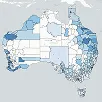

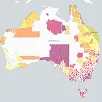


The total adult population (15 years or older) of Kingston 7050 TAS is 10,124, with a median age of 36. Of those, 45.38% are married, 12.64% are divorced or separated, 36.44% are single and 5.45% are widowed.
The average household size is 2.5 people per dwelling, and the median household monthly income is estimated to be $7,568. The median monthly mortgage repayment for households in this suburb is $1,625 which is 21.47% of their earnings.
Source: ABS Census Data (2021)