
Sandringham, VIC 3191

Good to know:
Sandringham, VIC 3191, is a picturesque bayside suburb located approximately 16 km southeast of Melbourne's CBD. Known for its beautiful beaches and scenic coastal views, Sandringham is a popular residential area with a strong community feel. The suburb features an array of cafes, boutique shops, and restaurants, primarily centred around the Sandringham Village precinct. The Sandringham Yacht Club adds a touch of maritime charm, while several parks and gardens offer ample green space. Well-served by the Sandringham railway line, it provides convenient access to Melbourne, making it a desirable area for both families and professionals.
Read More
Sandringham VIC 3191 has a typical house price of $1,885,778, a rolling-year median rent of $988 per week and a gross rental yield of 2.72%. That yield is below the common 3% rule-of-thumb, while HTAG property market data also flags a high IRSAD (1105) and an extreme affordability measure of 55 years. For investors and buyers’ agents assessing Sandringham VIC 3191 property investment, the market shows tight listed supply and brisk selling conditions for houses, but low rental yield and elevated affordability may shape strategy towards capital-growth and selective active management rather than pure yield play.
Property market outlook
House prices in Sandringham are anchored by high socio-economic status (IRSAD 1105) and long hold periods (13.04 years), both supportive of long-term capital stability. Supply indicators for houses are generally tight: Stock on Market is low at 0.33% (opportune), days on market are short at 32 days (opportune), and hold periods indicate the stock is tightly held — all signals consistent with limited vendor willingness to sell and a supportive backdrop for price resilience.
Demand metrics are mixed but leans healthy for houses. Vacancy sits at 1.15% (neutral), buy search index is 4 (near state average), and auction clearance is a neutral 66.67%. Building approvals ratio (1.23%) and inventory at 2.74 months are in the neutral band — not indicating a surge of new supply, but not suppressing future additions either. The combination of low publicly listed stock and fast selling times points to a market where well-priced, well-presented houses transact quickly; however, rental returns are weak and affordability is a structural constraint.
Key investment implication: Sandringham VIC 3191 house market is primarily a capital-growth market for investors targeting long-term appreciation in a premium coastal suburb, rather than a high-yield rental play. Buyers should underwrite purchase decisions against low yield and high price sensitivity due to the very long affordability timeframe.
Pros
- Strong socio-economic profile: IRSAD 1105 indicates affluent demand and better prospects for long-term capital stability.
- Tight listed supply for houses: Stock on Market 0.33% is opportune and implies limited established stock competing for buyers.
- Rapid transaction environment: Days on Market 32 days and a 13.04-year hold period suggest property is tightly held and in demand.
- High data confidence: HTAG confidence marked as High improves reliability of signals for transactional decision-making.
- Balanced near-term supply pipeline: Building Approvals Ratio 1.23% and inventory at 2.74 months avoid immediate oversupply risk.
Cons
- Low gross yield: 2.72% is below the 3% threshold — poor for investors prioritising cashflow.
- Very poor affordability: 55 years to own is an extreme reading and indicates owner-occupier access is strained; this can cap buyer pool expansion and slow broad-based demand.
- High units-to-houses ratio (61%): the suburb’s housing stock skewed toward units is flagged as unfavourable — for house buyers it may indicate local supply distortion or comparative market pressures if unit construction rises.
- Rental market neutral: Vacancy 1.15% is not tight enough to drive strong rent growth, meaning yield uplift prospects are limited without active asset improvements.
- Neutral search and clearance metrics: buy search index 4 and clearance 66.7% indicate demand is steady but not overheating, so rapid capital gains are not guaranteed.
Investment strategies
- Target value-add for yield: Given sub-3% yield, investors seeking improved cashflow should prioritise renovation, dual-income conversion where feasible, or short-stay management in appropriate parts of the suburb (subject to STR regulations) to lift effective returns.
- Capital-growth focus: For long-hold portfolios, Sandringham houses are attractive as defensive, lifestyle-oriented assets in an affluent area. Underwrite purchases on capital-growth assumptions and plan 7–10 year or longer hold periods.
- Selective off-market and auction activity: Low listed stock and quick DOM suggest off-market sourcing or targeted auction bidding can secure assets without prolonged competition.
- Asset selection discipline: Avoid relying on pure yield metrics. Focus on houses with proximity to transport, bayside amenities and good school catchments to maximise demand from affluent owner-occupiers (IRSAD dynamics).
- Manage refinance and exit timing: High affordability pressures mean selling windows and refinancing assumptions should be conservative; stress-test scenarios for higher rates and slower re-sales.
- Consider unit exposure cautiously: With units/houses ratio high (61%), buyers should assess local pipeline and the relative performance of houses vs units in the specific pockets of Sandringham.
Is Sandringham VIC 3191 a good suburb to invest in?
Sandringham VIC 3191 is a good suburb for investors whose strategy emphasises long-term capital appreciation and who can tolerate low initial rental yields and extended holding horizons. House prices in Sandringham are supported by affluence, tight listed supply and short selling times, which reduce downside from short-term listing spikes. However, the sub-3% yield and extreme affordability reading (55 years) make it less suitable for investors needing immediate positive cashflow or short turnaround opportunities. For buyers’ agents, the suburb is best used to secure lifestyle and premium stock for clients focused on capital growth and long-term wealth accumulation rather than yield extraction.
About HtAG Analytics Data
HtAG Analytics reports a base set of suburb-level metrics designed to characterise market supply, demand and value. Commonly used fields include:
- Typical Price (improved alternative to median price), Median Rent, Sales and Rental counts, Δ Change (period % change), Gross Rental Yield, Capital Growth (annualised estimate with low/high bounds), Total RoI (Yield + Capital Growth), Projected Rent Increase, Volatility Index, Confidence (data accuracy), and Relative Composite Score™. There are additional metrics in HTAG dashboards (e.g., vacancy details, days on market splits, approvals, IRSAD, RO ratio, UH ratio, years-to-own, and hold period) that extend this base set.
The guiding principle behind HTAG metrics is to capture both present conditions and historical trends to enable relative market analysis tailored to purchase-level decisions. In a suburb context like Sandringham VIC 3191, that means our metrics target the kinds of signals a buyer or buyers’ agent needs to choose between premium coastal houses and nearby unit options — not just headline public data. While other providers often rely on broad public indicators to describe market direction, HTAG’s measures are curated and modelled to compare suburbs as closely as possible to the decision point for buyers and investors.
It’s important to remember the snapshot above reports current value metrics for Sandringham houses but does not show their trends over time — and trend behaviour can materially change investment outcomes. Some metrics carry more weight for particular strategies (for example yield vs. hold period), and investor selection will vary by budget, borrowing capacity, risk tolerance and intended hold/refinance timeframe. HTAG excels at shortlisting and ranking locations against bespoke criteria rather than offering one-size-fits-all recommendations; serious investors and real estate professionals should perform relative analyses across a set of suburbs aligned to their specific goals.
Updated: 1 Jun 2026
Read Less
Quick Area Stats

Dwellings

Population

EDI

Bushfire Risk Index

Flood Risk Index
Education & Infrastructure
Sign Up to Access

School Rank

Infra. Spend
Market Trends
Essential metrics effectively streamline the process of identifying markets that match your financial situation and investment objectives. Typical Price, Indicative Yield and Total ROI provide a swift means to shortlist areas that resonate with what you’re seeking and can afford. These metrics also serve as valuable general trend indicators, allowing you to visualise transaction volumes and dynamics of change.
1M
1Q
1Y
3Y
5Y
7Y
10Y
1M
1Q
1Y
3Y
5Y
7Y
10Y

1M
1Q
1Y
3Y
5Y
7Y
10Y
The Growth Rate Cycle (GRC) is a metric used to analyse the year-on-year change in property values, providing insights into the growth cycle of a particular area. It uses the “typical price” metric to gauge property values more accurately than median prices, and includes both actual and projected data for the current year.

Fundamental metrics play a vital role in providing a comprehensive analysis of the socio-economic environment within a specific suburb or region. Additionally, the Return on Investment (ROI) and Volatility Index are crucial metrics that aid in evaluating the prospective profitability and the level of risk or stability in the market.
Socio-economics
Sign Up to Access

IRSAD

Renter to Owner

Units to Houses
Projections
Sign Up to Access

Projected Annual ROI

Volatility Index
Quick Area Stats
Sign Up to Access

Annual Sales Volume

Annual Rentals Volume



Stock on Market

Building Approvals

Inventory

Hold Period




Supply metrics are crucial in gauging both the existing volumes of real estate listed for sale and the properties anticipated to enter the market soon. A diminished supply could signal opportunities for price appreciation, particularly when there’s corresponding buyer demand to buoy the market. The Stock on Market and Inventory level metrics (current values) are presented as a 3-month rolling average of monthly data shown in the charts. This means the last 3 months of data are averaged. The BA Ratio represents the proportion of building approvals over the latest 12 months relative to the total dwellings in the area.

Days on Market

Search Index

Vacancy Rate

Clearance Rate




Demand metrics underscore the level of interest that potential property buyers or tenants have in a specific suburb or locality. When demand outstrips the available supply, or if the supply fails to meet the intensity of buyer/renter interest, there’s a potential for prices to climb, underscoring the pivotal relationship between demand dynamics and property value trends. The Days on Market and Clearance Rate metrics (current values) are presented as a 3-month rolling average of monthly data shown in the charts. This means the last 3 months of data are averaged.
We invite you to contribute to the conversation by sharing your thoughts or raising questions about this market in the comment section below.
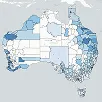

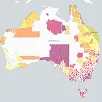


The total adult population (15 years or older) of Sandringham 3191 VIC is 9,192, with a median age of 47. Of those, 50.58% are married, 12.48% are divorced or separated, 30.53% are single and 6.40% are widowed.
The average household size is 2.4 people per dwelling, and the median household monthly income is estimated to be $13,504. The median monthly mortgage repayment for households in this suburb is $2,708 which is 20.05% of their earnings.
Source: ABS Census Data (2021)