
Templestowe Lower, VIC 3107

Good to know:
Templestowe Lower, located in Victoria with the postcode 3107, is a tranquil residential suburb situated about 17 km northeast of Melbourne's CBD. Known for its leafy streets and spacious homes, it's an attractive area for families. The suburb boasts excellent amenities including reserves like Finns Reserve and Wombat Bend, perfect for recreation and leisure. Good schooling options add to its appeal, with both public and private schools available. The Eastern Freeway provides convenient access to the city, and local shops along Macedon Square cater to daily needs. Templestowe Lower is well-regarded for its peaceful, community-oriented lifestyle.
Read More
Templestowe Lower VIC 3107 houses — the suburb shows high entry values with a Typical Price of $1,536,256, a rolling-year Median Rent of $735 pw and a Gross Yield of 2.49%. This Templestowe Lower VIC 3107 property market snapshot indicates a high-wealth catchment (IRSAD 1063) with tight ownership tenure and balanced listed supply, but affordability is an extreme constraint (estimated 66 years to own) and gross yields sit below the common 3% threshold—important signals for investor strategy.
Property market outlook
The headline picture for Templestowe Lower VIC 3107 houses is one of capital-value strength but constrained cash-flow. IRSAD 1063 places the suburb well into an opportune socio-economic band, which typically supports long‑run price resilience. Hold period of 12.3 years confirms tightly held stock: fewer transactions historically mean lower established supply and can sustain price growth during normal cycles.
Supply indicators are broadly balanced: Stock on Market 0.43% and Inventory 2.55 months sit near the balanced/low-supply boundary, while Building Approvals Ratio 0.94% signals modest new supply coming through—unlikely to materially upset established stock levels in the short term. Demand signals are mixed: Days on Market at 40 days and a Vacancy Rate of 1.9% are neutral to healthy for renters, but an Auction Clearance Rate of 37.17% is notably weak and suggests softer contestability in listings sold via auction or a structural move away from auction sales in the local market. Confidence in the data is high.
Three practical implications: (1) house prices in Templestowe Lower are underpinned by socio‑economic strength and long ownership cycles, supporting capital-growth outcomes for patient buyers; (2) low gross yield (2.49%) increases reliance on capital growth and rental escalation to deliver returns; (3) the extreme affordability metric (66 years) and low clearance rate imply a narrower purchaser pool and heightened sensitivity to borrowing costs and credit conditions.
Pros
- Strong demographic profile: IRSAD 1063 supports premium pricing and resilient capital growth potential.
- Low turnover: 12.29-year hold period reduces established supply and can preserve values in tighter markets.
- Balanced market liquidity: Stock on Market and Inventory sit in the balanced range, avoiding flood risks.
- Rental market functional: Vacancy 1.9% indicates a typical rental market (balanced), not elevated vacancy risk.
- High data confidence: sufficient sales volume underpins metric reliability for decision-making.
Cons
- Very low gross yield (2.49%): below 3% threshold — poor for yield-focused or cash-flow-dependent investors.
- Extreme affordability pressure (66 years): price-to-income dynamics restrict the pool of buyers and increase interest-rate sensitivity.
- Weak auction performance: 37.17% clearance indicates softer demand or pricing pressure in auction channels.
- High price point risk: Typical Price ~ $1.54m requires higher serviceability and larger deposit capacity; not suited to entry-level investors.
- Limited upside from immediate supply-side development: BA Ratio ~0.94% is modest; large-scale supply relief unlikely.
Investment strategies
- Growth-led buy-and-hold: Prioritise long-term capital growth investors able to tolerate sub‑3% yields. Hold 7–15+ years to capture capital appreciation supported by strong socio-economic fundamentals and low turnover.
- Target quality family houses: Focus on 3–4+ bedroom houses with strong amenity (schools, transport access) that suit owner-occupier demand and attract long tenancies—this matches the suburb’s owner-occupied profile.
- Off-market and negotiation strategies: Low auction clearance and modest turnover create opportunities to source off‑market or negotiated purchases below advertised competition; engage buyer’s agents with local networks.
- Value-add where practical: Cosmetic improvements, rental optimisation and targeted upgrades (kitchen/bathroom, storage) can slightly improve rental yield and tenant retention without major capex.
- Portfolio diversification: If you need yield, pair a Templestowe Lower growth asset with higher-yielding properties elsewhere (adjacent middle-ring suburbs or regional markets) to balance portfolio cash flow.
- Finance and stress-testing: Given the 66-year affordability metric, stress-test serviceability under higher rate scenarios and plan for longer refinance windows; preference for investors with strong deposit buffers or low leverage.
- Consider adjacent pockets: For lower entry cost and better yields, screen neighbouring suburbs where typical prices and affordability are more favourable but growth drivers are similar.
Is Templestowe Lower VIC 3107 a good suburb to invest in?
Templestowe Lower VIC 3107 is appropriate for investors who prioritise long‑term capital growth and can accept low immediate rental returns and significant interest‑rate sensitivity. The suburb’s high IRSAD and long hold periods support capital appreciation potential, but the very low gross yield and extreme affordability constrain short-term cash flow and buyer pool breadth. It is not recommended for yield‑dependent investors or short‑term flip strategies; it is better suited to well-capitalised, patient investors or owner-occupier investors seeking capital stability and lifestyle value.
About HtAG Analytics Data
HtAG Analytics reports a base set of suburb-level metrics designed for relative market analysis. Common metrics include Typical Price, Median Rent, Sales, Rentals, Δ Change (short and long-term), Gross Yield, Capital Growth (annualised estimates with low/high bounds), Total RoI (Yield + CG), Rent Increase (annualised projection), Volatility Index (MAPE-based), Confidence (data reliability), and Relative Composite Score™. Fundamental indicators such as IRSAD, RO Ratio (Renter/Owner), UH Ratio (Units/Houses), UHV Ratio, Years to Own (Affordability), and Growth Rate Cycle (GRC) are also applied with defined thresholds to aid interpretation. Supply and demand metrics include Stock on Market (SoM and SoM%), Inventory/Months of Supply, Building Approvals and BA Ratio, Hold Period, Days on Market, Discounting, Vacancy Rate, Buy & Rent Search Index, and Auction Clearance Rates. There are additional advanced metrics (population, estimated dwellings, school rank, infrastructure approvals per capita, annual sales volume, distance to CBD) used for deeper analysis.
The guiding principle behind HtAG metrics is to capture both current market conditions and historical trends to enable relative comparisons close to the point of purchase. In the context of Templestowe Lower VIC 3107, that means metrics are curated to reflect how local supply, tenure, socio‑economic status and recent sale activity combine to inform price prospects—not just headline public data. While other data providers often publish broad public datasets to describe state-wide or national trends, HtAG’s methodology emphasises localised, purchase‑level comparison and incorporates nuances in curation and measurement to support decision-making in specific suburbs.
It’s important to remember this summary is a snapshot of current value metrics for Templestowe Lower VIC 3107 and does not include metric trends or the relative weighting of metrics, both of which can materially alter investment conclusions. Different investors will select different suburbs based on budgets, borrowing capacity, timeframes and risk appetite. HtAG specialises in shortlisting and ranking markets against individual criteria rather than offering one-size-fits-all recommendations; for serious investors and buyer’s agents, perform a relative analysis across comparable suburbs and incorporate trend channels and strategy-specific priorities before committing.
Updated: 1 Jun 2026
Read Less
Quick Area Stats

Dwellings

Population

EDI

Bushfire Risk Index

Flood Risk Index
Education & Infrastructure
Sign Up to Access

School Rank

Infra. Spend
Market Trends
Essential metrics effectively streamline the process of identifying markets that match your financial situation and investment objectives. Typical Price, Indicative Yield and Total ROI provide a swift means to shortlist areas that resonate with what you’re seeking and can afford. These metrics also serve as valuable general trend indicators, allowing you to visualise transaction volumes and dynamics of change.
1M
1Q
1Y
3Y
5Y
7Y
10Y
1M
1Q
1Y
3Y
5Y
7Y
10Y

1M
1Q
1Y
3Y
5Y
7Y
10Y
The Growth Rate Cycle (GRC) is a metric used to analyse the year-on-year change in property values, providing insights into the growth cycle of a particular area. It uses the “typical price” metric to gauge property values more accurately than median prices, and includes both actual and projected data for the current year.

Fundamental metrics play a vital role in providing a comprehensive analysis of the socio-economic environment within a specific suburb or region. Additionally, the Return on Investment (ROI) and Volatility Index are crucial metrics that aid in evaluating the prospective profitability and the level of risk or stability in the market.
Socio-economics
Sign Up to Access

IRSAD

Renter to Owner

Units to Houses
Projections
Sign Up to Access

Projected Annual ROI

Volatility Index
Quick Area Stats
Sign Up to Access

Annual Sales Volume

Annual Rentals Volume



Stock on Market

Building Approvals

Inventory

Hold Period




Supply metrics are crucial in gauging both the existing volumes of real estate listed for sale and the properties anticipated to enter the market soon. A diminished supply could signal opportunities for price appreciation, particularly when there’s corresponding buyer demand to buoy the market. The Stock on Market and Inventory level metrics (current values) are presented as a 3-month rolling average of monthly data shown in the charts. This means the last 3 months of data are averaged. The BA Ratio represents the proportion of building approvals over the latest 12 months relative to the total dwellings in the area.

Days on Market

Search Index

Vacancy Rate

Clearance Rate




Demand metrics underscore the level of interest that potential property buyers or tenants have in a specific suburb or locality. When demand outstrips the available supply, or if the supply fails to meet the intensity of buyer/renter interest, there’s a potential for prices to climb, underscoring the pivotal relationship between demand dynamics and property value trends. The Days on Market and Clearance Rate metrics (current values) are presented as a 3-month rolling average of monthly data shown in the charts. This means the last 3 months of data are averaged.
We invite you to contribute to the conversation by sharing your thoughts or raising questions about this market in the comment section below.
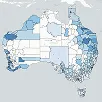

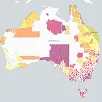


The total adult population (15 years or older) of Templestowe Lower 3107 VIC is 11,737, with a median age of 45. Of those, 55.85% are married, 8.77% are divorced or separated, 27.98% are single and 7.39% are widowed.
The average household size is 2.7 people per dwelling, and the median household monthly income is estimated to be $8,924. The median monthly mortgage repayment for households in this suburb is $2,500 which is 28.01% of their earnings.
Source: ABS Census Data (2021)