
Reservoir, VIC 3073

Good to know:
Reservoir, VIC 3073, is a diverse and multicultural suburb located about 12 km north of Melbourne's Central Business District. It is known for its mix of residential, commercial, and industrial areas. The suburb boasts several parks and recreational facilities, including Edwardes Lake Park, which offers walking tracks, picnic areas, and a playground. Reservoir is serviced by multiple public transport options, including train services from Reservoir Railway Station and numerous bus routes. The area has a range of shopping amenities, with Reservoir Village and Broadway Shopping Strip catering to residents' needs. The local community is vibrant, with various schools, cafes, and sporting clubs contributing to its lively atmosphere.
Read More
Reservoir VIC 3073 houses: the suburb’s property market currently shows typical house prices around $1,123,448, median rent of $597 per week and a gross yield of 2.77%. Reservoir VIC 3073 property investment is characterised by tight for-sale supply (low Stock on Market and low months of inventory) and strong holding patterns among owners, which supports upside for house prices in Reservoir; however low rental yield and very poor affordability (56 years) constrain cash-flow attractiveness and the pool of potential owner-occupier buyers.
Property market outlook
Inventory and supply indicators are the most notable signals. Stock on Market is 0.29% and months-of-supply 1.67 — both in the low-supply (opportune) range — and Building Approvals Ratio is only 0.17%, suggesting limited new supply on the horizon. A hold period of 11.25 years confirms properties are relatively tightly held, reducing churn. These supply dynamics are normally supportive of capital growth for houses, particularly where demand remains steady.
Demand-side metrics are mixed. Days on Market at 26 days and a clearance rate ~65.9% point to ongoing transactional activity (balanced-to-strong demand). Vacancy at 1.81% is in the neutral band — rental demand is not acute but not weak. The Buy Search Index of 3 sits at a market-average level for buyer interest.
Affordability (Years to Own = 56) is a clear constraint: very high serviceability burden limits how many buyers can enter or upgrade within the market. Combined with a gross yield of 2.77% (below the commonly referenced 3% threshold), Reservoir houses are more aligned to growth-focused capital allocation than yield-driven investing. Data confidence is High.
Pros
- Tight established supply: SoM 0.29% and inventory 1.67 months point to scarcity of listed houses, which supports price resilience and potential capital growth.
- Low churn / tightly held stock: Hold period 11.25 years reduces transactional supply shocks and supports longer-term price stability.
- Low recent time-to-sell: DOM 26 days implies active buyer penetration and market liquidity for sellers.
- Socio-economic profile supportive: IRSAD 983 is opportune (above the neutral threshold), consistent with an owner-occupier base that historically underpins long-run capital growth.
- High-quality data confidence: Confidence = High improves trust in these signals for decision-making.
Cons
- Weak rental yield: Gross yield 2.77% is below a practical 3% threshold — poor for investors focused on positive cash flow or yield.
- Very poor affordability: 56 years to own is materially above the 30-year threshold and will constrain buyer pool and first-home activity, potentially increasing reliance on higher-income purchasers.
- Neutral rental demand: Vacancy 1.81% is balanced but not tight; rent growth upside may be modest compared with tighter rental markets.
- Buyer interest only average: Buy Search Index = 3 indicates demand is not exceptional relative to metropolitan benchmarks, so price growth may depend more on limited supply than on structural demand uplift.
Investment strategies
- Growth-first houses: Given tight supply, long-term investors targeting capital growth (5–10+ years) are best positioned. Expect capital appreciation to be the primary return driver rather than rental yield.
- Buy-for-value / renovation: Look for opportunities to add value through refurbishment or reconfiguration to increase capital gains and justify premium resale prices to owner-occupiers.
- Selective negotiation: Low visible stock can inflate prices; disciplined entry pricing and off-market sourcing will improve margin for growth strategies.
- Avoid yield-only plays: Investors seeking positive cash flow or high gross yields should avoid pure buy-to-let here unless significant gearing or tax strategies alter cashflow dynamics.
- Consider hybrid holdings: Combine a Reservoir house for long-term growth with higher-yielding assets elsewhere to balance portfolio yield and growth objectives.
- Monitor affordability and serviceability: Given elevated years-to-own, structuring purchases with conservative stress-tested serviceability is essential; consider longer hold horizons or owner-occupier purchasers who will accept lower yields.
Is Reservoir VIC 3073 a good suburb to invest in?
Reservoir VIC 3073 is a reasonable choice for investors prioritising long-term capital growth in houses rather than immediate rental yield. Tight supply metrics (SoM, inventory, BA ratio) and long hold periods create a supply-constrained environment that historically supports price appreciation. Conversely, the 2.77% gross yield and a 56-year affordability metric mean this market is unattractive for investors needing strong cashflow or quick turnaround strategies. In short: good for long-duration, equity-capitalised growth plays and owner-occupier-focused resales; unsuitable for yield-focused or short-term income strategies without additional portfolio diversification.
About HtAG Analytics Data
Base metrics reported here (per dwelling type where applicable) include Typical Price, Median Rent, Sales, Rentals, % Change over selected periods, Gross Rental Yield, Capital Growth (per annum estimate with low/high bounds), Total RoI (Yield + CG), Rent Increase (projected p.a.), Volatility Index (MAPE-based), Confidence (data reliability), and Relative Composite Score™. Additional metrics often used in HTAG suburb profiles include Stock on Market, Inventory (months supply), Building Approvals and BA Ratio, Hold Period, Days on Market, Discounting, Vacancy Rate, Buy & Rent Search Indices, Auction Clearance Rates, IRSAD (SEIFA), Renter/Owner ratio, Unit/House mix ratios, Years to Own (affordability), Growth Rate Cycle (GRC), population, estimated dwellings, and local infrastructure approvals per capita. There are more metrics available in our dashboards; the list above represents the base set commonly used in comparative suburb analysis.
HTAG’s guiding principle is to capture both current market conditions and historical trends to enable relative market analysis at a purchase-level granularity. In practice this means our measures are tuned to compare suburbs closely to the point of purchase rather than simply reporting high-level public series. Other providers that publish broad public datasets (for example some media-facing services) often emphasise state- or city-level narratives; HTAG metrics are curated and measured with different nuances so the same metric name can reflect distinct methodology and curation choices focused on relative suburb-level decision-making.
Note that the snapshot above reports current value metrics but does not replace trend analysis: metric trajectories, weighting of metrics by strategy, and investor-specific constraints (budget, borrowing capacity, risk appetite, exit or refinance timeframes) materially change the assessment. Different investors will shortlist different suburbs for identical strategies. HTAG excels at producing tailored shortlists based on specified criteria rather than one-size-fits-all recommendations — for serious investment decisions we recommend relative analysis across a set of locations aligned to an investor’s objectives.
Updated: 1 Jul 2026
Read Less
Quick Area Stats

Dwellings

Population

EDI

Bushfire Risk Index

Flood Risk Index
Education & Infrastructure
Sign Up to Access

School Rank

Infra. Spend
Market Trends
Essential metrics effectively streamline the process of identifying markets that match your financial situation and investment objectives. Typical Price, Indicative Yield and Total ROI provide a swift means to shortlist areas that resonate with what you’re seeking and can afford. These metrics also serve as valuable general trend indicators, allowing you to visualise transaction volumes and dynamics of change.
1M
1Q
1Y
3Y
5Y
7Y
10Y
1M
1Q
1Y
3Y
5Y
7Y
10Y

1M
1Q
1Y
3Y
5Y
7Y
10Y
The Growth Rate Cycle (GRC) is a metric used to analyse the year-on-year change in property values, providing insights into the growth cycle of a particular area. It uses the “typical price” metric to gauge property values more accurately than median prices, and includes both actual and projected data for the current year.

Fundamental metrics play a vital role in providing a comprehensive analysis of the socio-economic environment within a specific suburb or region. Additionally, the Return on Investment (ROI) and Volatility Index are crucial metrics that aid in evaluating the prospective profitability and the level of risk or stability in the market.
Socio-economics
Sign Up to Access

IRSAD

Renter to Owner

Units to Houses
Projections
Sign Up to Access

Projected Annual ROI

Volatility Index
Quick Area Stats
Sign Up to Access

Annual Sales Volume

Annual Rentals Volume



Stock on Market

Building Approvals

Inventory

Hold Period




Supply metrics are crucial in gauging both the existing volumes of real estate listed for sale and the properties anticipated to enter the market soon. A diminished supply could signal opportunities for price appreciation, particularly when there’s corresponding buyer demand to buoy the market. The Stock on Market and Inventory level metrics (current values) are presented as a 3-month rolling average of monthly data shown in the charts. This means the last 3 months of data are averaged. The BA Ratio represents the proportion of building approvals over the latest 12 months relative to the total dwellings in the area.

Days on Market

Search Index

Vacancy Rate

Clearance Rate




Demand metrics underscore the level of interest that potential property buyers or tenants have in a specific suburb or locality. When demand outstrips the available supply, or if the supply fails to meet the intensity of buyer/renter interest, there’s a potential for prices to climb, underscoring the pivotal relationship between demand dynamics and property value trends. The Days on Market and Clearance Rate metrics (current values) are presented as a 3-month rolling average of monthly data shown in the charts. This means the last 3 months of data are averaged.
We invite you to contribute to the conversation by sharing your thoughts or raising questions about this market in the comment section below.

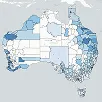

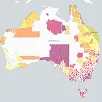


The total adult population (15 years or older) of Reservoir 3073 VIC is 43,146, with a median age of 38. Of those, 40.16% are married, 10.90% are divorced or separated, 42.40% are single and 6.53% are widowed.
The average household size is 2.4 people per dwelling, and the median household monthly income is estimated to be $7,932. The median monthly mortgage repayment for households in this suburb is $1,986 which is 25.04% of their earnings.
Source: ABS Census Data (2021)
Reservoir, VIC 3073
Analysis performed on 17/08/2024
1-4 timeframe performance:
Supply side:
Current values for all supply metrics are in the opportunistic range.
SoM% long term trend is taking a substantial nosedive, and the recent trend (last 6 months) has seen a great reduction. The exact same can be said about inventory. This suggest that the direction of supply of existing stock to market will reflect a trend of reduction, which is a necessary foundation for future price growth.
Building approval ratio has been increasing, including its overall trend which means that two years into the future we might see an influx of new stock which could slow down price growth if the demand is not strong enough to absorb it.
Hold periods are currently sitting at close to 12 years which is leaps and bound above one property lifecycle. This suggests high liability factor of the area and separates the influx of existing dwelling from owner occupier selloff by 12 years. This means that those that are investing in the area for the future decade have a much more reduced concern about dampened price growth from increasing supply.
Therefore, when looking at the supply side, the only minor concern is the influx of new dwelling to the market from the increasing building approvals.
Demand side:
Current value for days on market is sitting at 25 days, which paired with a reducing supply side of the equation—namely SoM% and Inventory—is reminiscent of a hot market. Judging by the last year growth sitting at close to 6%, we could say that the area is moving from a warm spot into a hot sport territory. More importantly, we are seeing a reduction in the long term DOM rend, as well as a persistently decreasing low short term trend with DOM values in the last 6 releases sitting below the overall trend mark.
The current vacancy rate is sitting at a neutral 1.28%. This however matter less than the vacancy rate trend, both short term and long term which is reflecting a forceful movement to the downside. It therefore becomes much more understandable to see that rents have increased by 13% in the last year to a comparative 6% increase in typical values.
Such arrangement between a dramatically decreasing Vacancy Rate trend, high increases in rental pricing and a reduction in both short term and long-term DOM trend indicate that ownership is becoming more and more desired in this suburb thus demonstrating that the trend in DOM will continue to decrease in the future and potentially rather forcefully.
Such arrangement between supply and demand dynamics indicates that Reservoir, VIC 3073 is primed for above average growth in the next 1-4 years, with my hunch sitting at an average annual CG return of between 8-12% in the next 3-4 years.
Judging by the algorithmic forecast on our platform, which is forecasting a cone of anywhere between -1 and + 14% ROI (ROI includes both capital growth and yield – yiled for this area is currently at 2.87%), I would say that my observation has a very high probability.
4-10 years investment timeframe:
Sitting at a price point of 972k, it is necessary for Reservoir to have a socioeconomic index of greater than 5. This is satisfied at it is currently sitting at 6/10.
We also have the insurance policy satisfied because the suburb has high industry diversification and has no exposure to negative environmental effects. Currently its Low Risk RCS score is sitting at 89 out of a 100.
The areas Growth Rate Cycle highlights that Reservoir has seen negative growth 3 times in the past since 2009, with a combined value of approximately -18%, if we only take into account peak negative values. This is not something that is preferred when assessing an areas long term performance potential and it might have something to do with the following point:
The areas affordability index is currently sitting at 48.9 years to own, which for its price point, is above the preferred 45 years to own ceiling. Given that the areas industry is decentralised, we could infer that multiple dives into the negative growth zone are enabled by the forceful reduction of internal (i.e. owner occupier) demand caused by the increasingly tighter bottle neck of rising unaffordability for its residents.
The positive in this negative story if you will is that negative growth has been reducing as time has went on: in 2012, the area has seen circa -9% growth; in 2018, circa 6% negative growth and in 2013 circa 3% negative growth.
Now the crescendo!
The influx of new stock from building approvals and potential disposal of investment property from the neutral renter to owner ratio which is currently sitting at 36% suggest that two and 6 years from now we could see some influx of supply which could restrict price growth. Why 2 and 6?
Well two because it talks 2 years for a building approval to materialise into a dwelling and 6 because we are at the onset of a new cycle in interest rate reduction. Debt cycles move from 4-6 year timeframes meaning that 6 years into the future interest rates will again continue to rise which combined with rising unaffordability will see this area again plumet into the negative growth zone.
Final verdict:
This area provides great growth opportunities for 1-5 year timeframe and I suspect the area will see on average 7% growth all the way up to the 6 year mark. The issue with rising unaffordability and potential macroeconomic changes (interest rate increases) introduces a layer of uncertainty which tells me that after the 6-year mark, the area might experience some undesired volatility and turbulence which would reduce its 10 year long appeal.
Strategy:
Buy and hold for 6 years. If a 10 year timeframe is desired, take advantage of developing a 2 or 3 bedroom home into a 4 bedroom home to be able to comfortably ride out any weaves of uncertainty after the 6 year mark.