
Tarneit, VIC 3029

Good to know:
Tarneit, VIC 3029, is a rapidly growing suburb located approximately 25 kilometres west of Melbourne's CBD. Known for its family-friendly atmosphere, Tarneit features modern residential estates, numerous parks, and green spaces. The area is well-serviced by Tarneit train station, offering convenient public transport options to the city. Tarneit Central Shopping Centre and other retail hubs cater to residents' shopping and dining needs. The suburb also boasts a variety of educational institutions, including primary and secondary schools. Tarneit combines suburban tranquility with urban accessibility, making it a popular choice for families and professionals.
Read More
Tarneit VIC 3029 houses: the local property market shows a typical house price of $740,296, median rent around $496 per week and a gross yield of 3.48%. HTAG data for Tarneit VIC 3029 indicates solid socio‑economic metrics (IRSAD 1012) and reliable data confidence, but also flags elevated upcoming supply (Building Approvals Ratio 3.95%) and stretched affordability (35 years). For investors this is a market with workable yields and demographic support, yet with clear downside risks from new supply and relatively short holding periods.
Property market outlook
Tarneit VIC 3029 house market sits at the outer Melbourne growth corridor profile: good socio‑economic score (IRSAD 1012 — opportune) and a house-dominant stock (Units/Houses ratio 3.0% — opportune for house purchasers). Gross yield at 3.48% is above the 3% threshold, so rental returns are respectable for a growth‑oriented suburb. Demand signals are mixed: Days on Market of 45 and a Buy Search Index of 3 are neutral, while Vacancy Rate at 3.4% sits at the upper end of balanced demand. Key short‑term headwinds are high recent building approvals (BA Ratio 3.95% — unfavourable) and a low average hold period (5.28 years — unfavourable), both suggesting meaningful new supply and higher turnover in the established market. Auction clearance rates are weak (44.5%), indicating softer buyer competition at current price levels. Overall, expect moderate capital growth potential over the medium term if local infrastructure and employment growth keep pace with new supply; otherwise price growth may be constrained by incoming stock and affordability pressures.
Pros
- Typical price of $740,296 coupled with a 3.48% gross yield offers a reasonable balance for buyers seeking modest income and capital gains.
- IRSAD 1012 indicates a relatively strong socio‑economic base, supportive of long‑term capital stability.
- Very low Units/Houses ratio (3.0%) reduces the risk of unit oversupply and increases clarity for house-focused investors.
- Confidence in the underlying data is High, improving reliability of signals and trend interpretation.
Cons
- Affordability estimated at 35 years is above the preferred 30-year threshold — a structural limit on owner‑occupier demand and a potential cap on rapid price growth.
- Building Approvals Ratio 3.95% is high (unfavourable): significant pipeline supply could pressure prices and rents as new completions come online.
- Hold period 5.28 years signals higher turnover of stock, increasing available supply in the established market.
- Auction Clearance Rate 44.5% is low, suggesting current buyer sentiment is weak and negotiation margins may widen against vendors.
Investment strategies
- Selective house buying over volume new‑builds: favour well‑located established houses or infill land parcels where lot size, north orientation or separation from dense estates add scarcity value. Given the high BA Ratio, avoid off‑the‑plan purchases in areas with heavy developer concentration unless priced attractively with completion timing aligned to demand.
- Target rental capture near transport and amenity nodes: with vacancy near the balanced/upper bound, properties within walking distance to rail, major bus routes or schools will hold rental demand better and reduce vacancy risk.
- Focus on medium‑term hold and active asset management: expect supply volatility as approvals convert to completions — plan for a 5–8 year holding period with active leasing and targeted improvements to maintain rental yield and re‑list competitiveness.
- Consider yield protection through conservative gearing: yields are moderate; using conservative loan-to-value metrics and stress‑testing cashflow against rate rises will protect returns during slower capital growth phases.
- Use comparative suburb shortlists: because Tarneit is supply‑sensitive, run relative screens versus adjacent suburbs (where BA Ratios are lower or infrastructure projects are further advanced) to identify pockets with a better supply/demand balance.
- For development or small‑scale subdivision investors: monitor local planning and the BA pipeline closely; there may be opportunistic acquisition windows if approvals slow or market absorption picks up.
Is Tarneit VIC 3029 a good suburb to invest in?
Conditionally yes — suitable for investors who prioritise growth from outer‑metro expansion but who are selective about asset type and timing. The suburb’s demographics (IRSAD 1012) and a house-dominant stock favour long‑term capital retention, while yields above 3% make buy‑to‑let plausible. However, the high Building Approvals Ratio and short hold periods introduce supply risk that can mute short‑term price appreciation and pressure rents. Investors seeking immediate capital growth or high yield should be cautious; those prepared to pick quality lots close to amenity, adopt conservative finance settings and hold for multiple years can reasonably expect market‑level returns.
About HtAG Analytics Data
HtAG reports key suburb metrics (this report lists the base set): Typical Price, Median Rent, Sales and Rentals activity, % Change over selected periods, Gross Rental Yield, Capital Growth (annualised: CG Low/High and central estimate), Total RoI (Yield + CG), Rent Increase forecast, Volatility Index (MAPE‑based), Confidence (data reliability), IRSAD, Renter/Owner ratio, Units/Houses ratio, Years to Own (affordability), Growth Rate Cycle, Stock on Market (SoM and SoM%), Inventory (months), Building Approvals and BA Ratio, Hold Period, Days on Market, Discounting, Vacancy Rate, Buy & Rent Search Index, Auction Clearance Rate, Population and Estimated Dwellings. There are additional advanced and contextual metrics available on HTAG dashboards beyond this list.
The guiding principle behind HTAG metrics is to capture both current market conditions and historical trends to enable relative market analysis tailored to precinct‑level decisions. Unlike providers that primarily publish public aggregates for broad trend narratives, HTAG metrics are designed to assess and compare markets as closely as possible to the likely point of purchase. That means similar metric names can reflect different curation and measurement nuances in our datasets, and Tarneit VIC 3029 outputs should be read with those methodological distinctions in mind.
Finally, note that the preceding suburb snapshot shows current value metrics but does not replace trend analysis — metric trajectories can materially alter investment outcomes. Some metrics carry greater weight than others depending on your strategy, budget and borrowing capacity. Market selection always varies by investor objectives and timeframes; HTAG excels at shortlisting markets against bespoke criteria rather than offering one‑size‑fits‑all verdicts. For serious investors and buyer agents, perform relative analysis across a set of comparable suburbs aligned to your specific goals before committing capital.
Updated: 1 Jul 2026
Read Less
Quick Area Stats

Dwellings

Population

EDI

Bushfire Risk Index

Flood Risk Index
Education & Infrastructure
Sign Up to Access

School Rank

Infra. Spend
Market Trends
Essential metrics effectively streamline the process of identifying markets that match your financial situation and investment objectives. Typical Price, Indicative Yield and Total ROI provide a swift means to shortlist areas that resonate with what you’re seeking and can afford. These metrics also serve as valuable general trend indicators, allowing you to visualise transaction volumes and dynamics of change.
1M
1Q
1Y
3Y
5Y
7Y
10Y
1M
1Q
1Y
3Y
5Y
7Y
10Y

1M
1Q
1Y
3Y
5Y
7Y
10Y
The Growth Rate Cycle (GRC) is a metric used to analyse the year-on-year change in property values, providing insights into the growth cycle of a particular area. It uses the “typical price” metric to gauge property values more accurately than median prices, and includes both actual and projected data for the current year.

Fundamental metrics play a vital role in providing a comprehensive analysis of the socio-economic environment within a specific suburb or region. Additionally, the Return on Investment (ROI) and Volatility Index are crucial metrics that aid in evaluating the prospective profitability and the level of risk or stability in the market.
Socio-economics
Sign Up to Access

IRSAD

Renter to Owner

Units to Houses
Projections
Sign Up to Access

Projected Annual ROI

Volatility Index
Quick Area Stats
Sign Up to Access

Annual Sales Volume

Annual Rentals Volume



Stock on Market

Building Approvals

Inventory

Hold Period




Supply metrics are crucial in gauging both the existing volumes of real estate listed for sale and the properties anticipated to enter the market soon. A diminished supply could signal opportunities for price appreciation, particularly when there’s corresponding buyer demand to buoy the market. The Stock on Market and Inventory level metrics (current values) are presented as a 3-month rolling average of monthly data shown in the charts. This means the last 3 months of data are averaged. The BA Ratio represents the proportion of building approvals over the latest 12 months relative to the total dwellings in the area.

Days on Market

Search Index

Vacancy Rate

Clearance Rate




Demand metrics underscore the level of interest that potential property buyers or tenants have in a specific suburb or locality. When demand outstrips the available supply, or if the supply fails to meet the intensity of buyer/renter interest, there’s a potential for prices to climb, underscoring the pivotal relationship between demand dynamics and property value trends. The Days on Market and Clearance Rate metrics (current values) are presented as a 3-month rolling average of monthly data shown in the charts. This means the last 3 months of data are averaged.
We invite you to contribute to the conversation by sharing your thoughts or raising questions about this market in the comment section below.
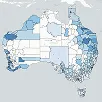

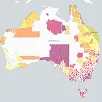


The total adult population (15 years or older) of Tarneit 3029 VIC is 40,024, with a median age of 30. Of those, 61.15% are married, 6.40% are divorced or separated, 30.34% are single and 2.11% are widowed.
The average household size is 3.4 people per dwelling, and the median household monthly income is estimated to be $8,324. The median monthly mortgage repayment for households in this suburb is $1,950 which is 23.43% of their earnings.
Source: ABS Census Data (2021)