
Portland, VIC 3305

Good to know:
Portland, VIC 3305, is a historic coastal town located in Victoria's southwest. Known as the birthplace of Victoria, it was the first European settlement in the state, established in 1834. The town is situated on the picturesque Portland Bay, offering stunning ocean views and a well-protected harbour. Key attractions include the Portland Maritime Museum, Cape Nelson Lighthouse, and the Great South West Walk. The local economy is driven by industries such as fishing, agriculture, and tourism. Portland boasts a friendly community, heritage architecture, beautiful beaches, and excellent fishing spots, making it a charming and vibrant place to live or visit.
Read More
Portland VIC 3305 house market shows a modest typical price ($520,380), a solid rental return (median rent $472pw; yield 4.72%) and generally tight supply dynamics. This Portland VIC 3305 property market data points to a cashflow-friendly regional house market with low vacancy and constrained listings, but offset by below-average socioeconomic indicators (IRSAD 905) and stretched affordability (32 years).
Property market outlook
Portland VIC 3305 house prices are currently positioned in a middle band for regional Victoria: Typical price $520,380 with a median rent of $472 per week delivering a gross yield of 4.72% — above conventional investor minimums and attractive for yield-focused buyers. Supply indicators are supportive of price stability and potential uplift: Stock on Market at 0.39% signals tightly listed stock, Building Approvals Ratio 0.26% indicates limited new supply pipeline, and Vacancy Rate is very low at 0.91% indicating strong rental demand. Inventory sits at 2.98 months (balanced), while Days on Market of 41 days and a hold period near 9.6 years point to a market that trades at a steady pace rather than a speculative sprint.
Offsetting those positives are socioeconomic and affordability constraints. IRSAD 905 is below the reference minimum of 927, which signals weaker relative household income and disadvantage versus higher-scoring suburbs — this tends to cap long-run capital growth potential compared with higher-IRSAD regional towns. Affordability at 32 years (years to own) is above the 30-year threshold, making buyer capacity sensitive to rate moves and slowing first-home-buyer activity if rates rise.
Pros
- Yield-positive: 4.72% gross yield for houses, supportive of cashflow and serviceability.
- Very low rental vacancy (0.91%): strong rental demand and limited void risk.
- Tight listings and constrained upcoming supply: SoM 0.39% and BA Ratio 0.26% both point to supply-side support for prices.
- Low unit share (UH ratio 10%): predominance of houses reduces immediate oversupply risk from apartments.
- High data confidence: dataset flagged as High confidence for this suburb/dwelling type.
Cons
- IRSAD 905 (below recommended 927): relative socioeconomic disadvantage that can suppress price growth compared with higher-SES markets.
- Affordability stretched (32 years): buyers are more rate-sensitive; marginal shifts in interest rates will have larger household cashflow impacts.
- Neutral transactional momentum: Days on Market 41 and Inventory ~3 months imply modest turnover — not a fast-growth or highly liquid market.
- Clearance Rate 0% (neutral): few auctions reduce price-discovery transparency; not an immediate concern but limits certain market signals.
Investment strategies
- Yield/Income strategy (primary): Target established houses for buy-and-hold to capture above‑average regional yields and low vacancy. Focus on properties with minimal maintenance surprises and consistent tenant appeal (proximity to services, schools, transport).
- Value-add renovations: Given moderate typical prices and a cautious growth backdrop, selective cosmetic and rental-focused upgrades (kitchen, bathroom refresh, energy efficiency, separate outdoor space) can lift rent and capital value with limited capital outlay.
- Conservative gearing with serviceability buffer: Affordability is stretched; structure loans with buffers (offset accounts, principal-and-interest where possible) to withstand rate rises and protect cashflow.
- Portfolio diversification: Use Portland houses as a regional income leg within a broader portfolio rather than a primary growth bet — combine with higher-IRSAD growth suburbs if capital appreciation is a priority.
- Active property management: Low vacancy is an advantage; maintain high letting standards, reduce turnover and market vacancies proactively to maximise yield continuity.
Is Portland VIC 3305 a good suburb to invest in?
Portland VIC 3305 is a solid option for investors prioritising rental income and low vacancy risk. House yields are attractive and supply measures are supportive, which makes the suburb a reasonable choice for cashflow-focused, moderately conservative investors. However, investors seeking strong long-term capital growth should be cautious; the below‑average IRSAD and stretched affordability imply growth may lag higher-SES regional or metropolitan markets. In short: good for income and rental stability, moderate for capital growth — best used as part of a diversified strategy.
About HtAG Analytics Data
HtAG reports a base set of suburb metrics including Typical Price, Median Rent, Sales and Rentals counts, % Change over standard periods, Gross Rental Yield, Capital Growth estimates (annualised with low/high ranges), Total RoI, projected Rent Increase, Volatility Index, Confidence, and a Relative Composite Score™. Additional metrics commonly used in reports include IRSAD, Renter/Owner ratio, Unit/House mix, Affordability (Years to Own), Growth Rate Cycle (GRC), Stock on Market (SoM) and SoM%, Inventory (months supply), Building Approvals and BA Ratio, Hold Period, Days on Market, Discounting, Vacancy Rate, Buy & Rent Search Index, Auction Clearance Rates, population and dwelling estimates, school rank, and infrastructure proxies.
The guiding principle behind HtAG metrics is to measure both current market conditions and historical trends to enable relative market comparisons that are closer to the point of purchase. HtAG metrics are curated and calculated with that buyer-centric purpose in mind; while some providers publish broad public datasets to inform macro narratives, HtAG’s methodology emphasises localised, purchase-relevant measures and bespoke curation — so similarly named metrics can carry different definitions and nuances across providers.
The snapshot above summarises current value metrics for Portland VIC 3305 houses but does not incorporate metric trends or weightings that can materially alter an investment view. Some metrics (for example IRSAD, yield and vacancy) will typically exert greater influence than others depending on investor objectives, borrowing capacity and holding timeframes. Different strategies and budgets will therefore produce different suburb selections. HtAG specialises in shortlisting markets against investor-specific criteria rather than offering one-size-fits-all answers; serious investors and buyer’s agents should use relative analysis across a tailored set of locations that match their goals.
Updated: 1 May 2026
Read Less
Quick Area Stats

Dwellings

Population

EDI

Bushfire Risk Index

Flood Risk Index
Education & Infrastructure
Sign Up to Access

School Rank

Infra. Spend
Market Trends
Essential metrics effectively streamline the process of identifying markets that match your financial situation and investment objectives. Typical Price, Indicative Yield and Total ROI provide a swift means to shortlist areas that resonate with what you’re seeking and can afford. These metrics also serve as valuable general trend indicators, allowing you to visualise transaction volumes and dynamics of change.
1M
1Q
1Y
3Y
5Y
7Y
10Y
1M
1Q
1Y
3Y
5Y
7Y
10Y

1M
1Q
1Y
3Y
5Y
7Y
10Y
The Growth Rate Cycle (GRC) is a metric used to analyse the year-on-year change in property values, providing insights into the growth cycle of a particular area. It uses the “typical price” metric to gauge property values more accurately than median prices, and includes both actual and projected data for the current year.

Fundamental metrics play a vital role in providing a comprehensive analysis of the socio-economic environment within a specific suburb or region. Additionally, the Return on Investment (ROI) and Volatility Index are crucial metrics that aid in evaluating the prospective profitability and the level of risk or stability in the market.
Socio-economics
Sign Up to Access

IRSAD

Renter to Owner

Units to Houses
Projections
Sign Up to Access

Projected Annual ROI

Volatility Index
Quick Area Stats
Sign Up to Access

Annual Sales Volume

Annual Rentals Volume



Stock on Market

Building Approvals

Inventory

Hold Period




Supply metrics are crucial in gauging both the existing volumes of real estate listed for sale and the properties anticipated to enter the market soon. A diminished supply could signal opportunities for price appreciation, particularly when there’s corresponding buyer demand to buoy the market. The Stock on Market and Inventory level metrics (current values) are presented as a 3-month rolling average of monthly data shown in the charts. This means the last 3 months of data are averaged. The BA Ratio represents the proportion of building approvals over the latest 12 months relative to the total dwellings in the area.

Days on Market

Search Index

Vacancy Rate

Clearance Rate




Demand metrics underscore the level of interest that potential property buyers or tenants have in a specific suburb or locality. When demand outstrips the available supply, or if the supply fails to meet the intensity of buyer/renter interest, there’s a potential for prices to climb, underscoring the pivotal relationship between demand dynamics and property value trends. The Days on Market and Clearance Rate metrics (current values) are presented as a 3-month rolling average of monthly data shown in the charts. This means the last 3 months of data are averaged.
We invite you to contribute to the conversation by sharing your thoughts or raising questions about this market in the comment section below.
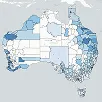

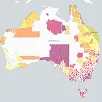


The total adult population (15 years or older) of Portland 3305 VIC is 8,446, with a median age of 47. Of those, 42.34% are married, 15.71% are divorced or separated, 34.57% are single and 7.40% are widowed.
The average household size is 2.2 people per dwelling, and the median household monthly income is estimated to be $5,944. The median monthly mortgage repayment for households in this suburb is $1,083 which is 18.22% of their earnings.
Source: ABS Census Data (2021)