
Karnup, WA 6176

Good to know:
Karnup, located in Western Australia, is a tranquil semi-rural suburb within the City of Rockingham. Known for its expansive natural landscape and open spaces, Karnup offers a blend of residential areas and agricultural zones, providing a peaceful lifestyle away from the bustling city centre. It's well-regarded for the Serpentine River, which adds to the suburb’s scenic beauty. Despite its rural charm, Karnup is conveniently connected to nearby urban amenities in Rockingham and Mandurah, making it appealing for families and individuals seeking a serene environment without being completely isolated.
Read More
Karnup WA 6176 has a typical house price of $1,030,871, median weekly rent of $630 and a gross yield of 3.18% in the current property market. For investors considering Karnup WA 6176 property investment, the data shows high socio-economic scores (IRSAD 1008), very low unit supply (Units/Houses 1.0%) and tight inventory (1.93 months), but also elevated rental vacancy (4.74%) and stretched affordability (44 years). House prices in Karnup sit at a premium level with rental income that produces a small but acceptable yield; however the low confidence of the data means these signals should be treated cautiously and validated against neighbouring suburbs and transaction-level records.
Property market outlook
Supply-side indicators are mixed but tilt slightly favourable for price support. Inventory at 1.93 months and a low Units/Houses ratio (1.0%) point to constrained available product for buyers, which is typically supportive of capital values. Building approvals ratio is 1.97% (neutral) — near the threshold where new supply starts to matter — so imminent uplift in new listings is possible but not yet certain. Demand signals are neutral: days on market (44) and buy-search index (5) are neither overheated nor weak. Key downside is the rental market: vacancy at 4.74% is materially above balanced levels and signals elevated rental risk and potential downward pressure on rents or longer void periods. Affordability of 44 years is well above the 30-year threshold, implying a narrow buyer pool for owner-occupiers and investors reliant on finance, which can blunt price growth over rate-hiking cycles.
Pros
- Strong socio-economic profile (IRSAD 1008) — supports long-term capital growth for quality houses.
- Typical price point (~$1.03m) with reasonable yield (3.18%) relative to minimum thresholds for investors seeking capital-plus-income.
- Very low units-to-houses share (1.0%) — limited competition from medium/high-density stock preserves house market scarcity.
- Low inventory (1.93 months) indicates currently tight established supply, a constructive factor for price appreciation.
- Balanced days on market and buy-search interest — sales are neither distressed nor stalled, allowing selective acquisition.
Cons
- Vacancy rate 4.74% is unfavourable and signals elevated rental risk; expect longer voids or pressure on achievable rents until vacancy normalises.
- Affordability at 44 years is very high, limiting the domestic buyer pool and increasing sensitivity to interest-rate rises.
- Data confidence is Low — small sample sizes or few market transactions increase forecast uncertainty; measured metrics may shift materially with subsequent sales.
- Yield is modest despite being above 3% — rental returns alone are unlikely to deliver strong cashflow without leverage or capital growth.
- Building approvals near 2% could introduce incremental supply risk if approvals convert to completions, especially at the upper end of local price bands.
Investment strategies
- Capital-growth focus: Given the stronger socio-economic profile and constrained house supply, target long-term capital appreciation strategies — buy well-located, quality houses and hold for several years. Expect growth to be driven by scarcity and amenity rather than rental yield.
- Selective value-add: Seek properties that can justify a premium on resale—renovations that increase liveability or add bedrooms (where permitted) can improve both rentability and sale price, helping offset modest yields.
- Cautious cashflow management: With vacancy elevated, build conservative rent assumptions into cashflow models and maintain higher cash buffers for potential voids; avoid leverage strategies that require continuous high occupancy.
- Comparative market screening: Because data confidence is low, shortlist Karnup alongside adjacent suburbs (e.g. nearby coastal or peri-urban markets) and run a relative analysis to identify pockets with similar upside but stronger rental fundamentals or higher transaction volumes.
- Development / subdivision appraisal: Monitor BA Ratio and local planning — if approvals and infrastructure spend increase, small-scale development or subdivision opportunities could be profitable, but require careful cost and liquidity planning.
- Timing and entry: Prefer purchasing when a property is priced below the suburb typical (below the $1.03m marker) or where vendor conditions suggest motivated selling; avoid overpaying purely based on low inventory if vacancy remains elevated.
Is Karnup WA 6176 a good suburb to invest in?
Karnup WA 6176 can be a good suburb for investors whose primary objective is medium-to-long-term capital growth rather than immediate rental income. The suburb benefits from a strong IRSAD (1008), low competition from units and tight inventory — all supportive of house price outperformance over time. However, elevated vacancy (4.74%) and very stretched affordability (44 years) increase near-term risk to rental cashflow and buyer demand. Given the Low confidence rating in the data, Karnup should not be a standalone “buy” decision; instead include Karnup in a comparative shortlist, verify transaction detail, and prioritise properties with clear value-add or superior micro-location attributes if proceeding.
About HtAG Analytics Data
Base metrics reported here (per dwelling type where relevant) include: Typical Price, Median Rent, Sales and Rentals counts, % Change over multiple periods, Gross Rental Yield, Capital Growth (annualised with low/high bounds), Total RoI (Yield + Capital Growth), Rent Increase (projected p.a.), Volatility Index, Confidence score, Relative Composite Score™, IRSAD, Renter/Owner ratio, Units/Houses ratio, UHV ratio (units only), Years to Own (Affordability), Growth Rate Cycle (GRC), Stock on Market (SoM) & SoM%, Inventory (months), Building Approvals & BA Ratio, Hold Period, Days on Market, Discounting, Vacancy Rate, Vacancies (listings), Days on Rental Market (DoRM), Buy & Rent Search Index, Auction Clearance Rate, Population, Estimated Dwellings, School Rank, Non-residential Building Approvals per Capita, Annual Sales Volume and Distance to nearest CBD. There are additional analytics and derived indicators available on HtAG dashboards; the list above represents the core set used in suburb comparisons.
The guiding principle behind HtAG metrics is to capture both current market conditions and historical trends to enable relative market analysis tailored to location-specific decisions — this is especially important for suburbs like Karnup where transaction volumes are low. Unlike some providers that rely primarily on public-level aggregates to describe broad trends, HtAG measures are curated and adjusted to approximate conditions close to the point of purchase. In practice that means similar metric names may be calculated with different sampling windows, spatial adjustments and volatility treatments, producing distinct insights for suburb-level investing.
Finally, the snapshot above describes current value metrics for Karnup but does not substitute for trend analysis and weighting of metrics by investor strategy. Some metrics (for example vacancy and affordability) will carry more weight for cashflow-focused investors, while IRSAD and supply tightness may matter more to long-term growth investors. Different budgets, borrowing capacity, risk appetite and hold horizons will lead to different suburb selections. HtAG excels at shortlisting and comparing markets against customised criteria rather than offering one-size-fits-all rankings; for serious investors and buyer agents we recommend running a relative analysis of Karnup alongside neighbouring suburbs and scenario-testing assuming low confidence in small-sample datasets.
Updated: 1 May 2026
Read Less
Quick Area Stats

Dwellings

Population

EDI

Bushfire Risk Index

Flood Risk Index
Education & Infrastructure
Sign Up to Access

School Rank

Infra. Spend
Market Trends
Essential metrics effectively streamline the process of identifying markets that match your financial situation and investment objectives. Typical Price, Indicative Yield and Total ROI provide a swift means to shortlist areas that resonate with what you’re seeking and can afford. These metrics also serve as valuable general trend indicators, allowing you to visualise transaction volumes and dynamics of change.
1M
1Q
1Y
3Y
5Y
7Y
10Y
1M
1Q
1Y
3Y
5Y
7Y
10Y

1M
1Q
1Y
3Y
5Y
7Y
10Y
The Growth Rate Cycle (GRC) is a metric used to analyse the year-on-year change in property values, providing insights into the growth cycle of a particular area. It uses the “typical price” metric to gauge property values more accurately than median prices, and includes both actual and projected data for the current year.

Fundamental metrics play a vital role in providing a comprehensive analysis of the socio-economic environment within a specific suburb or region. Additionally, the Return on Investment (ROI) and Volatility Index are crucial metrics that aid in evaluating the prospective profitability and the level of risk or stability in the market.
Socio-economics
Sign Up to Access

IRSAD

Renter to Owner

Units to Houses
Projections
Sign Up to Access

Projected Annual ROI

Volatility Index
Quick Area Stats
Sign Up to Access

Annual Sales Volume

Annual Rentals Volume



Stock on Market

Building Approvals

Inventory

Hold Period




Supply metrics are crucial in gauging both the existing volumes of real estate listed for sale and the properties anticipated to enter the market soon. A diminished supply could signal opportunities for price appreciation, particularly when there’s corresponding buyer demand to buoy the market. The Stock on Market and Inventory level metrics (current values) are presented as a 3-month rolling average of monthly data shown in the charts. This means the last 3 months of data are averaged. The BA Ratio represents the proportion of building approvals over the latest 12 months relative to the total dwellings in the area.

Days on Market

Search Index

Vacancy Rate

Clearance Rate




Demand metrics underscore the level of interest that potential property buyers or tenants have in a specific suburb or locality. When demand outstrips the available supply, or if the supply fails to meet the intensity of buyer/renter interest, there’s a potential for prices to climb, underscoring the pivotal relationship between demand dynamics and property value trends. The Days on Market and Clearance Rate metrics (current values) are presented as a 3-month rolling average of monthly data shown in the charts. This means the last 3 months of data are averaged.
We invite you to contribute to the conversation by sharing your thoughts or raising questions about this market in the comment section below.
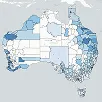

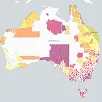


The total adult population (15 years or older) of Karnup 6176 WA is 1,542, with a median age of 30. Of those, 49.68% are married, 10.44% are divorced or separated, 38.20% are single and 1.43% are widowed.
The average household size is 3.0 people per dwelling, and the median household monthly income is estimated to be $8,768. The median monthly mortgage repayment for households in this suburb is $1,857 which is 21.18% of their earnings.
Source: ABS Census Data (2021)