
Muchea, WA 6501

Good to know:
Muchea is a rural suburb located in the Shire of Chittering, Western Australia, approximately 65 kilometres north of Perth. Known for its agricultural land and sprawling properties, Muchea offers a tranquil lifestyle with a strong sense of community. The suburb's landscape features a mix of farmland and natural bushland, making it an appealing area for those seeking a peaceful, country setting. Local amenities are relatively limited, but nearby towns like Bullsbrook provide essential services. Muchea is also home to the Muchea Tracking Station, a historical space communication facility.
Read More
Muchea WA 6501 houses: the Muchea WA 6501 property market shows a typical house price of $999,039, a rolling-year median rent of $457pw and a gross yield of 2.38% — below the common 3% yield benchmark. This snapshot of Muchea property investment highlights a high socio-economic score (IRSAD 998), very low stock on market (SoM 0.28%) and long hold periods (13.27 years), offset by stretched affordability (45 years) and an elevated building approvals ratio (4.25%).
Overall the data points to a market where house prices in Muchea are supported by tight established supply and strong owner-occupation, but where rental income is weak relative to price and incoming approvals could change the supply/demand balance.
Property market outlook
Muchea’s structural strengths are clear: low SoM (0.28%) and a long average hold period (13.27 years) indicate tightly held stock and limited churn — conditions that support upside for capital values if demand persists. IRSAD at 998 is in the opportune range, signalling above-average socio-economic characteristics that typically correlate with stronger long-term price resilience.
At the same time, the market exhibits material weaknesses for income-focused investors. Gross rental yield is 2.38%, below a typical 3% floor that many investors target, meaning rental returns won’t cover a large portion of holding costs. Affordability is very stretched (45 years), which constrains the local buyer pool and raises sensitivity to interest rate shifts. Compounding risk, the Building Approvals Ratio is 4.25% — well above the >2% threshold for high upcoming supply — which could increase new-stock pressure and moderate future price growth if completions come to market.
Demand indicators are broadly neutral: Days on Market at 88 and a Vacancy Rate of 2.56% both sit in the balanced band, while Buy Search Index of 3 shows average online interest. Clearance Rate is reported at 0.0% which in this market reflects few or no auctions rather than a distressed clearance outcome and should be treated as neutral.
Pros
- Very low Stock on Market (SoM 0.28%): established supply is tight, supportive of price stability and potential capital growth.
- High owner-occupier share — Renter/Owner ratio 8.0% (opportune): owner-heavy markets usually show lower turnover and stronger price support.
- IRSAD 998 (opportune): relative affluence and socio-economic advantage can underpin higher capital growth over the long run.
- Hold period 13.27 years (favourable): properties are tightly held, reducing tradable inventory and limiting quick supply shocks.
- Units/Houses ratio 0.0% (opportune): minimal unit stock limits competition from higher-density product if you’re buying houses.
Cons
- Low gross yield 2.38%: below a typical 3% benchmark, implying weak rental cashflow and heavier reliance on capital gains.
- Affordability 45 years: very stretched — this reduces the pool of mortgage-ready local buyers and heightens sensitivity to rate rises.
- Building Approvals Ratio 4.25% (unfavourable): high recent approvals point to elevated pipeline supply that can moderate price growth once stock is delivered.
- Inventory 2.13 months (neutral but close to low-supply): if approvals translate to completions, inventory could move into a higher-supply band.
- Confidence: Medium — data reliability is adequate but not high; monitor sales volumes and monthly updates.
Investment strategies
- Capital-growth, long-hold play: Muchea suits investors targeting long-term appreciation rather than near-term yield. Acceptably low churn and strong socio-economic indicators favour patient strategies with a 7–15 year horizon.
- Selective entry and off-market sourcing: given tight SoM and long hold periods, buyers agents should prioritise off-market deals and vendor-motivated listings to avoid competitive bidding that erodes margin.
- Focus on asset-level yield uplift: seek homes with value-add potential (secondary dwelling, minor refurbishment, outdoor amenity) to improve rent capture and mitigate the low headline yield.
- Timing around supply pipeline: monitor WA building approvals and upcoming completions closely. Delay speculative acquisitions where local approvals indicate a significant new stock delivery in the next 12–36 months.
- Stretch financing & longer terms: affordability is stretched — structure loans with realistic serviceability stress tests and long-term refinance pathways rather than relying on short holding periods.
- Avoid yield-only strategies: Muchea is not optimal for investors needing cashflow cover from day one; consider combining assets (higher-yield suburbs or diversified portfolios) if yield is a mandate requirement.
- Use HTAG trend alerts: with Medium confidence, subscribe to rolling sales and approvals updates to detect shifts in demand and supply before they fully reflect in prices.
Is Muchea WA 6501 a good suburb to invest in?
Muchea WA 6501 is attractive for investors whose primary objective is capital growth and who can tolerate low rental yields and long holding periods. The suburb’s tight stock on market, high owner-occupation and strong IRSAD score support a case for long-term appreciation. Conversely, it is a poor fit for yield-focused investors or those needing short-term liquidity, because rental returns are weak (2.38%) and affordability (45 years) increases market sensitivity. For buyers agents and discretionary capital, Muchea is worth consideration as a selective, long-hold target provided you actively manage entry pricing and monitor the approvals pipeline.
About HtAG Analytics Data
HtAG reports a base set of metrics designed for suburb-level comparison and investment decisioning. Key metrics include Typical Price, Median Rent, Sales and Rentals counts, Δ Change over multiple horizons, Gross Rental Yield, Capital Growth (per annum estimate with low/high bands), Total RoI (Yield + Capital Growth), Rent Increase (per annum estimate), Volatility Index (MAPE-based), Confidence (data reliability), and the Relative Composite Score™. Fundamental metrics reported include IRSAD (opportune above 950; neutral 920–950; unfavourable under 920), Renter/Owner ratio (opportune <15%, neutral 15–45%, unfavourable >45%), Units/Houses ratio, UHV ratio for units, Years to Own (affordability), and Growth Rate Cycle (GRC) status. Supply indicators cover Stock on Market (SoM%) thresholds (low <0.4%, balanced 0.4–1.3%, high >1.3%), Inventory (months), Building Approvals & BA Ratio (low supply <0.3%, balanced 0.3–2%, high supply >2%), and Hold Period bands. Demand metrics include Days on Market, Discounting, Vacancy Rate bands, Buy & Rent Search Index, and Auction Clearance benchmarks. Advanced context metrics include estimated dwellings, adult population, school ranking, non-residential approvals per capita and distance to nearest GPO.
HtAG’s methodology emphasises relative, suburb-level measurement that blends current conditions and historical trends to inform point-of-purchase decisions. In practice for a location such as Muchea, our metrics are tuned to capture both near-term supply signals (SoM, approvals) and longer-term structural indicators (IRSAD, hold period) so buyers and agents can compare suburbs on criteria that matter for acquisition and holding strategy. This differs from some providers who focus on broader public-data narratives; HTAG’s models rework similar inputs with distinct curation and measurement steps to produce outputs designed for transactional and comparative analysis.
Finally, the snapshot above shows current value metrics but does not replace trend analysis — metric trajectories (rising approvals, changing vacancy or yield pressure) materially affect outcomes. Some metrics carry greater weight depending on strategy, and individual investors will select different suburbs based on budget, borrowing capacity, risk appetite and intended hold or refinance timeframes. HTAG specialises in shortlisting markets against personalised criteria rather than one-size-fits-all rankings. For Muchea, combine this snapshot with rolling sales, approvals and rental trend data to form a position aligned to your investment horizon.
Updated: 1 Jun 2026
Read Less
Quick Area Stats

Dwellings

Population

EDI

Bushfire Risk Index

Flood Risk Index
Education & Infrastructure
Sign Up to Access

School Rank

Infra. Spend
Market Trends
Essential metrics effectively streamline the process of identifying markets that match your financial situation and investment objectives. Typical Price, Indicative Yield and Total ROI provide a swift means to shortlist areas that resonate with what you’re seeking and can afford. These metrics also serve as valuable general trend indicators, allowing you to visualise transaction volumes and dynamics of change.
1M
1Q
1Y
3Y
5Y
7Y
10Y
1M
1Q
1Y
3Y
5Y
7Y
10Y

1M
1Q
1Y
3Y
5Y
7Y
10Y
The Growth Rate Cycle (GRC) is a metric used to analyse the year-on-year change in property values, providing insights into the growth cycle of a particular area. It uses the “typical price” metric to gauge property values more accurately than median prices, and includes both actual and projected data for the current year.

Fundamental metrics play a vital role in providing a comprehensive analysis of the socio-economic environment within a specific suburb or region. Additionally, the Return on Investment (ROI) and Volatility Index are crucial metrics that aid in evaluating the prospective profitability and the level of risk or stability in the market.
Socio-economics
Sign Up to Access

IRSAD

Renter to Owner

Units to Houses
Projections
Sign Up to Access

Projected Annual ROI

Volatility Index
Quick Area Stats
Sign Up to Access

Annual Sales Volume

Annual Rentals Volume



Stock on Market

Building Approvals

Inventory

Hold Period




Supply metrics are crucial in gauging both the existing volumes of real estate listed for sale and the properties anticipated to enter the market soon. A diminished supply could signal opportunities for price appreciation, particularly when there’s corresponding buyer demand to buoy the market. The Stock on Market and Inventory level metrics (current values) are presented as a 3-month rolling average of monthly data shown in the charts. This means the last 3 months of data are averaged. The BA Ratio represents the proportion of building approvals over the latest 12 months relative to the total dwellings in the area.

Days on Market

Search Index

Vacancy Rate

Clearance Rate




Demand metrics underscore the level of interest that potential property buyers or tenants have in a specific suburb or locality. When demand outstrips the available supply, or if the supply fails to meet the intensity of buyer/renter interest, there’s a potential for prices to climb, underscoring the pivotal relationship between demand dynamics and property value trends. The Days on Market and Clearance Rate metrics (current values) are presented as a 3-month rolling average of monthly data shown in the charts. This means the last 3 months of data are averaged.
We invite you to contribute to the conversation by sharing your thoughts or raising questions about this market in the comment section below.
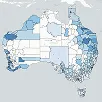

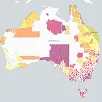


The total adult population (15 years or older) of Muchea 6501 WA is 775, with a median age of 47. Of those, 52.90% are married, 14.58% are divorced or separated, 30.32% are single and 2.84% are widowed.
The average household size is 2.7 people per dwelling, and the median household monthly income is estimated to be $8,232. The median monthly mortgage repayment for households in this suburb is $2,000 which is 24.30% of their earnings.
Source: ABS Census Data (2021)