
South Hedland, WA 6722

Good to know:
South Hedland, WA 6722, is a suburb situated within the town of Port Hedland in the Pilbara region. It serves as a residential and commercial hub, complementing the port-oriented northern part of Port Hedland. The suburb features amenities including shopping centres, schools, and recreational facilities. South Hedland's landscape is characterised by its arid environment, with red earth and sparse vegetation typical of the Pilbara. It plays a significant role in supporting the mining and resources industry, which is a major economic driver for the region.
Read More
South Hedland WA 6722 is offering a clear cash-flow story: Typical price for houses sits at $598,683, median rent is $942 per week and gross yield is 8.18% — making South Hedland WA 6722 property investment highly yield‑oriented. The South Hedland property market shows tight listed supply (SoM 0.33%) and sub‑1% vacancy (0.98%), while affordability (19 years) and an above‑average IRSAD (980) provide supportive fundamentals for income investors. However a high renter/owner ratio (67%) flags a tenancy-heavy market that is sensitive to employment cycles — house prices in South Hedland are therefore likely to behave more like a cash‑flow play than a low‑volatility growth market.
Property market outlook
Supply conditions are supportive of rental tightness and near‑term price support: Stock on Market at 0.33% is opportune (low supply) and vacancy at 0.98% is opportune (high rental demand). Inventory of 2.36 months and a BA Ratio of 0.79% are neutral — there’s not a near‑term wave of new dwellings scheduled to overwhelm the market, but supply is not extremely constrained either. Affordability at 19 years sits well below stress thresholds, which helps owner‑occupier entry if employment is steady.
Demand signals are mixed. Days on market of 56 is neutral and the Buy Search Index of 3 is around state average, indicating buyer interest is modest rather than frenzied. Clearance Rate reported at 0% is neutral for regional markets with few auctions. The most significant demand risk is the very high Renter/Owner ratio (67% — unfavourable), which implies a large proportion of households are rentals and the suburb’s performance is more exposed to rental market cycles and workforce mobility than areas dominated by owner‑occupiers.
Overall investment outlook: strong for yield and cash flow, conditional for capital growth. If local employment and population remain stable, low supply and tight vacancies can sustain rental income and support prices. If employment falls, the high renter base raises downside rental and price volatility.
Pros
- Very high gross yield (8.18%) — strong cash‑flow potential for buy‑and‑hold investors.
- Vacancy rate 0.98% — rental tightness that supports rent levels and reduces vacancy risk.
- Low Stock on Market (0.33%) — limited listed supply and an opportune selling environment for vendors.
- Affordability 19 years and IRSAD 980 — prices are within reasonable reach relative to local incomes and broader socioeconomic indicators are positive.
- Data confidence high — robust sample for the metrics reported.
Cons
- Renter/Owner ratio 67% (unfavourable) — heavy renter profile increases exposure to employment cycles, higher tenant turnover and potential rental volatility.
- Buy Search Index neutral and Days on Market moderate — demand is not exceptionally strong for capital growth.
- Clearance Rate reported as 0% (neutral) — auction activity is limited, making price discovery different to capital city markets.
- Inventory and BA Ratio neutral — no structural supply shock upside for capital growth, but also no immediate supply crash that would tighten the market further.
- Market character likely cyclical (typical of regional/resource centres) — capital appreciation can be more variable than metro markets.
Investment strategies
- Income-first buy-and-hold: target houses (higher typical price data is for houses) to capture the strong 8%+ gross yields. Prioritise properties with low maintenance risk and long‑term tenants to stabilise cash flow.
- Lease management and tenant screening: because of the high renter proportion, focus on tenancy quality, lease length and contingency planning for turnover periods. Consider professional property management to reduce downtime.
- Value-add renovations that target rent uplift: modest kitchen/bath upgrades or improving energy efficiency can materially increase rents in yield markets without relying on large capital gains.
- Off‑market and vendor approaches: low SoM suggests off‑market sourcing or buyer agents can uncover opportunities before they hit limited public stock.
- Hold flexibility: plan for a medium to long hold (5+ years) to ride employment cycles; have refinance buffers and stress‑test scenarios if local industry activity softens.
- Diversify exposure: if your portfolio seeks growth, pair South Hedland holdings with more owner‑occupier dominated or capital‑growth focused suburbs to balance volatility.
- Due diligence emphasis: verify local employment drivers, major project pipelines, and recent vacancy trendlines rather than relying on a single monthly snapshot.
Is South Hedland WA 6722 a good suburb to invest in?
Yes — if your objective is strong rental income and you accept higher exposure to local employment cycles. South Hedland WA 6722 offers very attractive yields and tight vacancy/stock metrics that favour cash‑flow centric strategies. It is less compelling for investors whose primary goal is low‑volatility capital appreciation, given the high renter share and only neutral demand indicators. For buyer‑agents and sophisticated investors, South Hedland is a purposeful allocation for yield and return diversification, provided you perform targeted due diligence on tenant demand drivers and maintain holding flexibility.
About HtAG Analytics Data
HtAG reports a base set of suburb metrics designed for market comparison and shortlist workflows. Core metrics include Typical Price, Median Rent, Sales and Rentals counts, % Change over selected periods, Gross Rental Yield, Capital Growth (annual estimate with low/high bounds), Total RoI (Yield + Capital Growth), projected Rent Increase, Volatility Index (MAPE‑based), Confidence (data accuracy), and Relative Composite Score™. There are further metrics available on suburb dashboards such as longer trend histories, micro‑supply indicators and amenity overlays.
The guiding principle behind HTAG metrics is to capture both current market conditions and historical trends to enable relative market analysis tailored to the point of purchase. Unlike providers that emphasise public aggregates for broad media narratives, HTAG metrics are curated and measured to compare markets as closely as possible to actual buying scenarios. That means similar metric names may exist across providers, but HTAG’s data curation and calculation nuances are designed specifically for investment and agent decision workflows.
Finally, the summary above is a snapshot of current value metrics and does not replace trend analysis. Metric trajectories and the relative importance of individual indicators vary by strategy and investor profile. Different budgets, borrowing capacity, risk appetite and intended hold/refinance horizons result in different suburb selections. HTAG specialises in shortlisting markets against individual investor criteria rather than applying a one‑size‑fits‑all view; for serious investors and professionals we recommend performing relative analysis across a tailored set of suburbs aligned to your objectives.
Updated: 1 May 2026
Read Less
Quick Area Stats

Dwellings

Population

EDI

Bushfire Risk Index

Flood Risk Index
Education & Infrastructure
Sign Up to Access

School Rank

Infra. Spend
Market Trends
Essential metrics effectively streamline the process of identifying markets that match your financial situation and investment objectives. Typical Price, Indicative Yield and Total ROI provide a swift means to shortlist areas that resonate with what you’re seeking and can afford. These metrics also serve as valuable general trend indicators, allowing you to visualise transaction volumes and dynamics of change.
1M
1Q
1Y
3Y
5Y
7Y
10Y
1M
1Q
1Y
3Y
5Y
7Y
10Y

1M
1Q
1Y
3Y
5Y
7Y
10Y
The Growth Rate Cycle (GRC) is a metric used to analyse the year-on-year change in property values, providing insights into the growth cycle of a particular area. It uses the “typical price” metric to gauge property values more accurately than median prices, and includes both actual and projected data for the current year.

Fundamental metrics play a vital role in providing a comprehensive analysis of the socio-economic environment within a specific suburb or region. Additionally, the Return on Investment (ROI) and Volatility Index are crucial metrics that aid in evaluating the prospective profitability and the level of risk or stability in the market.
Socio-economics
Sign Up to Access

IRSAD

Renter to Owner

Units to Houses
Projections
Sign Up to Access

Projected Annual ROI

Volatility Index
Quick Area Stats
Sign Up to Access

Annual Sales Volume

Annual Rentals Volume



Stock on Market

Building Approvals

Inventory

Hold Period




Supply metrics are crucial in gauging both the existing volumes of real estate listed for sale and the properties anticipated to enter the market soon. A diminished supply could signal opportunities for price appreciation, particularly when there’s corresponding buyer demand to buoy the market. The Stock on Market and Inventory level metrics (current values) are presented as a 3-month rolling average of monthly data shown in the charts. This means the last 3 months of data are averaged. The BA Ratio represents the proportion of building approvals over the latest 12 months relative to the total dwellings in the area.

Days on Market

Search Index

Vacancy Rate

Clearance Rate




Demand metrics underscore the level of interest that potential property buyers or tenants have in a specific suburb or locality. When demand outstrips the available supply, or if the supply fails to meet the intensity of buyer/renter interest, there’s a potential for prices to climb, underscoring the pivotal relationship between demand dynamics and property value trends. The Days on Market and Clearance Rate metrics (current values) are presented as a 3-month rolling average of monthly data shown in the charts. This means the last 3 months of data are averaged.
We invite you to contribute to the conversation by sharing your thoughts or raising questions about this market in the comment section below.
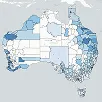

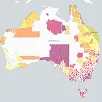


The total adult population (15 years or older) of South Hedland 6722 WA is 8,270, with a median age of 32. Of those, 37.57% are married, 11.52% are divorced or separated, 49.07% are single and 1.86% are widowed.
The average household size is 2.7 people per dwelling, and the median household monthly income is estimated to be $12,096. The median monthly mortgage repayment for households in this suburb is $1,387 which is 11.47% of their earnings.
Source: ABS Census Data (2021)