
Marsfield, NSW 2122

Good to know:
Marsfield is a family-friendly suburb located 16 kilometres north-west of Sydney's central business district, within the City of Ryde. It boasts a range of amenities, including the Macquarie Centre, numerous parks like Waterloo Park, and excellent public transport links via buses and the nearby Macquarie University railway station. The suburb is known for its leafy streets and quiet, residential atmosphere. It is also home to educational institutions such as Macquarie University and several well-regarded schools, making it a popular choice for families and students alike.
Read More
Marsfield NSW 2122 houses present a classic Sydney inner-north growth market: a very high typical price ($2,788,638), modest median rent ($1,054 pw) and a very low gross yield (1.97%). The Marsfield NSW 2122 property market is characterised by tight for-sale stock, low vacancy and an affluent demographic (IRSAD 1063), making it more of a long-term capital-growth play than a yield or cashflow suburb.
Property market outlook
Marsfield NSW 2122 house prices are underpinned by acute supply constraints and strong owner-occupier holding patterns. Supply indicators are supportive of price retention and upside: Stock on Market at 0.32% and Inventory of 1.9 months sit in the low-supply/opportune band, Building Approvals Ratio of 0.19% implies limited near-term new dwelling inflows, and the average Hold Period of 14.8 years confirms tightly held stock. Demand-side signals are positive for landlords from a vacancy perspective — Vacancy Rate 0.75% is low — but transactional activity is neutral: Days on Market 36 days and Clearance Rate ~62% are around balanced levels. The mix of a high typical price with low rental return and an affordability index of 116 years are notable structural constraints that shape buyer pools and likely keep this market dominated by high‑income owner-occupiers and investors with capital strength.
Pros
- Tight supply profile: SoM 0.32% and Inventory 1.9 months favour price stability and upside pressure.
- Low vacancy (0.75%): rental demand is strong relative to supply, limiting downside rental risk.
- Affluent socio-economic base: IRSAD 1063 supports premium pricing and capital growth prospects.
- Long hold periods (14.8 years): indicates low churn and owner‑occupier dominance, helpful for capital preservation.
- High data confidence: recent sales volume supports reliable metrics for decision-making.
Cons
- Very low gross yield (1.97%): below the typical 3% threshold — poor for income-focused investors; negative cashflow risk likely unless heavily geared or subsidised.
- Extreme affordability constraint (116 years): price-to-income dynamics severely restrict the broad buyer pool and heighten sensitivity to rate rises or lending policy shifts.
- Units/Houses mix unfavourable (56%): a high relative presence of units in the local stock can compress demand for houses in some cycles and indicates development pressure in parts of the catchment.
- Neutral market turnover: DoM ~36 and Clearance Rate ~61.8% suggest sale liquidity is not immediate premium — transactions can still take time.
- Not a short-term yield play: combination of high capital value and low rents reduces appeal for investors seeking immediate positive cashflow.
Investment strategies
- Capital-growth focused buy-and-hold: best suited to investors targeting long-term capital appreciation, able to tolerate low yields and long hold horizons. Prioritise houses with features attractive to owner-occupiers (land size, schooling catchments, presentation).
- Owner-occupier or high‑net‑wealth investor acquisition: if you or your client can buy with low leverage or substantial equity, the suburb’s IRSAD and supply tightness favour capital protection and long-term gains.
- Selective value-add: small renovations that increase appeal to owner-occupiers (kitchen/bathroom, landscaping) may unlock resale premiums given the owner-occupier market dominance.
- Off-market and buyer-agent sourcing: with SoM and Inventory so low, use buyer-agent networks and off-market channels to secure property without competing in the thin public market.
- Avoid yield-reliant strategies: skip Marsfield houses for investors focused on cashflow or yield. If income is required, consider alternative suburbs or property types where yields are >=3%.
- Portfolio diversification: use Marsfield exposure as a growth segment within a broader portfolio that includes higher-yield assets to balance cashflow and servicing risk.
Is Marsfield NSW 2122 a good suburb to invest in?
Marsfield NSW 2122 is a good suburb to invest in if your mandate prioritises long-term capital growth, has high borrowing capacity or significant equity, and tolerates minimal rental yield. Tight supply, low vacancy and a high IRSAD support price resilience and upside over time. However, it is a poor choice for yield-focused investors or those requiring short-term liquidity due to very low gross yields (1.97%) and extreme affordability pressures (116 years). Buyer agents should position acquisitions for owner-occupier appeal and be prepared to operate largely off-market. For discretionary investors, Marsfield houses can be a strategic holding within a diversified portfolio — not a standalone yield play.
About HtAG Analytics Data
Base metrics referenced above (reported per dwelling type where applicable) include: Typical Price, Median Rent, Yield (Gross Rental Yield), Sales, Rentals, % Change over selected periods, Capital Growth (CG) with Low/High bounds, Total RoI, Rent Increase projection, Volatility Index, Confidence, Relative Composite Score™, IRSAD, Renter/Owner ratio, Unit/House ratio, Unit/House Value ratio (units), Years to Own (Affordability), Growth Rate Cycle (GRC), Stock on Market (SoM) & SoM%, Inventory (months supply), Building Approvals & BA Ratio, Hold Period, Days on Market (DoM), Discounting, Vacancy Rate, Vacancies, Buy & Rent Search Index, Auction Clearance Rates, Population, Estimated Dwellings, School Rank and selected infrastructure proxies. There are additional specialist metrics on suburb dashboards beyond this base set.
HtAG’s metrics are designed to reflect both current market conditions in a specific suburb context and the historical trend behaviour that matters at the point of purchase. That means our measurements prioritise localised, transaction-level signals and supply/demand balances that influence neighbourhood-level outcomes. Other providers may focus on more aggregated public datasets for broad trend reporting; HtAG refines similar inputs into metrics tailored for comparative, suburb-level decision-making and shortlist generation.
The snapshot above describes current value and structural metrics for Marsfield houses but does not show trends, which can alter investment conclusions when rate cycles, new supply or demand shocks occur. Some metrics will matter more than others depending on investor strategy and timeframe — for example, yield vs capital-growth weightings differ between an SMSF investor and a developer. Market selection therefore varies by budget, borrowing capacity, risk appetite and intended hold or refinance horizon. HtAG specialises in shortlisting and relative analysis customised to those individual criteria rather than offering one-size-fits-all rankings. For professional investors and buyer agents, Marsfield should be assessed alongside comparable inner‑north Sydney suburbs to confirm relative value and execution strategy.
Updated: 1 May 2026
Read Less
Quick Area Stats

Dwellings

Population

EDI

Bushfire Risk Index

Flood Risk Index
Education & Infrastructure
Sign Up to Access

School Rank

Infra. Spend
Market Trends
Essential metrics effectively streamline the process of identifying markets that match your financial situation and investment objectives. Typical Price, Indicative Yield and Total ROI provide a swift means to shortlist areas that resonate with what you’re seeking and can afford. These metrics also serve as valuable general trend indicators, allowing you to visualise transaction volumes and dynamics of change.
1M
1Q
1Y
3Y
5Y
7Y
10Y
1M
1Q
1Y
3Y
5Y
7Y
10Y

1M
1Q
1Y
3Y
5Y
7Y
10Y
The Growth Rate Cycle (GRC) is a metric used to analyse the year-on-year change in property values, providing insights into the growth cycle of a particular area. It uses the “typical price” metric to gauge property values more accurately than median prices, and includes both actual and projected data for the current year.

Fundamental metrics play a vital role in providing a comprehensive analysis of the socio-economic environment within a specific suburb or region. Additionally, the Return on Investment (ROI) and Volatility Index are crucial metrics that aid in evaluating the prospective profitability and the level of risk or stability in the market.
Socio-economics
Sign Up to Access

IRSAD

Renter to Owner

Units to Houses
Projections
Sign Up to Access

Projected Annual ROI

Volatility Index
Quick Area Stats
Sign Up to Access

Annual Sales Volume

Annual Rentals Volume



Stock on Market

Building Approvals

Inventory

Hold Period




Supply metrics are crucial in gauging both the existing volumes of real estate listed for sale and the properties anticipated to enter the market soon. A diminished supply could signal opportunities for price appreciation, particularly when there’s corresponding buyer demand to buoy the market. The Stock on Market and Inventory level metrics (current values) are presented as a 3-month rolling average of monthly data shown in the charts. This means the last 3 months of data are averaged. The BA Ratio represents the proportion of building approvals over the latest 12 months relative to the total dwellings in the area.

Days on Market

Search Index

Vacancy Rate

Clearance Rate




Demand metrics underscore the level of interest that potential property buyers or tenants have in a specific suburb or locality. When demand outstrips the available supply, or if the supply fails to meet the intensity of buyer/renter interest, there’s a potential for prices to climb, underscoring the pivotal relationship between demand dynamics and property value trends. The Days on Market and Clearance Rate metrics (current values) are presented as a 3-month rolling average of monthly data shown in the charts. This means the last 3 months of data are averaged.
We invite you to contribute to the conversation by sharing your thoughts or raising questions about this market in the comment section below.
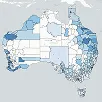

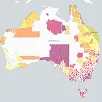


The total adult population (15 years or older) of Marsfield 2122 NSW is 10,531, with a median age of 39. Of those, 48.42% are married, 9.77% are divorced or separated, 36.40% are single and 5.36% are widowed.
The average household size is 2.5 people per dwelling, and the median household monthly income is estimated to be $9,384. The median monthly mortgage repayment for households in this suburb is $2,383 which is 25.39% of their earnings.
Source: ABS Census Data (2021)