
Strathfield, NSW 2135

Good to know:
Strathfield, located in New South Wales, 2135, is a vibrant and diverse suburb known for its blend of residential, commercial, and educational precincts. Situated approximately 12 kilometres west of Sydney's CBD, Strathfield boasts excellent public transport links, including a major railway station and numerous bus routes. The suburb features a mix of architectural styles, from charming Federation homes to modern apartments. Strathfield is recognized for its esteemed schools, multicultural community, and extensive dining options. Parks like Strathfield Park and Airey Park offer ample recreational spaces, contributing to the suburb's family-friendly atmosphere.
Read More
Strathfield NSW 2135 has a high‑priced house market: Typical price $4,044,657, median rent $982 pw and a gross yield of 1.26% per annum. This snapshot of Strathfield NSW 2135 property market data shows a premium, tightly‑held location with very weak rental yield and extreme affordability pressure (167 years to own by HTAG’s measure). House prices in Strathfield are supported by strong socio‑economic indicators and low stock, but poor yield and subdued auction clearance signals change the risk/return profile for investors.
Property market outlook
Strathfield houses sit in the premium band of Sydney’s middle ring. IRSAD 1051 signals above‑average socio‑economic status which tends to support long‑term capital growth for high‑value stock. Supply indicators are supportive of price sustainability: Stock on Market 0.35% is very low and hold period of 10.95 years points to tightly‑held stock. Days on Market at 33 days is in the high‑demand band for houses, and inventory at 3.05 months is balanced — together these point to steady buyer interest with constrained supply rather than a frothy market.
Key downsides for income investors are acute: a 1.26% gross yield is far below the 3% guideline and makes cashflow difficult unless the buyer is highly geared or has alternative income. Affordability at 167 years is extreme and matters because it increases sensitivity to interest rate moves and limits the buyer pool to well‑capitalised owner‑occupiers and investors. Clearance rate at 50% is soft for a Sydney suburb and signals that when lots are tested at auction vendor expectations are not always met — this can create short windows for negotiation but also indicates price discovery is uneven.
Overall the house market is skewed toward capital growth potential backed by affluent demographics and low available stock; it is not a reliable yield play and is sensitive to affordability-driven shifts in demand.
Pros
- High Typical Price ($4.04m): reflects premium market with historical capacity for capital growth.
- IRSAD 1051 (opportune): affluent profile that supports higher long‑run price floors.
- Very low Stock on Market (0.35%): tight supply supportive of price resilience.
- Hold period 10.95 years (favourable): established owners reduce churn and supply.
- Days on Market 33 (opportune): quick transactional velocity for houses.
- High data confidence: sample size and transaction activity give reliability to metrics.
Cons
- Gross Yield 1.26%: extremely low; poor for investors needing positive cashflow.
- Affordability 167 years: exceptionally unaffordable — increases refinancing/interest‑rate risk and limits buyer pool.
- Units/Houses ratio 59% (unfavourable): relatively high unit share in broader suburb composition can cap overall market growth for some product types.
- Clearance Rate 50% (unfavourable): auction outcomes are weak/variable, implying price discovery friction.
- RO Ratio 44% (neutral/high end): sizeable renter base that can increase short‑term volatility in rental demand vs owner‑occupier preference.
- Inventory neutral and BA ratio neutral: no structural new‑supply constraint beyond current low stock; future approvals could change dynamics.
Investment strategies
- Capital‑growth focus: target Strathfield house stock for long‑term appreciation rather than near‑term yield. Expect holding periods measured in decades; suitability for HNW investors or owner‑occupiers buying for lifestyle plus growth.
- Prioritise houses over units: with the suburb’s units/houses composition unfavourable, buyers seeking lower downside from oversupply should favour detached houses or properties with clear owner‑occupier appeal.
- Seek off‑market and vendor‑motivated opportunities: low visible stock and a 50% clearance rate create windows where negotiation can secure below‑market entries. Buyers agents should leverage relationships to access quiet listings.
- Look for value‑add or upside through planning: small extensions, secondary dwelling (where permitted) or subdivision potential can materially improve returns in a low‑yield environment.
- Conservative leverage and long refinance horizons: given extreme affordability measures, structure finance with buffers for rate shocks and longer refinance timelines to avoid forced sales.
- Avoid pure yield plays: unless a property can be acquired materially below typical price or repurposed, Strathfield houses will not meet cashflow targets for yield‑driven investors.
- Comparative shortlist: shortlist adjacent middle‑ring suburbs and run relative analysis — similar socio‑economic profiles but lower entry prices may improve yield/cashflow while maintaining growth potential.
- Buyers agents should document buyer profiles: this suburb favours buyers with capacity to carry negative cashflow short‑term and an explicit long‑term capital objective.
Is Strathfield NSW 2135 a good suburb to invest in?
Strathfield NSW 2135 is a good suburb to invest in if your objective is long‑term capital growth and you have a high risk tolerance, deep capital base and the ability to carry low or negative cashflow. The affluent IRSAD, tight stock on market, long hold periods and relatively quick days on market support price resilience. It is not a good fit for investors who require rental yield or short‑term income: the 1.26% gross yield and extreme affordability figure make it unsuitable for yield‑focused or highly leveraged buyers seeking near‑term returns. Buyers agents should match client strategy (capital growth, long hold, development upside) to Strathfield’s profile and short‑list against nearby alternatives to optimise entry price and product type.
About HtAG Analytics Data
Base metrics reported (subset): Typical Price, Median Rent, Sales, Rentals, Δ Change (period comparisons), Gross Rental Yield, Capital Growth (annual estimate with low/high), Total RoI (yield + growth), Rent Increase projection, Volatility Index (MAPE‑based), Confidence (data accuracy), Relative Composite Score. There are additional supply, demand and demographic metrics in HTAG dashboards (SoM%, Inventory months, Building Approvals Ratio, Hold Period, Days on Market, Discounting, Vacancy Rate, Buy/Rent Search Index, Clearance Rate, IRSAD, RO Ratio, UH Ratio, UHV Ratio and more) and the ranges/thresholds we use (for example IRSAD opportune >950; SoM% low supply <0.4%; Inventory balanced 2.1–4.5 months; Vacancy balanced 1–3.5%; Days on Market high demand 0–35 days) are designed to give consistent comparative signals across suburbs.
HTAG’s methodology is designed to capture both current market conditions and historical trends to enable relative market analysis close to the point of purchase. That focus differentiates HTAG from some providers that primarily distribute public aggregates for broader trend commentary. Although metric names may look similar across vendors, HTAG’s curation, calibration and measurement nuances aim to make our suburb‑level comparisons more actionable for buyers agents and investors evaluating specific purchase opportunities.
Note on interpretation: the snapshot above shows current value metrics but does not substitute for trend analysis — metric trajectories and relative weighting matter. Some metrics (for example supply tightness or affordability) have greater influence on near‑term risk than others depending on investor strategy. Market selection varies by budgets, borrowing capacity, risk appetite and time horizons; HTAG excels at shortlisting markets against individual criteria rather than offering one‑size‑fits‑all recommendations. For investment decisions, perform relative analysis across a tailored set of suburbs that align with your strategy and holding period.
Updated: 1 May 2026
Read Less
Quick Area Stats

Dwellings

Population

EDI

Bushfire Risk Index

Flood Risk Index
Education & Infrastructure
Sign Up to Access

School Rank

Infra. Spend
Market Trends
Essential metrics effectively streamline the process of identifying markets that match your financial situation and investment objectives. Typical Price, Indicative Yield and Total ROI provide a swift means to shortlist areas that resonate with what you’re seeking and can afford. These metrics also serve as valuable general trend indicators, allowing you to visualise transaction volumes and dynamics of change.
1M
1Q
1Y
3Y
5Y
7Y
10Y
1M
1Q
1Y
3Y
5Y
7Y
10Y

1M
1Q
1Y
3Y
5Y
7Y
10Y
The Growth Rate Cycle (GRC) is a metric used to analyse the year-on-year change in property values, providing insights into the growth cycle of a particular area. It uses the “typical price” metric to gauge property values more accurately than median prices, and includes both actual and projected data for the current year.

Fundamental metrics play a vital role in providing a comprehensive analysis of the socio-economic environment within a specific suburb or region. Additionally, the Return on Investment (ROI) and Volatility Index are crucial metrics that aid in evaluating the prospective profitability and the level of risk or stability in the market.
Socio-economics
Sign Up to Access

IRSAD

Renter to Owner

Units to Houses
Projections
Sign Up to Access

Projected Annual ROI

Volatility Index
Quick Area Stats
Sign Up to Access

Annual Sales Volume

Annual Rentals Volume



Stock on Market

Building Approvals

Inventory

Hold Period




Supply metrics are crucial in gauging both the existing volumes of real estate listed for sale and the properties anticipated to enter the market soon. A diminished supply could signal opportunities for price appreciation, particularly when there’s corresponding buyer demand to buoy the market. The Stock on Market and Inventory level metrics (current values) are presented as a 3-month rolling average of monthly data shown in the charts. This means the last 3 months of data are averaged. The BA Ratio represents the proportion of building approvals over the latest 12 months relative to the total dwellings in the area.

Days on Market

Search Index

Vacancy Rate

Clearance Rate




Demand metrics underscore the level of interest that potential property buyers or tenants have in a specific suburb or locality. When demand outstrips the available supply, or if the supply fails to meet the intensity of buyer/renter interest, there’s a potential for prices to climb, underscoring the pivotal relationship between demand dynamics and property value trends. The Days on Market and Clearance Rate metrics (current values) are presented as a 3-month rolling average of monthly data shown in the charts. This means the last 3 months of data are averaged.
We invite you to contribute to the conversation by sharing your thoughts or raising questions about this market in the comment section below.
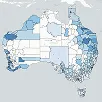

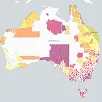


The total adult population (15 years or older) of Strathfield 2135 NSW is 22,989, with a median age of 32. Of those, 46.29% are married, 7.01% are divorced or separated, 42.87% are single and 3.81% are widowed.
The average household size is 2.8 people per dwelling, and the median household monthly income is estimated to be $9,692. The median monthly mortgage repayment for households in this suburb is $2,765 which is 28.53% of their earnings.
Source: ABS Census Data (2021)
Strathfield, NSW 2135 is a growth powerhouse, and that is simply observed when we look at the dramatic disparity between the typical value expressed in thousands ($3,488k) and the weekly rent ($742 per week).
This means that the typical value expressed in thousands is over 4.5 times greater than weekly rent. Such growth is observed rarely.
What does this tell us?
Well first and most obviously that most of the growth for Strathfield, NSW 2135 has occurred in the capital growth domain. This, more importantly, also tells us that the market fundamentals for Strathfield, NSW 2135 are well positioned for sustained capital growth — the area with such disparity between typical values (expressed in thousands and rents) has been experiencing substantial and sustained growth which suggests that its fundamentals are such that this will most probably continue in future. At what rate, however, remains a mystery for now.
These observations are confirmed when looking at its growth in the past decade. Strathfield, NSW 2135 has experienced a 122% growth in the last decade, meaning that its value has more than doubled in that timeframe. Again, this is indicative of solid market fundamentals.
What do I mean by this? I mean that the markets supply and demand is imbalanced in such a way that it leads to sustained growth. We can also see from the number of sales data that Strathfield, NSW 2135 is outpacing its neighbours in the LGA, 11 sales in Strathfield, NSW 2135 to zero sales in its adjoining suburbs.
Conversely, Strathfield, NSW 2135 has seen only 22% growth in rents in the past decade.
Interestingly, our projections indicate continued growth for Strathfield, NSW 2135. The growth is projected to land between -1% and 11%, with a rather small error rate of 5.6%.
Now let’s look into other RCS scores to see if the above observations are warranting.
WHY:
With a Relative Composite Score (RCS) of:
1. 29 / 100 for risk;
2. 10 / 100 for cashflow;
3. 84 / 100 for capital growth;
4. 41 / 100 score for overall.
As per my previous observations, the RCS indicates that the area is a growth area, with the highest value being assigned to the capital growth RCS (84). In all honesty, although this score is high, it indicates that Strathfield, NSW 2135 is not even in the top 10% of suburbs with respect to growth in Australia (it is in the top 16%). Considering that RCS is a forward looking metric (5 years into the future) and the fact that there is a 4.5 times disparity between typical values expressed in thousands and weekly rents tells me that Strathfield, NSW 2135 may be positioned for some colling off in the coming years.
I think the future growth should be somewhere around 5% or less annually, as opposed to 11%, pending macro-economic conditions. Rents, on the other hand, might experience a more substantial growth.
Surprisingly, its Lower Risk score is considerably low for an area that has experienced sustained growth. Combined with unaffordability of the area, I would be cautious to proceed investing in Strathfield, NSW 2135.
What are some of the metrics that form part of HtAG Analytics risk scores:
• Floor risk;
• Bushfire risk;
• Costal and/or river erosion risk;
• IRSAD;
• Renter to owner ratio;
• GRC;
• Average age of properties;
• Average monthly sales volume;
• Average monthly rentals volume;
• Error rate
• Plus, over 60 other metrics…
Let’s look at other important metrics that buttress or form part of the RCS:
Fundamentals
ISRAD score: 10 — the ISRAD metric highlights the socio-economic standards of the area in question. For Strathfield, NSW 2135, the score of 10 is a perfect score. This highlights Strathfield, NSW 2135 as an affluent area which is a good foundation for those interested in investing in the area.
Be patient, we need to look at other metrics.
R|O Ratio: 90% — this is an extremely unfavourable statistic. A high proportion of renters in the area is usually indicative of reduced liveability for the area. This is only a general rule of thumb which I would say does not play out in the context of Strathfield, NSW 2135. Why? I think the high proportion of renters is indicative of exactly opposite—people love living in Strathfield, NSW 2135 but they rent instead of owning a property simply because of the reduced affordability on the one hand and low growth in rents on the others. This means that it is more affordable to rent than to buy in Strathfield, NSW 2135 hence why people seem to be opting for the option more. The fact that its ISRAD is 10 indicates that it is a highly liveable area.
Also, the sustained substantial growth in the past decade is also indicative of liveability.
This is a perfect indication of the danger of looking at one metric in isolation. In most cases a high R|O Ratio is a bad sign, however, when we consider this statistic in the context of ISRAD and past capital growth, we can see that the rule of thumb does not apply to Strathfield, NSW 2135.
Side note—a flow on effect of a rule of thumb is as follows:
Balanced or favourable R|O ration = better liveability = higher hold periods = restricted supply = price growth.
U|H Ratio: 49% — this is a balanced statistic and one that I personally do not think plays a role in decision making in the context of Strathfield, NSW 2135.
The usual flow on effect is usually exemplified as such:
Higher proportion of units = higher proportion of renters which = surplus in the supply of properties due to more change over (lower hold periods) in rental in comparison to owner occupier properties = subdued price and rental growth.
With respect to Strathfield, NSW 2135, the subdued rental growth is mainly the result of the exorbitant growth in the capital growth domain.
Remember this rule of property investing — it is very difficult to find areas that have seen a lot of growth in both domains. Usually, if one domain grows, the other does not.
GRC: its GRC is favourable for a few reasons, most of which relate to the evident cyclicality in the market. This is suggestible of healthy market fundamentals—the cyclical nature of growth and decline immediately indicates that the area is not supported by a single industry or unfavourable demographics.
A general rule of thumb is — if there are no cycles to the GRC and if there are also outlier sharp increases and decreases in the growth rate of an area, this is indicative of unbalanced market fundamentals with respect to industry and demographics.
The only negative I can find with the GRC was in the year 2012 and 2019 which saw the area experience a rather substantial negative growth of about -3 and -9% respectively. A general rule of thumb I apply in analysing the area is to impose a zero-threshold rule—areas that go below the zero threshold on a few occasions take a back seat to those that do not, simply because those that do not always have better market fundamentals. In the instance of Strathfield, NSW 2135, I think the negative growth was actually healthy for the market’s affordability—it had to experience negative growth to bring itself back in line of more or less healthy growth.
Supply Metrics
I will say that all supply metrics for Strathfield, NSW 2135 are all favourable, meaning that has been a restriction on the supply of new properties to the market. It is rare to see that all supply metrics are coloured green. Great sign!
SoM%: 0.31% (16 listings)
Inventory: 1.5 months
Hold Periods: 11.35 years
Not only are these statistics all very opportunistic, but their respective trend lines are moving all in accordance with putting more pressure on the restriction of the supply. All trend lines have also seen a decrease since 2020 or an increase in the context of hold periods.
SoM% trend line is reducing = restricted supply = price growth all things being equal;
Inventory trend line reducing = restricted supply = price growth all things being equal;
Hold periods increasing = restricted supply = price growth all things being equal;
On top of all of this BA Ratio is at 0.61%, which is rather balanced meaning that new property scheduled to be introduced into the area will not will not affect the reduced supply.
Demand Metrics
Demand metric, in combination with the supply metrics, highlight a market that has capital growth potential, as highlighted by the RCS, also. Most of the demand metrics are favourable and green!
DoM: 31 — very opportunistic with the trend line gradually reducing since October last year. Great sign indicating an increasing demand.
Vacancy Rate: 0.86% (18 vacancies)— very opportunistic with the trend line sharply reducing since October last year. Great sign indicating an increasing demand for rental properties.
Clearance Rates: 52.94%– this is a balanced statistic which indicates that market is cooling off a little due to the lack of affordability. However, what is cooling off is actions, and not much in the slightest because the statistic provided is still balanced. This means that with other two demand metrics highlighting an increase in demand, clearance rates will not play a dramatic role in restricting price growth too much.
Overall, as indicated by the RCS, the area is positioned for sustained growth however the issue with affordability does not make it a primary pick for me.
For a cheat sheet which highlights what are unfavourable, balanced and opportunistic statistics, refer to our Data Dictionary.
If you want something similar with better metrics, have a look Baulkham Hills which I did an overview for recently and which I would consider a better investment option to Strathfield, NSW 2135.