
Sydney, NSW 2000

Good to know:
Sydney, NSW 2000, is the bustling heart of Australia's largest city and serves as a major financial and commercial hub. Known for its iconic landmarks including the Sydney Opera House and Sydney Harbour Bridge, this suburb offers a vibrant mix of culture, shopping, dining, and entertainment. Circular Quay, Darling Harbour, and The Rocks are popular areas within Sydney 2000, attracting both tourists and locals. The area is well-serviced by public transport, including trains, buses, and ferries. High-rise apartments dominate the skyline, providing a cosmopolitan lifestyle amidst stunning harbour views.
Read More
Sydney NSW 2000 units show a typical price of $1,698,348, median rent of $1,307 per week and a gross yield of 4.0% — the data highlights a high‑value, tightly supplied CBD unit market. This Sydney NSW 2000 property market data points to low available stock (SoM 0.16%), very low vacancy (0.58%) and strong socio‑economic indicators (IRSAD 1040), but extreme affordability pressure (69 years estimated to own) and a very high renter share (Renter/Owner 72%). For Sydney NSW 2000 property investment the profile is clear: premium capital value underpinned by constrained supply and rental demand, yet entry costs and investor concentration create specific risks you must price into strategy.
Property market outlook
The market is supply‑constrained and tenant‑tight. Stock on Market at 0.16% is well below the 0.4% low‑supply threshold, and Building Approvals Ratio at 0.0% implies minimal near‑term additions — both supportive of ongoing price resilience for units. Vacancy at 0.58% (<1%) signals strong rental demand and limited downside rent risk. IRSAD 1040 places the postcode in an affluent bracket, which supports premium pricing and long‑run capital retention.
Offsetting those positives is extreme affordability: Years to Own of 69 means owner‑occupier demand is heavily constrained, shifting market composition toward investor and institutional buyers and renters. The units/houses ratio of 98% confirms the market is overwhelmingly apartments — that elevates exposure to apartment‑specific risks (body corporate health, supply of similar stock, planning changes). Days on Market ~68 and Inventory ~3.3 months are neutral, indicating transactions continue but not at breakneck pace. Data confidence is High, so these signals are reliable for shortlisting and strategy design.
Pros
- Tight established supply: SoM 0.16% (opportune) and BA Ratio 0.0% — low turnover and minimal new build pressure support capital values.
- Very low vacancy (0.58%): strong rental security and minimal vacancy risk for investors.
- Socio‑economic strength: IRSAD 1040 (opportune) supports premium rents and long‑term price resilience.
- Rent yield acceptable for CBD units: 4.0% gross — above the typical 3% minimum benchmark for investors seeking yield.
- High data confidence: sufficient transaction activity to make the dataset meaningful for decision making.
Cons
- Extreme affordability: 69 years to own makes owner‑occupier demand weak; market relies on investors and tenants, increasing sensitivity to changes in investor sentiment and lending conditions.
- Very high renter concentration: Renter/Owner 72% (unfavourable) increases churn and can amplify rental volatility in downturns.
- Unit‑dominant stock: Units/Houses ratio 98% — concentrated exposure to apartment risks (depreciation, body corporate, supply of similar product).
- Limited upside from near‑term supply compression: low approvals mean growth will be driven by demand; if demand softens (rate rises, policy changes) price downside could be sharper.
- Clearance Rate 0.0% (neutral due to few auctions) reduces a commonly used liquidity signal; auctions won’t reliably reflect market sentiment.
Investment strategies
- Core long‑hold (capital growth focused): For investors targeting long‑term capital appreciation, Sydney NSW 2000 units fit a scarcity + amenity play. Tight supply, low vacancy and high IRSAD favour holding prime apartments that appeal to high‑income tenants and future owner‑occupiers if affordability improves.
- Selective yield optimisation: At 4.0% gross yield, select units that punch above the median — larger floorplans, properties with car spaces, or residences in buildings with superior amenity/management. Focus on minimising holding costs (body corporate health, levies) to protect net yield.
- Value‑add within apartment constraints: Cosmetic upgrades that improve tenancy quality (kitchen/bathroom upgrades, integrated appliances) can lift rents and reduce vacancy in a tight rental market. Avoid expensive structural alterations that risk body corporate or compliance issues.
- Off‑market and buyer agent sourcing: Given tight stock on market (0.16%) and hold periods near 10 years, off‑market opportunities and buyer‑agent sourcing increase the chance of sourcing underpriced or less contested stock.
- Risk management and scenario planning: Stress test serviceability and cashflow under higher interest rates and periods of weakened investor demand. Given high renter share, maintain contingency for short‑term rental fluctuations.
- Portfolio diversification: Use Sydney CBD exposure as part of a diversified strategy — combine with higher‑yield outer‑metropolitan assets or commercial/redevelopment opportunities to balance return drivers and liquidity.
Is Sydney NSW 2000 a good suburb to invest in?
Yes — for experienced investors and buyer agents seeking long‑term capital growth in a tightly supplied, high‑amenity CBD apartment market. The combination of very low vacancy, limited new supply and strong IRSAD supports price resilience and rental stability. However, it is not ideal for entry‑level investors or those reliant on strong cash yields alone: typical price is high ($1.698m) and affordability is extreme (69 years), so liquidity, serviceability and apartment‑specific risk must be actively managed. If your strategy is capital appreciation, tenant quality and low vacancy matter more than headline yield — Sydney NSW 2000 fits that brief. If you need high immediate cashflow or minimal exposure to body corporate risks, consider alternative or complementary markets.
About HtAG Analytics Data
Key base metrics reported (subset): Typical Price, Median Rent (rolling year), Sales, Rentals, % Change vs prior periods, Gross Rental Yield, Capital Growth (annual estimate) + low/high bounds, Total RoI (Yield + CG), Rent Increase (projected pa), Volatility Index (MAPE‑based), Confidence (data accuracy), Relative Composite Score. There are additional metrics in dashboards (e.g. Days on Market by dwelling type, Building Approvals, SoM%, Inventory months, Vacancy Rate, Buy/Rent Search Index, Hold Period, IRSAD, RO Ratio, UH Ratio).
Ranges and interpretation examples (base set sampling): IRSAD — opportune above ~950; RO Ratio — unfavourable above 45%; UH Ratio — unfavourable above 50%; SoM% low supply <0.4%; Inventory balanced 2.1–4.5 months; Vacancy high demand <1%; Yield and Typical Price are context dependent and must be viewed together.
Methodology context for Sydney NSW 2000: HTAG metrics are designed to capture both current market conditions and historical trends with an investor’s point‑of‑purchase focus. For Sydney NSW 2000 this means metrics are curated to reflect on‑the‑ground liquidity, rental market tightness and supply pipelines relevant to CBD unit buyers — not just high‑level public aggregates. Other providers may emphasise broad public datasets to illustrate macro trends; HTAG’s approach adjusts measurement and curation to make suburb‑level comparisons and shortlist markets aligned to acquisition decisions.
Limits of the snapshot: the summary above is a current value snapshot for Sydney NSW 2000 units and does not replace trend analysis. Metric trends (direction and volatility), differential weighting of metrics by strategy, and individual investor constraints (budget, borrowing capacity, risk appetite, intended hold/refinance timeline) materially change market suitability. HTAG excels at shortlisting and relative analysis tailored to an investor’s criteria rather than offering one‑size‑fits‑all rankings; for professional decisions, perform relative comparisons across a tailored list of suburbs and run scenario stress tests before committing capital.
Updated: 1 May 2026
Read Less
Quick Area Stats

Dwellings

Population

EDI

Bushfire Risk Index

Flood Risk Index
Education & Infrastructure
Sign Up to Access

School Rank

Infra. Spend
Market Trends
Essential metrics effectively streamline the process of identifying markets that match your financial situation and investment objectives. Typical Price, Indicative Yield and Total ROI provide a swift means to shortlist areas that resonate with what you’re seeking and can afford. These metrics also serve as valuable general trend indicators, allowing you to visualise transaction volumes and dynamics of change.
1M
1Q
1Y
3Y
5Y
7Y
10Y
1M
1Q
1Y
3Y
5Y
7Y
10Y

1M
1Q
1Y
3Y
5Y
7Y
10Y
The Growth Rate Cycle (GRC) is a metric used to analyse the year-on-year change in property values, providing insights into the growth cycle of a particular area. It uses the “typical price” metric to gauge property values more accurately than median prices, and includes both actual and projected data for the current year.

Fundamental metrics play a vital role in providing a comprehensive analysis of the socio-economic environment within a specific suburb or region. Additionally, the Return on Investment (ROI) and Volatility Index are crucial metrics that aid in evaluating the prospective profitability and the level of risk or stability in the market.
Socio-economics
Sign Up to Access

IRSAD

Renter to Owner

Units to Houses
Projections
Sign Up to Access

Projected Annual ROI

Volatility Index
Quick Area Stats
Sign Up to Access

Annual Sales Volume

Annual Rentals Volume



Stock on Market

Building Approvals

Inventory

Hold Period




Supply metrics are crucial in gauging both the existing volumes of real estate listed for sale and the properties anticipated to enter the market soon. A diminished supply could signal opportunities for price appreciation, particularly when there’s corresponding buyer demand to buoy the market. The Stock on Market and Inventory level metrics (current values) are presented as a 3-month rolling average of monthly data shown in the charts. This means the last 3 months of data are averaged. The BA Ratio represents the proportion of building approvals over the latest 12 months relative to the total dwellings in the area.

Days on Market

Search Index

Vacancy Rate

Clearance Rate




Demand metrics underscore the level of interest that potential property buyers or tenants have in a specific suburb or locality. When demand outstrips the available supply, or if the supply fails to meet the intensity of buyer/renter interest, there’s a potential for prices to climb, underscoring the pivotal relationship between demand dynamics and property value trends. The Days on Market and Clearance Rate metrics (current values) are presented as a 3-month rolling average of monthly data shown in the charts. This means the last 3 months of data are averaged.
We invite you to contribute to the conversation by sharing your thoughts or raising questions about this market in the comment section below.
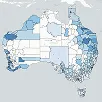

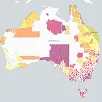


The total adult population (15 years or older) of Sydney 2000 NSW is 15,816, with a median age of 32. Of those, 30.63% are married, 9.36% are divorced or separated, 58.55% are single and 1.49% are widowed.
The average household size is 2.1 people per dwelling, and the median household monthly income is estimated to be $9,368. The median monthly mortgage repayment for households in this suburb is $2,691 which is 28.73% of their earnings.
Source: ABS Census Data (2021)