
Fletcher, NSW 2287

Good to know:
Fletcher, NSW 2287, is a fast-growing suburb located approximately 16 kilometres west of Newcastle's CBD. It is known for its family-friendly environment and tranquil residential streets. Fletcher offers a mix of modern housing developments and established homes, catering to diverse lifestyles. The suburb is well-serviced with amenities, including local shops, parks, and schools, making it ideal for families and professionals. The nearby Blue Gum Hills Regional Park provides recreational opportunities and a natural escape. With its community atmosphere and convenient location, Fletcher is a sought-after suburb in the Newcastle area.
Read More
Fletcher NSW 2287 property market data for houses shows a typical price of $1,143,266, median rent of $694 per week and a gross yield of 3.16%. The suburb combines tight established supply and above-average socio-economic indicators with stretched affordability: house prices in Fletcher are supported by low stock on market and short days-on-market, yet the estimated 42 years to own is materially higher than our 30-year affordability threshold. Fletcher NSW 2287 property investment therefore looks structurally supportive of capital appreciation but offers only modest rental income and carries affordability-related demand risk.
Property market outlook
Fletcher houses sit in a low-supply market: Stock on Market is 0.32% (below the 0.4% low-supply threshold) and Inventory is 1.66 months (also in the low-supply band). Days on Market of 30 days indicates strong transactional velocity. IRSAD at 1067 is opportune — the socio‑economic profile is supportive of longer-term price resilience. Yield at 3.16% exceeds the common 3% minimum, but remains modest in absolute terms for investors targeting cashflow. Vacancy at 2.59% is in the balanced range (1–3.5%) — rental demand is adequate but not overheated. Building Approvals Ratio of 1.25% is neutral, signalling a moderate near-term pipeline rather than a surge in new housing supply. Confidence in the data is high, so these signals are relatively reliable for shortlisting.
Pros
- Tight resale supply: SoM 0.32% and Inventory 1.66 months support house price strength and reduce downside risk from established stock.
- Strong socio-economic profile: IRSAD 1067 (opportune) correlates with buyer capacity and long-term capital growth potential.
- Market liquidity: DOM 30 days indicates properties transact quickly — useful for both acquisition and exit timing.
- Yield above minimum: 3.16% gross yield is slightly above a 3% cashflow threshold, making purchases less dependent on immediate rent rises.
- Low unit penetration: Units/Houses ratio 5.0% (opportune) means limited low-cost-unit competition in the housing market segment.
Cons
- Affordability pressure: Years to Own 42 is well above the 30-year benchmark — this limits the pool of local owner-occupiers and can slow demand if interest rates or wages stall.
- Modest rental upside: Vacancy is balanced rather than tight; rent growth prospects are not extreme and yield is moderate.
- Neutral supply additions: Building Approvals Ratio 1.25% indicates a steady but not negligible pipeline — future approvals could dampen upside if approvals accelerate.
- Renter/Owner mix neutral: RO ratio 28% (neutral) means demand is shared between renters and owners; markets with higher owner-occupation historically support steadier capital growth.
- Clearance Rate reported at 0.0% (neutral): limited auction activity can reduce transparency of true market price discovery.
Investment strategies
- Growth-focused buy-and-hold: Fletcher’s tight supply and strong IRSAD favour investors with a multi-year hold (5–10+ years) targeting capital appreciation. Prioritise houses in well-located pockets and properties with low competition.
- Off-market and buyer‑agent sourcing: Low advertised stock (SoM 0.32%) means off-market opportunities and proactive buyer-agent work deliver the best shot at value and choice.
- Value-add to improve yield: With a modest 3.16% gross yield, consider improvements that justify rent lifts (kitchen/bathroom upgrades, dual-living configuration, or approved secondary dwellings where council rules permit).
- Finance structuring for affordability: Given a 42‑year Years to Own estimate, structure purchases around long-term servicing capacity rather than maximum borrowing; target lower LVRs or interest-only periods where appropriate for cashflow.
- Portfolio diversification: Combine Fletcher houses with higher-yield assets in neighbouring suburbs or unit markets to balance total portfolio cashflow while capturing Fletcher’s capital growth potential.
- Monitor approvals and sales velocity: Building approvals and Days on Market are the lead indicators here; an uptick in approvals or a slowdown in DOM should prompt re-evaluation of purchase urgency and pricing.
Is Fletcher NSW 2287 a good suburb to invest in?
For investors prioritising capital growth and willing to hold for the medium to long term, Fletcher NSW 2287 is an attractive market. Low stock on market (0.32%), short days-on-market (30 days) and a high IRSAD (1067) create a bullish supply/demand dynamic for house prices in Fletcher. However, investors seeking strong immediate cashflow or high rental yields will find returns modest — the 3.16% gross yield is only slightly above common cashflow thresholds. Affordability is a significant constraint (42 years to own) and raises the risk that future demand could soften if incomes or lending conditions deteriorate. In short: favourable for growth-oriented investors with active sourcing strategies; less compelling for pure yield-seeking approaches.
About HtAG Analytics Data
HtAG reports a core set of suburb-level metrics (typical price, median rent, sales, rentals, % change over selected intervals, gross yield, capital growth estimates with low/high ranges, total RoI, projected rent increase, volatility index, confidence and Relative Composite Score™). There are additional metrics available on HTAG dashboards (supply measures, approvals, hold periods, demographic proxies, school rankings and more), but the above list covers the base metrics used for rapid market comparisons.
The guiding principle behind HTAG metrics is to capture both current market conditions and historical trend behaviour to enable relative, point-of-purchase market analysis. Unlike providers whose public datasets are oriented towards broader trend narratives, HTAG’s measurements are curated and modelled to compare suburbs at the level where buying decisions are made — similar metric names can therefore mean different underlying construction and granularity across providers.
Finally, the figures shown are a snapshot of value metrics for Fletcher NSW 2287 and do not by themselves reflect metric trends or the differing weight each metric should carry for distinct strategies. Some metrics (supply measures, affordability, socio‑economic indices) will matter more depending on an investor’s time horizon, budget and risk appetite. HTAG specialises in shortlisting and ranking markets against bespoke investor criteria rather than offering one-size-fits-all conclusions; serious investors and buyer agents should run relative analyses across a set of comparable suburbs that align with their objectives.
Updated: 1 Jun 2026
Read Less
Quick Area Stats

Dwellings

Population

EDI

Bushfire Risk Index

Flood Risk Index
Education & Infrastructure
Sign Up to Access

School Rank

Infra. Spend
Market Trends
Essential metrics effectively streamline the process of identifying markets that match your financial situation and investment objectives. Typical Price, Indicative Yield and Total ROI provide a swift means to shortlist areas that resonate with what you’re seeking and can afford. These metrics also serve as valuable general trend indicators, allowing you to visualise transaction volumes and dynamics of change.
1M
1Q
1Y
3Y
5Y
7Y
10Y
1M
1Q
1Y
3Y
5Y
7Y
10Y

1M
1Q
1Y
3Y
5Y
7Y
10Y
The Growth Rate Cycle (GRC) is a metric used to analyse the year-on-year change in property values, providing insights into the growth cycle of a particular area. It uses the “typical price” metric to gauge property values more accurately than median prices, and includes both actual and projected data for the current year.

Fundamental metrics play a vital role in providing a comprehensive analysis of the socio-economic environment within a specific suburb or region. Additionally, the Return on Investment (ROI) and Volatility Index are crucial metrics that aid in evaluating the prospective profitability and the level of risk or stability in the market.
Socio-economics
Sign Up to Access

IRSAD

Renter to Owner

Units to Houses
Projections
Sign Up to Access

Projected Annual ROI

Volatility Index
Quick Area Stats
Sign Up to Access

Annual Sales Volume

Annual Rentals Volume



Stock on Market

Building Approvals

Inventory

Hold Period




Supply metrics are crucial in gauging both the existing volumes of real estate listed for sale and the properties anticipated to enter the market soon. A diminished supply could signal opportunities for price appreciation, particularly when there’s corresponding buyer demand to buoy the market. The Stock on Market and Inventory level metrics (current values) are presented as a 3-month rolling average of monthly data shown in the charts. This means the last 3 months of data are averaged. The BA Ratio represents the proportion of building approvals over the latest 12 months relative to the total dwellings in the area.

Days on Market

Search Index

Vacancy Rate

Clearance Rate




Demand metrics underscore the level of interest that potential property buyers or tenants have in a specific suburb or locality. When demand outstrips the available supply, or if the supply fails to meet the intensity of buyer/renter interest, there’s a potential for prices to climb, underscoring the pivotal relationship between demand dynamics and property value trends. The Days on Market and Clearance Rate metrics (current values) are presented as a 3-month rolling average of monthly data shown in the charts. This means the last 3 months of data are averaged.
We invite you to contribute to the conversation by sharing your thoughts or raising questions about this market in the comment section below.
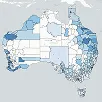

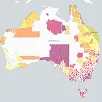


The total adult population (15 years or older) of Fletcher 2287 NSW is 5,822, with a median age of 32. Of those, 56.42% are married, 8.90% are divorced or separated, 32.96% are single and 1.68% are widowed.
The average household size is 3.2 people per dwelling, and the median household monthly income is estimated to be $10,544. The median monthly mortgage repayment for households in this suburb is $2,217 which is 21.03% of their earnings.
Source: ABS Census Data (2021)