
Dean Park, NSW 2761

Good to know:
Dean Park is a welcoming suburb in Western Sydney, New South Wales, situated within the City of Blacktown. Known for its family-friendly environment, Dean Park offers an array of amenities, including parks, playgrounds, and local shopping centres. The suburb boasts a diverse community and provides easy access to public transport, making commutes convenient. Educational institutions, such as schools and childcare centres, are readily available, catering to the needs of families. With its blend of convenience and community spirit, Dean Park is an appealing choice for residents seeking suburban living.
Read More
Dean Park NSW 2761 property market for houses shows a Typical Price of $1,113,640, a Median Rent of $559 per week and a gross yield of 2.61%. This Dean Park NSW 2761 property investment snapshot points to a tight established housing supply (low Stock on Market 0.15%, Inventory 1.12 months and long Hold Period 12.6 years) coupled with solid socio‑economic support (IRSAD 966). However affordability is extreme at 54 years and yields are below the typical 3% cash‑flow threshold, which matters for investor type and strategy. Use the following to assess house prices in Dean Park, demand drivers and tactical approaches for buyers’ agents and investors.
Property market outlook
Dean Park houses sit in a supply‑constrained position. SoM at 0.15% and months of inventory of 1.12 are in the “low supply” band, and a 12.6‑year hold period confirms properties are tightly held — structural supply is currently supportive of price resilience and uplift. Days on Market of 31 days indicates continued transactional velocity (high demand range), while vacancy at 2.15% is neutral, showing a functioning rental market without acute shortage.
Key tension points: gross yield (2.61%) is low for buyers seeking cash flow and affordability is very stretched (54 years to own at current conditions), which limits the potential domestic buyer pool and increases sensitivity to interest rate shifts. IRSAD at 966 is opportune for the price level, suggesting relative affluence that tends to support long‑term capital growth. Overall, the Dean Park property market favours longer‑term, growth‑oriented strategies rather than short‑term yield plays.
Pros
- Very low supply: SoM 0.15% and Inventory 1.12 months both indicate constrained available stock — supportive of price stability and upside in a demand recovery.
- Tightly held stock: Hold period 12.6 years reduces churn and established stock replacement, limiting downward pressure from resale volumes.
- Strong socio‑economic profile: IRSAD 966 is in the opportune range for supporting higher value housing markets.
- Fast sell times: DOM 31 days sits in the high‑demand band, aiding liquidity for sellers and signalling continued buyer interest.
- Low unit penetration: Units/Houses ratio 1.0% means the market is house‑dominant — attractive for families and owner‑occupiers seeking land and amenity.
Cons
- Low yield: Gross yield 2.61% is below the commonly used 3% cash‑flow threshold, making Dean Park houses weak for income‑first investors.
- Severe affordability pressure: Affordability at 54 years is materially above the 30‑year threshold and constrains the addressable buyer pool, increasing vulnerability if rates rise or wages stagnate.
- Rental market is only neutral: Vacancy 2.15% and Buy Search Index 3 are balanced rather than tight — rent growth upside may be limited in the short term.
- Limited development buffer: BA Ratio 0.8% is neutral but not high enough to expect substantial new supply to refresh the market; potential mismatch if local demand grows.
- Data confidence is Medium: decisions should factor the confidence level and local, off‑market dynamics.
Investment strategies
- Growth/land‑bank focus: Given tight supply, long‑term capital growth strategies suit Dean Park houses. Expect best outcomes over multi‑year horizons rather than near‑term cash‑flow extraction.
- Buyer’s agent targeting: Prioritise off‑market and pre‑listing opportunities — low SoM means many transactions won’t hit public portals. Focus on family homes with functional layouts and scope for minor improvements that attract owner‑occupiers.
- Rent optimisation and value‑add: With yield naturally low, extract return via rent improvements (target modest refurbishments that justify rent increases) and by reducing holding costs (refinance when rates permit).
- Leverage selective arbitrage: For investors needing yield, consider sourcing properties in neighbouring suburbs with similar supply dynamics but higher gross yields, then monitor Dean Park for capital appreciation.
- Stress test scenarios: Given 54 years affordability and low yields, run aggressive interest‑rate stress tests and refinance scenarios — ensure cash buffers for rate cycles and longer vacancy periods.
- Hold horizon and exit planning: Plan for extended hold periods (7–10+ years) and align tax, lending and exit strategies accordingly; Dean Park suits investors prepared to ride cycles.
Is Dean Park NSW 2761 a good suburb to invest in?
Dean Park NSW 2761 can be a good suburb to invest in for capital‑growth‑oriented investors or buyers’ agents sourcing properties for long‑term owner‑occupier demand. Structural supply tightness (SoM 0.15%, Inventory 1.12 months, Hold Period 12.6 years) and a strong IRSAD (966) are supportive of price appreciation and lower downside from resale saturation. However, it is not well suited to yield‑driven investors: the gross yield of 2.61% is below the commonly used 3% floor and median rent of $559pw limits immediate cash‑flow. The extreme affordability strain (54 years) raises a caution flag — price growth may be dependent on credit conditions, wage growth and investor appetite rather than a broad first‑home buyer base. In short: favourable for patient capital and growth plays; unfavourable for short‑term income or highly leveraged yield strategies.
About HtAG Analytics Data
HtAG reports a core set of suburb metrics (Typical Price, Median Rent, Sales and Rentals counts, % Change over time, Gross Rental Yield, Capital Growth projections with low/high bounds and Total RoI, Rent Increase estimates, Volatility Index, Confidence and a Relative Composite Score™). The platform also summarises supply metrics (Stock on Market, SoM%, Inventory/months, Building Approvals and BA Ratio, Hold Period), demand metrics (Days on Market, Discounting, Vacancy Rate, Vacancies, Days on Rental Market, Buy & Rent Search Index, Auction Clearance Rates) and other contextual indicators (IRSAD, Renter/Owner ratio, Units/Houses ratio, Population, Estimated Dwellings, School Rank and infrastructure proxies). These are the base metrics — HTAG dashboards include additional specialised indicators for deeper analysis.
HtAG’s methodology is designed to capture both current market conditions and historical trends to facilitate relative market analysis at the point of purchase. That focus differentiates our metrics from providers that mainly surface broad public data for headline narratives; HTAG refines similar raw inputs with distinct curation and measurement choices so outputs are tailored to compare suburbs as a buyer or investor would evaluate options near a prospective purchase.
Finally, the snapshot above captures current value metrics for Dean Park houses but does not substitute for trend analysis — metric trajectories, weightings and investor objectives materially change decisions. Some metrics carry greater practical importance depending on strategy (for example yield vs capital growth), and market selection varies by budget, borrowing capacity, risk appetite and intended hold or refinance horizon. HTAG excels at shortlisting markets to match individual criteria rather than offering one‑size‑fits‑all rankings; for serious investors and buyers’ agents we recommend a focused relative analysis across a tailored set of suburbs aligned to your specific strategy.
Updated: 1 Jun 2026
Read Less
Quick Area Stats

Dwellings

Population

EDI

Bushfire Risk Index

Flood Risk Index
Education & Infrastructure
Sign Up to Access

School Rank

Infra. Spend
Market Trends
Essential metrics effectively streamline the process of identifying markets that match your financial situation and investment objectives. Typical Price, Indicative Yield and Total ROI provide a swift means to shortlist areas that resonate with what you’re seeking and can afford. These metrics also serve as valuable general trend indicators, allowing you to visualise transaction volumes and dynamics of change.
1M
1Q
1Y
3Y
5Y
7Y
10Y
1M
1Q
1Y
3Y
5Y
7Y
10Y

1M
1Q
1Y
3Y
5Y
7Y
10Y
The Growth Rate Cycle (GRC) is a metric used to analyse the year-on-year change in property values, providing insights into the growth cycle of a particular area. It uses the “typical price” metric to gauge property values more accurately than median prices, and includes both actual and projected data for the current year.

Fundamental metrics play a vital role in providing a comprehensive analysis of the socio-economic environment within a specific suburb or region. Additionally, the Return on Investment (ROI) and Volatility Index are crucial metrics that aid in evaluating the prospective profitability and the level of risk or stability in the market.
Socio-economics
Sign Up to Access

IRSAD

Renter to Owner

Units to Houses
Projections
Sign Up to Access

Projected Annual ROI

Volatility Index
Quick Area Stats
Sign Up to Access

Annual Sales Volume

Annual Rentals Volume



Stock on Market

Building Approvals

Inventory

Hold Period




Supply metrics are crucial in gauging both the existing volumes of real estate listed for sale and the properties anticipated to enter the market soon. A diminished supply could signal opportunities for price appreciation, particularly when there’s corresponding buyer demand to buoy the market. The Stock on Market and Inventory level metrics (current values) are presented as a 3-month rolling average of monthly data shown in the charts. This means the last 3 months of data are averaged. The BA Ratio represents the proportion of building approvals over the latest 12 months relative to the total dwellings in the area.

Days on Market

Search Index

Vacancy Rate

Clearance Rate




Demand metrics underscore the level of interest that potential property buyers or tenants have in a specific suburb or locality. When demand outstrips the available supply, or if the supply fails to meet the intensity of buyer/renter interest, there’s a potential for prices to climb, underscoring the pivotal relationship between demand dynamics and property value trends. The Days on Market and Clearance Rate metrics (current values) are presented as a 3-month rolling average of monthly data shown in the charts. This means the last 3 months of data are averaged.
We invite you to contribute to the conversation by sharing your thoughts or raising questions about this market in the comment section below.
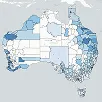

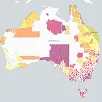


The total adult population (15 years or older) of Dean Park 2761 NSW is 2,534, with a median age of 35. Of those, 48.93% are married, 9.19% are divorced or separated, 35.16% are single and 6.59% are widowed.
The average household size is 2.9 people per dwelling, and the median household monthly income is estimated to be $7,940. The median monthly mortgage repayment for households in this suburb is $2,102 which is 26.47% of their earnings.
Source: ABS Census Data (2021)