
Woodcroft, NSW 2767

Good to know:
Woodcroft, located in New South Wales with the postcode 2767, is a serene suburban locality within the Greater Western Sydney region. Known for its family-friendly environment, Woodcroft offers a mix of modern and established homes. The suburb features Woodcroft Lake, a popular recreational spot surrounded by parklands, ideal for picnics and leisurely walks. Residents benefit from local amenities, including a shopping village, schools, and efficient public transport links to Sydney CBD and Parramatta. Woodcroft's community-centred atmosphere and green spaces make it a desirable place to live for families and professionals alike.
Read More
Woodcroft NSW 2767 houses: Typical price $1,183,462, median rent $730pw and a gross yield of 3.21%. This snapshot of the Woodcroft NSW 2767 property market shows a suburb with low listed supply and quick turnover, an above‑average socioeconomic profile (IRSAD 1063) and constrained affordability (47 years to own). For investors focused on house prices in Woodcroft, these conditions point to a market where capital growth is the primary return driver rather than strong rental yield or short-term cashflow.
Property market outlook
Woodcroft NSW 2767 house prices sit at the upper end of affordability for many buyers, but underlying demand indicators are supportive of price resilience. Low Stock on Market (SoM% 0.34%, classified opportune) and short Days on Market (32 days, opportune) indicate established housing is tightly held and transacts quickly when offered. Vacancy (1.42%) and Inventory (3.18 months) are in the neutral band — not signalling severe rental pressure but also not providing cushions for rapid rent falls. IRSAD 1063 suggests a relatively affluent buyer base capable of sustaining prices, while the Units/Houses ratio of 9% implies Woodcroft is overwhelmingly a house market, which is important for investors targeting standalone dwellings. The extreme outlier here is affordability at 47 years — materially above the 30‑year reference threshold — which will restrict first‑home buyers and price elastic demand over the medium term. Data confidence is Medium.
Pros
- Low listed supply (SoM% 0.34%): scarce for-sale stock supports capital appreciation if demand holds.
- Fast turnover (DoM 32 days): transactions complete quickly, useful for buyers prepared to act.
- Socioeconomic profile (IRSAD 1063): higher relative incomes correlate with price resilience and lower downside.
- Low units share (UH ratio 9%): a predominantly house market reduces competition from higher‑density stock and supports house capital growth.
- Yield above 3% (3.21%): marginally acceptable for combined capital-growth and income strategies, better than many inner‑city suburbs.
Cons
- Very stretched affordability (47 years): significantly limits the local buyer pool and increases sensitivity to rising interest rates.
- Moderate inventory and building approvals (Inventory 3.18 months; BA ratio 0.42%): neutral signals that new supply could increase and cap upside if approvals trend higher.
- Neutral rental demand measures (Vacancy 1.42%, Buy Search Index 4): while not weak, rental demand is not exceptionally strong to deliver outsized rent growth.
- Data confidence Medium: results should be interpreted with some caution and cross‑checked with transaction-level reports for large purchases.
Investment strategies
- Capital-growth focus: Target well‑located detached houses or larger lots where scarcity and owner‑occupier demand are strongest. Given low supply and fast sales, identify properties offering small structural improvements that add perceived value to owner‑occupiers.
- Selective value-add: Renovations that enhance liveability (kitchen, bathrooms, outdoor living) can convert a neutral yield into better cashflow while benefiting from the suburb’s capital growth tailwinds.
- Staggered entry and negotiation discipline: Fast DoM suggests auctions or quick sales are common; use pre-approval and vendor-solicitation strategies to avoid overpaying in competitive sales.
- Cashflow buffer planning: With a typical price ~ $1.18m and modest yield (3.21%), structure finance expecting lower immediate cashflow — account for serviceability stress tests and higher interest scenarios.
- Hold horizon: Expect a medium- to long-term hold (5–10+ years) to realise capital gains given affordability constraints and the suburb’s fundamentals.
- Buyer‑agent advantage: Use a buyer agent to access off‑market or early‑listed stock in a thin market where supply is the key constraint.
Is Woodcroft NSW 2767 a good suburb to invest in?
It depends on strategy. For investors prioritising capital growth in a family‑oriented, house‑dominated market, Woodcroft NSW 2767 is attractive: low for‑sale stock, strong socio‑economic indicators and quick transaction times point to price resilience. For pure cashflow investors or those seeking high yield, Woodcroft is less compelling — the yield is modest and typical prices are high relative to rent, while affordability (47 years) is a structural constraint that limits broad buyer participation. Medium confidence in the data means execution should be supported by local market intel, recent comparable sales, and a clear holding strategy.
About HtAG Analytics Data
Base metrics reported (selected — HTAG tracks many more): Typical Price, Median Rent, Sales, Rentals, Δ Change (period %), Gross Rental Yield, Capital Growth (annual CG + low/high), Total RoI (Yield + CG), Rent Increase (projected p.a.), Volatility Index (MAPE‑based), Confidence (data accuracy), Relative Composite Score™.
Key metric thresholds and ranges we use (examples from our dictionary): IRSAD — opportune >950, RO Ratio — opportune <15%, UH Ratio — opportune <10%; Stock on Market (SoM%) low supply <0.4%; Inventory months supply low supply <2.1, balanced 2.1–4.5; Days on Market — high demand 0–35 days; Vacancy Rate — high demand <1%, balanced 1–3.5%; Buy Search Index average = 5. These examples illustrate the base set — HTAG dashboards include additional specialised metrics beyond this list.
HtAG’s methodology is designed to capture both current market conditions and historical trends so we can perform relative market analysis at the suburb level — that focus distinguishes our approach from providers that primarily publish broad public datasets for media consumption. For Woodcroft NSW 2767 this means metrics are tuned to reflect local transaction intensity, supply composition and short‑term rental dynamics as they matter near the point of purchase. Although some metric names are similar across providers, our curation, scaling and trend‑adjustment steps introduce meaningful differences in how measures behave and how comparable suburbs are ranked.
Finally, note that the snapshot above describes current value metrics for Woodcroft houses but does not replace trend analysis — movements over time can materially alter the investment case. Some metrics carry greater weight depending on strategy (for example, vacancy and yield for cashflow investors; supply and IRSAD for growth investors). HTAG excels at shortlisting and ranking suburbs against bespoke criteria (budget, borrowing capacity, risk tolerance and intended hold/exit horizons). For professional investors and buyer agents, a relative analysis across comparable suburbs and an assessment of metric trends is essential before committing capital.
Updated: 1 Jun 2026
Read Less
Quick Area Stats

Dwellings

Population

EDI

Bushfire Risk Index

Flood Risk Index
Education & Infrastructure
Sign Up to Access

School Rank

Infra. Spend
Market Trends
Essential metrics effectively streamline the process of identifying markets that match your financial situation and investment objectives. Typical Price, Indicative Yield and Total ROI provide a swift means to shortlist areas that resonate with what you’re seeking and can afford. These metrics also serve as valuable general trend indicators, allowing you to visualise transaction volumes and dynamics of change.
1M
1Q
1Y
3Y
5Y
7Y
10Y
1M
1Q
1Y
3Y
5Y
7Y
10Y

1M
1Q
1Y
3Y
5Y
7Y
10Y
The Growth Rate Cycle (GRC) is a metric used to analyse the year-on-year change in property values, providing insights into the growth cycle of a particular area. It uses the “typical price” metric to gauge property values more accurately than median prices, and includes both actual and projected data for the current year.

Fundamental metrics play a vital role in providing a comprehensive analysis of the socio-economic environment within a specific suburb or region. Additionally, the Return on Investment (ROI) and Volatility Index are crucial metrics that aid in evaluating the prospective profitability and the level of risk or stability in the market.
Socio-economics
Sign Up to Access

IRSAD

Renter to Owner

Units to Houses
Projections
Sign Up to Access

Projected Annual ROI

Volatility Index
Quick Area Stats
Sign Up to Access

Annual Sales Volume

Annual Rentals Volume



Stock on Market

Building Approvals

Inventory

Hold Period




Supply metrics are crucial in gauging both the existing volumes of real estate listed for sale and the properties anticipated to enter the market soon. A diminished supply could signal opportunities for price appreciation, particularly when there’s corresponding buyer demand to buoy the market. The Stock on Market and Inventory level metrics (current values) are presented as a 3-month rolling average of monthly data shown in the charts. This means the last 3 months of data are averaged. The BA Ratio represents the proportion of building approvals over the latest 12 months relative to the total dwellings in the area.

Days on Market

Search Index

Vacancy Rate

Clearance Rate




Demand metrics underscore the level of interest that potential property buyers or tenants have in a specific suburb or locality. When demand outstrips the available supply, or if the supply fails to meet the intensity of buyer/renter interest, there’s a potential for prices to climb, underscoring the pivotal relationship between demand dynamics and property value trends. The Days on Market and Clearance Rate metrics (current values) are presented as a 3-month rolling average of monthly data shown in the charts. This means the last 3 months of data are averaged.
We invite you to contribute to the conversation by sharing your thoughts or raising questions about this market in the comment section below.
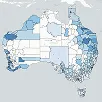

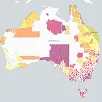


The total adult population (15 years or older) of Woodcroft 2767 NSW is 5,468, with a median age of 38. Of those, 58.47% are married, 6.62% are divorced or separated, 31.53% are single and 3.40% are widowed.
The average household size is 3.3 people per dwelling, and the median household monthly income is estimated to be $9,724. The median monthly mortgage repayment for households in this suburb is $2,275 which is 23.40% of their earnings.
Source: ABS Census Data (2021)