
Nudgee Beach, QLD 4014

Good to know:
Nudgee Beach is a tranquil bayside suburb located in Queensland, within the postcode 4014. Nestled along the shores of Moreton Bay, it boasts a pristine natural environment with lush mangroves and coastal wetlands. This suburb is popular for its outdoor recreational activities, including birdwatching, fishing, and picnicking. The Boondall Wetlands Reserve, nearby, offers extensive walking and cycling trails. Despite its serene setting, Nudgee Beach provides convenient access to Brisbane's CBD and Brisbane Airport, enhancing its appeal to both nature lovers and commuters.
Read More
Nudgee Beach QLD 4014 property market shows a high-value, owner-occupied house market with clear lifestyle demographics but material rental and supply risks. Typical price for houses sits at $1,396,430, median rent is $626pw and the gross rental yield is 2.33% — below the common 3% threshold for yield-focused investors. House prices in Nudgee Beach are supported by an opportune IRSAD (1089) and a very low renter share, yet elevated inventory and approvals plus a higher vacancy rate create a mixed outlook for short-term returns.
Property market outlook
- Market character: Predominantly owner-occupied houses with almost no units (Units/Houses ratio 0.0%) and a low renter share (Renter/Owner ratio 12.0%). That profile typically attracts lifestyle buyers and owner-occupiers more than yield-driven investors.
- Demand vs supply: Days on Market of 25 indicates strong transactional velocity (opportune demand) while Stock on Market at 0.56% is broadly balanced. However Inventory at 8.0 months and a Building Approvals Ratio of 7.34% are both high — signalling material existing stock and significant pipeline supply that can cap near-term capital growth and rental tightness.
- Rental market: Vacancy at 4.76% is unfavourable (elevated vacancy risk). The median rent of $626pw translates to a low gross yield (2.33%), so rental cashflow is weak relative to capital employed.
- Affordability and socio-economic tailwinds: IRSAD 1089 and an affordability index of 0 years indicate above-average socio-economic advantage and a market accessible to local buyers under the model assumptions — this supports owner-occupier demand and longer-term price resilience.
- Data confidence: Medium. Use the signals directionally but validate with local agents and on-ground listings given the mixed supply/demand indicators.
Pros
- Strong socio-economic profile (IRSAD 1089) — generally supportive of capital preservation and premium pricing.
- Dominant owner-occupier base (Renter/Owner 12%) and near-zero unit supply — reduces risk of investor-driven churn and creates a stable homeowner market.
- Fast transactional pace (DoM 25) — where pricing is attractive, properties can sell quickly.
- Very short affordability metric under the HTAG model (0 years) — suggests local buyer capacity to sustain prices.
Cons
- Low gross rental yield (2.33%) — below the 3% benchmark, limiting positive cashflow for buy-and-hold yield strategies.
- Elevated vacancy rate (4.76%) — rental uptake is weak relative to supply; leasing risk is material and may require price concessions or different leasing strategies.
- High inventory (8.0 months) and large recent approvals (BA Ratio 7.34%) — an oversupply dynamic that can slow price growth or push yields lower as more stock competes for the same tenant pool.
- Low buy search intensity (Buy Search Index 2) — reduced buyer interest versus state/city averages, which can translate to longer marketing campaigns for vendors and less competition for new stock.
- Building approvals vs market size creates a supply overhang risk — monitor completions and release timing.
Investment strategies
- Capital-growth / long-hold: Best suited to investors prioritising long-term capital appreciation over immediate cashflow. The suburb’s affluence and owner-occupier bias can support price resilience, but plan for a multi-year hold due to current supply pressures and rental weakness.
- Lifestyle / owner-occpier hybrid: Consider acquiring with an eventual owner-occupation plan (or high-net-worth clients) where rental income is secondary and lifestyle amenity supports price upside.
- Selective redevelopment or subdivision: Given approvals activity, small-scale development or landholding strategies could work if zoning and site economics align — but perform tight feasibility modelling given high competition and construction timelines.
- Avoid pure yield plays: The 2.33% yield and elevated vacancy make buy-to-let for cashflow unattractive without significant leverage or rent-growth assumptions; consider targeting nearby suburbs with stronger rental fundamentals for income.
- Active management for leasing: If renting, expect longer vacancy periods — price competitively, stage properties for premium presentation, or target specialised tenant cohorts (short-term corporate, holiday let where local rules permit) to offset vacancy risk.
- Comparative shortlist: Shortlist adjacent coastal or riverside suburbs and compare yields, vacancy trends and approvals to assess relative value and downside protection.
Is Nudgee Beach QLD 4014 a good suburb to invest in?
Nudgee Beach QLD 4014 can be a good strategic play for investors focused on long-term capital appreciation and lifestyle-driven buyer demand rather than immediate rental income. The suburb’s high IRSAD and low renter share favour price resilience, but low gross yields (2.33%), elevated vacancy (4.76%) and a sizeable approvals pipeline increase short-to-medium term risk. For yield-first investors the suburb is unfavourable; for growth-focused or owner-occupier-hybrid strategies it is conditionally attractive — only after careful comparative analysis and acceptance of a longer holding period.
About HtAG Analytics Data
Base metrics used in this summary include Typical Price, Median Rent, Sales and Rentals counts, % Change, Gross Rental Yield, Capital Growth projections (CG and ranges), Total RoI, Rent Increase, Volatility Index, Confidence, Relative Composite Score™, IRSAD, Renter/Owner ratio, Units/Houses ratio, Affordability (Years to Own), Growth Rate Cycle (GRC), Stock on Market (SoM and SoM%), Inventory / Months of Supply, Building Approvals and BA Ratio, Hold Period, Days on Market, Discounting, Vacancy Rate, Vacancies, DoRM, Buy & Rent Search Index, Auction Clearance Rates, plus advanced context metrics such as Population, Estimated Dwellings, School Rank and Non-residential Approvals per Capita. There are additional HTAG metrics beyond this base set that can be applied for deeper analysis.
HtAG’s methodology emphasises capturing both current market conditions and historical trends to enable relative market analysis tailored to the point of purchase. Unlike providers whose public datasets primarily support broad trend reporting, HTAG metrics are designed and curated to compare and rank suburbs specifically for investor and purchaser decision-making. Even where metric names match other vendors, our data curation and measurement nuances are intentionally different to improve decision-quality for buyers and agents.
Note that the tables above are a snapshot of value metrics and do not capture metric trajectories — trend behaviour can materially alter an investment case. Some metrics carry more decision weight than others depending on strategy and timeframe; that nuance is vital for a holistic view. Different investors will select different suburbs based on budget, borrowing capacity, risk appetite and intended hold or refinance horizons. HTAG excels at shortlisting markets to match those individual criteria rather than offering one-size-fits-all recommendations. For serious investors and buyer’s agents, perform a relative analysis across comparable suburbs that reflect your specific financial and time horizons.
Updated: 1 Jun 2026
Read Less
Quick Area Stats

Dwellings

Population

EDI

Bushfire Risk Index

Flood Risk Index
Education & Infrastructure
Sign Up to Access

School Rank

Infra. Spend
Market Trends
Essential metrics effectively streamline the process of identifying markets that match your financial situation and investment objectives. Typical Price, Indicative Yield and Total ROI provide a swift means to shortlist areas that resonate with what you’re seeking and can afford. These metrics also serve as valuable general trend indicators, allowing you to visualise transaction volumes and dynamics of change.
1M
1Q
1Y
3Y
5Y
7Y
10Y
1M
1Q
1Y
3Y
5Y
7Y
10Y

1M
1Q
1Y
3Y
5Y
7Y
10Y
The Growth Rate Cycle (GRC) is a metric used to analyse the year-on-year change in property values, providing insights into the growth cycle of a particular area. It uses the “typical price” metric to gauge property values more accurately than median prices, and includes both actual and projected data for the current year.

Fundamental metrics play a vital role in providing a comprehensive analysis of the socio-economic environment within a specific suburb or region. Additionally, the Return on Investment (ROI) and Volatility Index are crucial metrics that aid in evaluating the prospective profitability and the level of risk or stability in the market.
Socio-economics
Sign Up to Access

IRSAD

Renter to Owner

Units to Houses
Projections
Sign Up to Access

Projected Annual ROI

Volatility Index
Quick Area Stats
Sign Up to Access

Annual Sales Volume

Annual Rentals Volume



Stock on Market

Building Approvals

Inventory

Hold Period




Supply metrics are crucial in gauging both the existing volumes of real estate listed for sale and the properties anticipated to enter the market soon. A diminished supply could signal opportunities for price appreciation, particularly when there’s corresponding buyer demand to buoy the market. The Stock on Market and Inventory level metrics (current values) are presented as a 3-month rolling average of monthly data shown in the charts. This means the last 3 months of data are averaged. The BA Ratio represents the proportion of building approvals over the latest 12 months relative to the total dwellings in the area.

Days on Market

Search Index

Vacancy Rate

Clearance Rate




Demand metrics underscore the level of interest that potential property buyers or tenants have in a specific suburb or locality. When demand outstrips the available supply, or if the supply fails to meet the intensity of buyer/renter interest, there’s a potential for prices to climb, underscoring the pivotal relationship between demand dynamics and property value trends. The Days on Market and Clearance Rate metrics (current values) are presented as a 3-month rolling average of monthly data shown in the charts. This means the last 3 months of data are averaged.
We invite you to contribute to the conversation by sharing your thoughts or raising questions about this market in the comment section below.
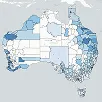

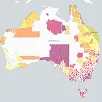


The total adult population (15 years or older) of Nudgee Beach 4014 QLD is 262, with a median age of 47. Of those, 51.91% are married, 13.36% are divorced or separated, 30.15% are single and 4.58% are widowed.
The average household size is 2.6 people per dwelling, and the median household monthly income is estimated to be $12,092. The median monthly mortgage repayment for households in this suburb is $2,100 which is 17.37% of their earnings.
Source: ABS Census Data (2021)